#Ursa Major
3 wallpapers tagged "Ursa Major"
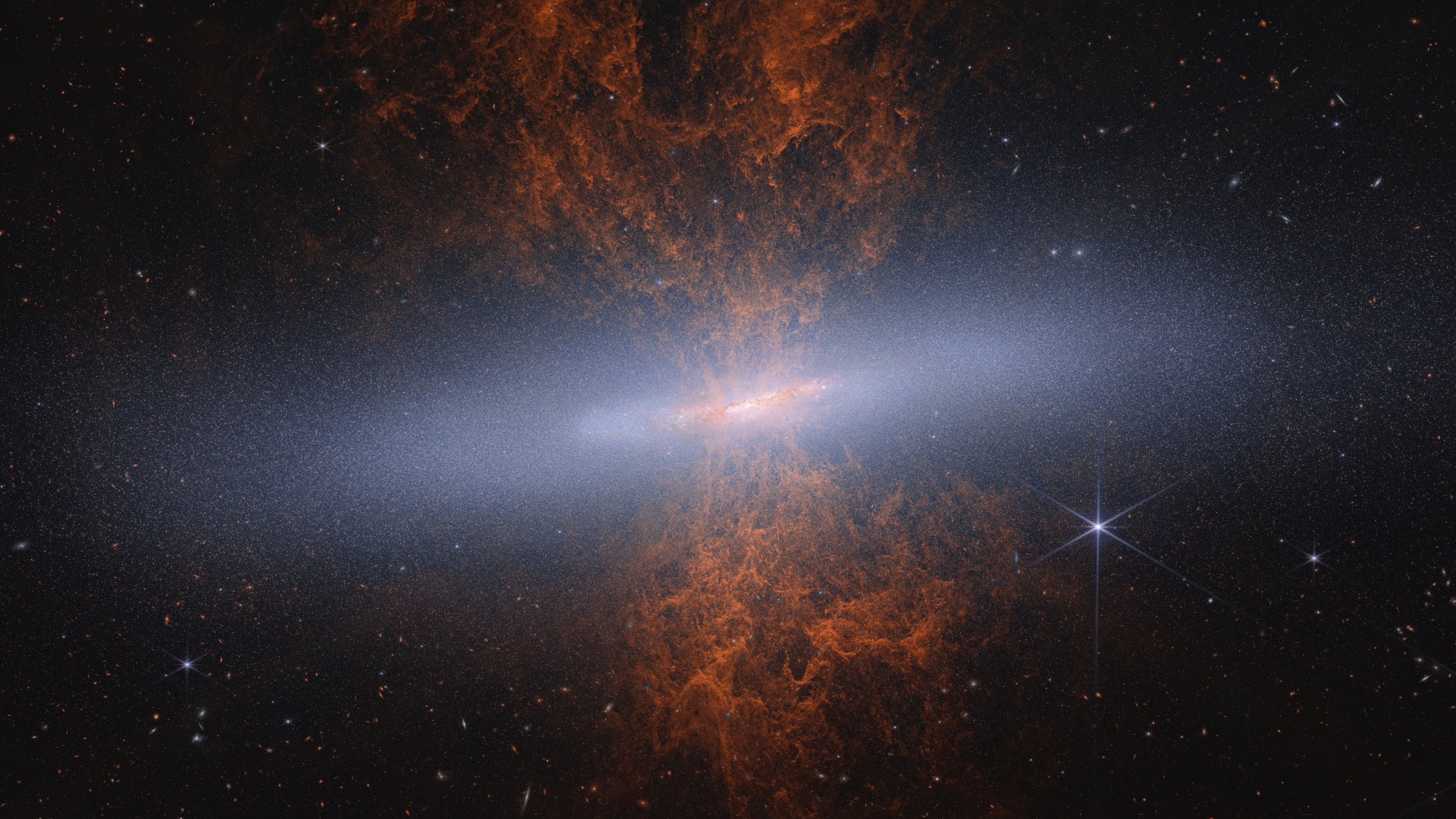
NASA's James Webb Space Telescope recently observed edge-on starburst galaxy Messier 82 (M82), nicknamed the Cigar Galaxy. Webb's near-infrared-light view is a snapshot in time, revealing a scene that has been evolving over a couple hundred million years. In near-infrared light, astronomers can see the galaxy's distended disk structure and millions of individual stars — approximately 16.5 million — for the first time. Webb's imaging survey of the galaxy is helping astronomers investigate the formation history of M82 and will also shed light on the current processes occurring within the starburst galaxy.
40.8k downloads
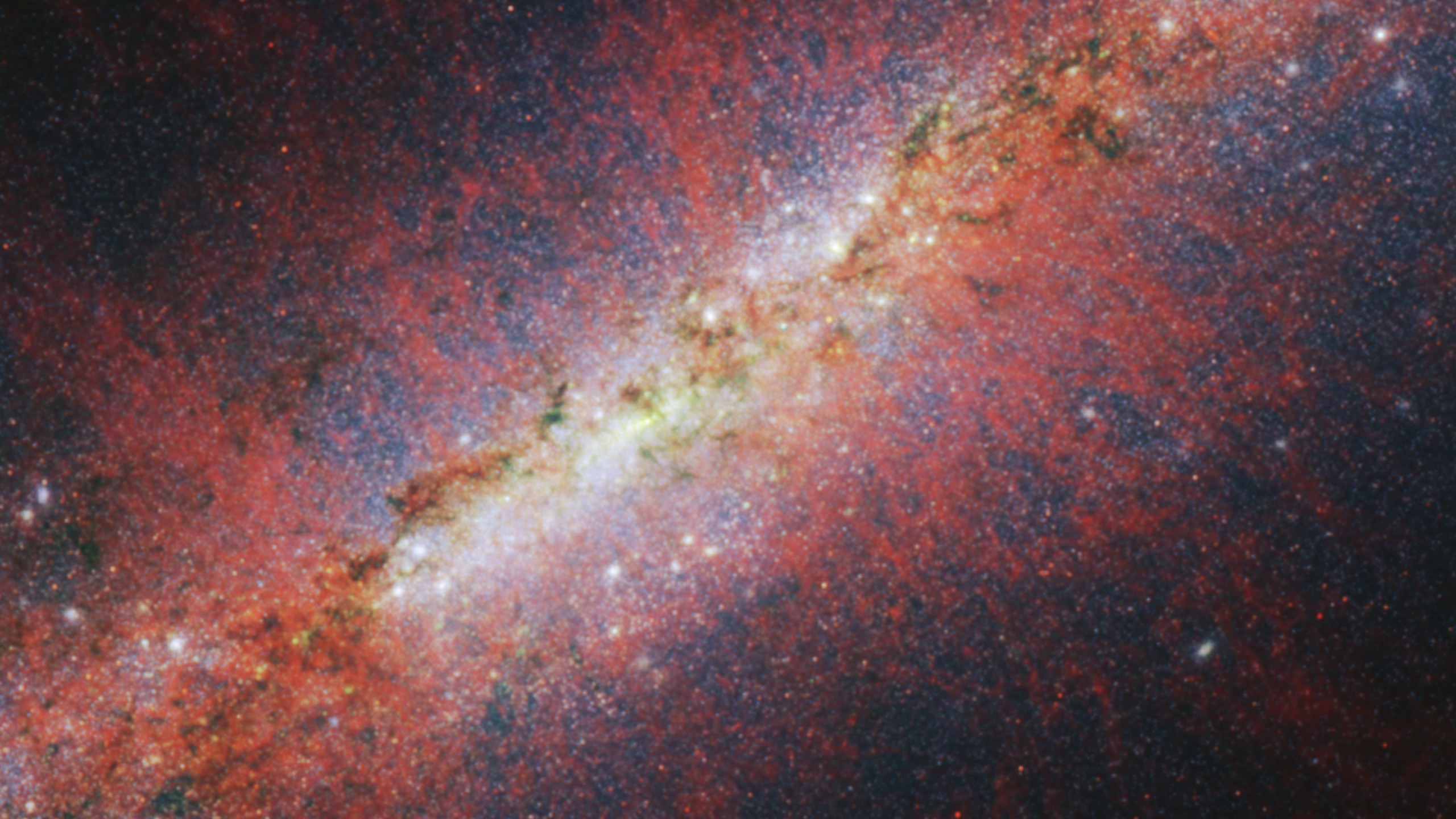
Astronomers used the James Webb Space Telescope to look toward M82’s center, where a galactic wind is being launched as a result of rapid star formation and subsequent supernovas. Studying the galactic wind can offer insight into how the loss of gas shapes the future growth of the galaxy. This image from Webb’s NIRCam (Near-Infrared Camera) instrument shows M82’s galactic wind via emission from sooty chemical molecules known as polycyclic aromatic hydrocarbons (PAHs). PAHs are very small dust grains that survive in cooler temperatures but are destroyed in hot conditions. The structure of the emission resembles that of hot, ionized gas, suggesting PAHs may be replenished by continued ionization of molecular gas. In this image, light at 3.35 microns is colored red, 2.50 microns is green, and 1.64 microns is blue (filters F335M, F250M, and F164N, respectively).
23.3k downloads
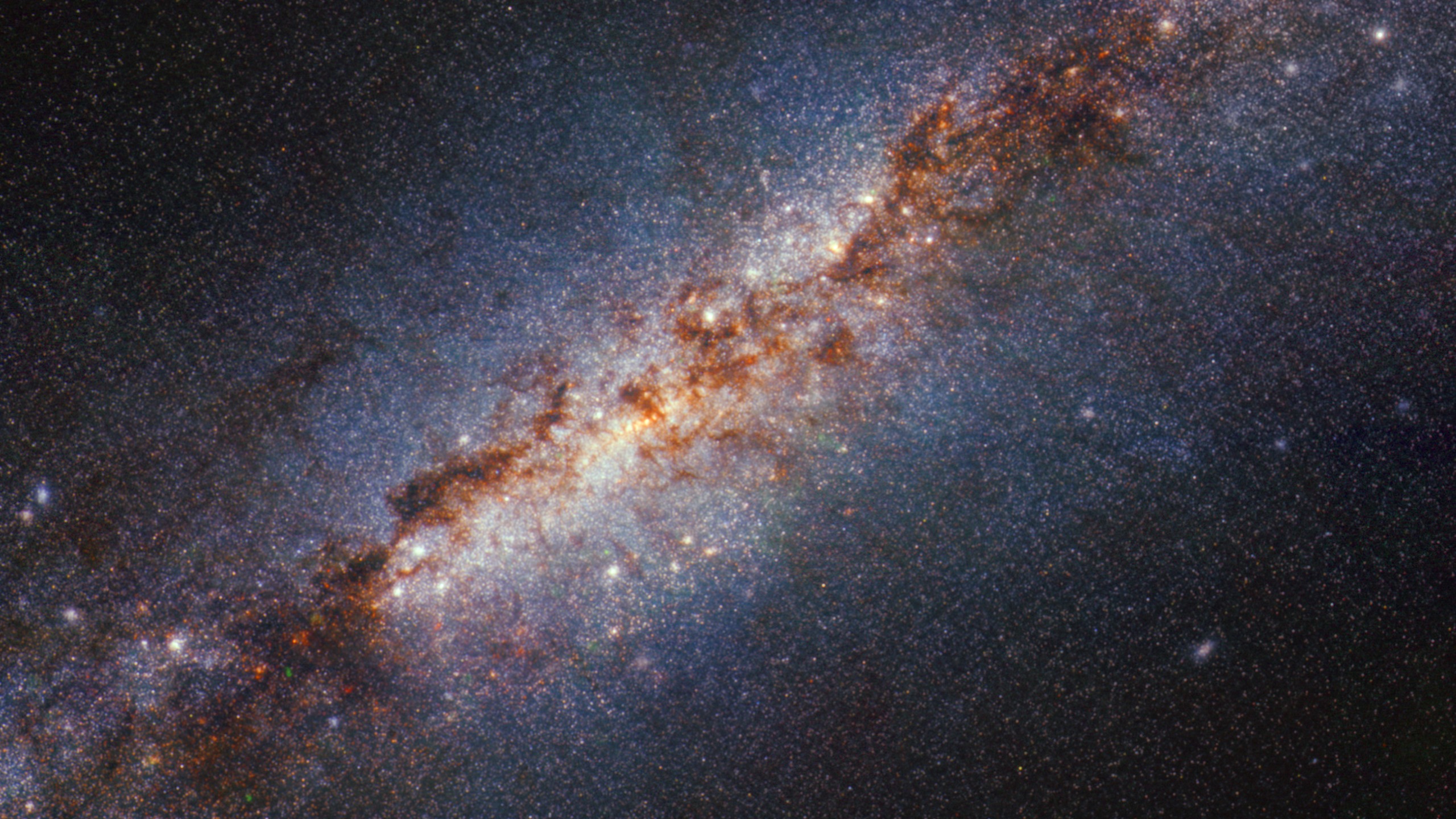
A team of astronomers used NASA’s James Webb Space Telescope to survey the starburst galaxy Messier 82 (M82), which is located 12 million light-years away in the constellation Ursa Major. M82 hosts a frenzy of star formation, sprouting new stars 10 times faster than the Milky Way galaxy. Webb’s infrared capabilities enabled scientists to peer through curtains of dust and gas that have historically obscured the star formation process. This image from Webb’s NIRCam (Near-Infrared Camera) instrument shows M82’s center in an unprecedented level of detail. With Webb’s resolution, astronomers can distinguish small, bright compact sources that are either individual stars or star clusters. Obtaining an accurate count of the stars and clusters that compose M82’s center can help astronomers understand the different phases of star formation and the timelines for each stage. In this image, light at 2.12 microns is colored red, 1.64 microns is green, and 1.40 microns is blue (filters F212N, 164N, and F140M, respectively).
34.5k downloads