Nebula Wallpapers
Clouds of gas and dust where stars are born and die, seen in the infrared detail only James Webb can capture, like the Carina Nebula's dust cliffs and the Pillars of Creation.
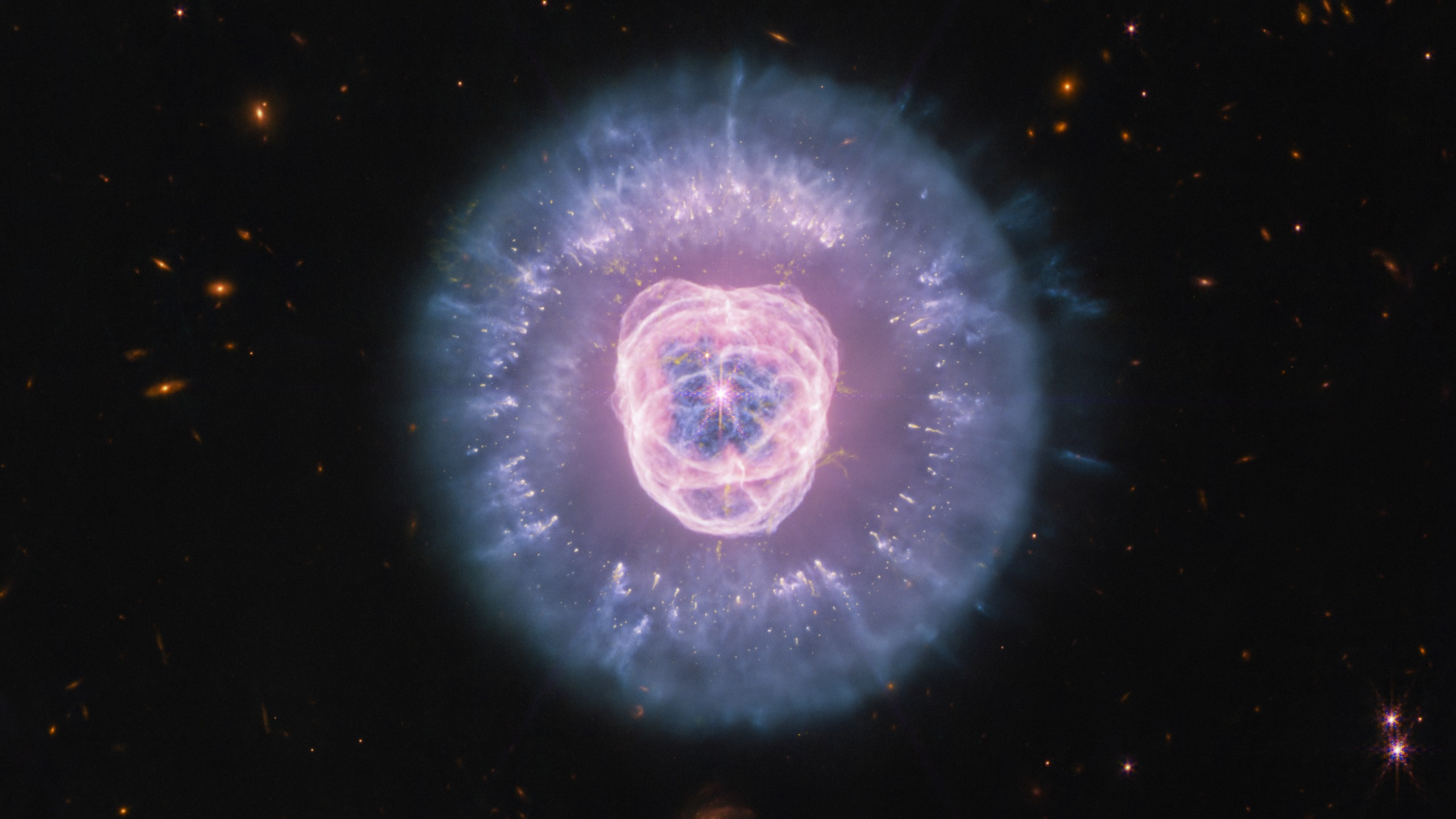
NASA’s James Webb Space Telescope’s NIRCam (Near Infrared Camera) and MIRI (Mid Infrared Instrument) instruments recently imaged planetary nebula NGC 2392, which is nicknamed the Lion Nebula due to its distinct shape. This near- and mid-infrared composite image reveals the complex structure of the nebula, which has formed and continues to be sculpted by the remains of a dying star. The stellar core, also known as a white dwarf, is located at the center and looks like the button nose of the lion. The central dying star is so hot that its radiation is “cooking” everything from the inside and producing a bubble of ionized hydrogen gas as it does. The gas bubble, which is the lion’s “face,” features cavernous shells and rings with tendrils that are expanding and destroying dust upon encounter. However, not all dust is obliterated from the scene. The lion’s mane is the interior of a dust shell that is being illuminated by the central star’s core. Within the mane some compact clumps of dust (red and orange) have managed to survive so far and are protecting the material that lies behind them. Additional clumps of molecular hydrogen appear yellow. The Lion Nebula is a snapshot in time. It’s taken several thousand years for the gas and dust to be shaped in this way, and it continues to change as the star drives away the material. Astronomers estimate NGC 2392 will eventually disperse in about 10,000 years, which is a relatively short period in astronomical terms.
40.5k downloads
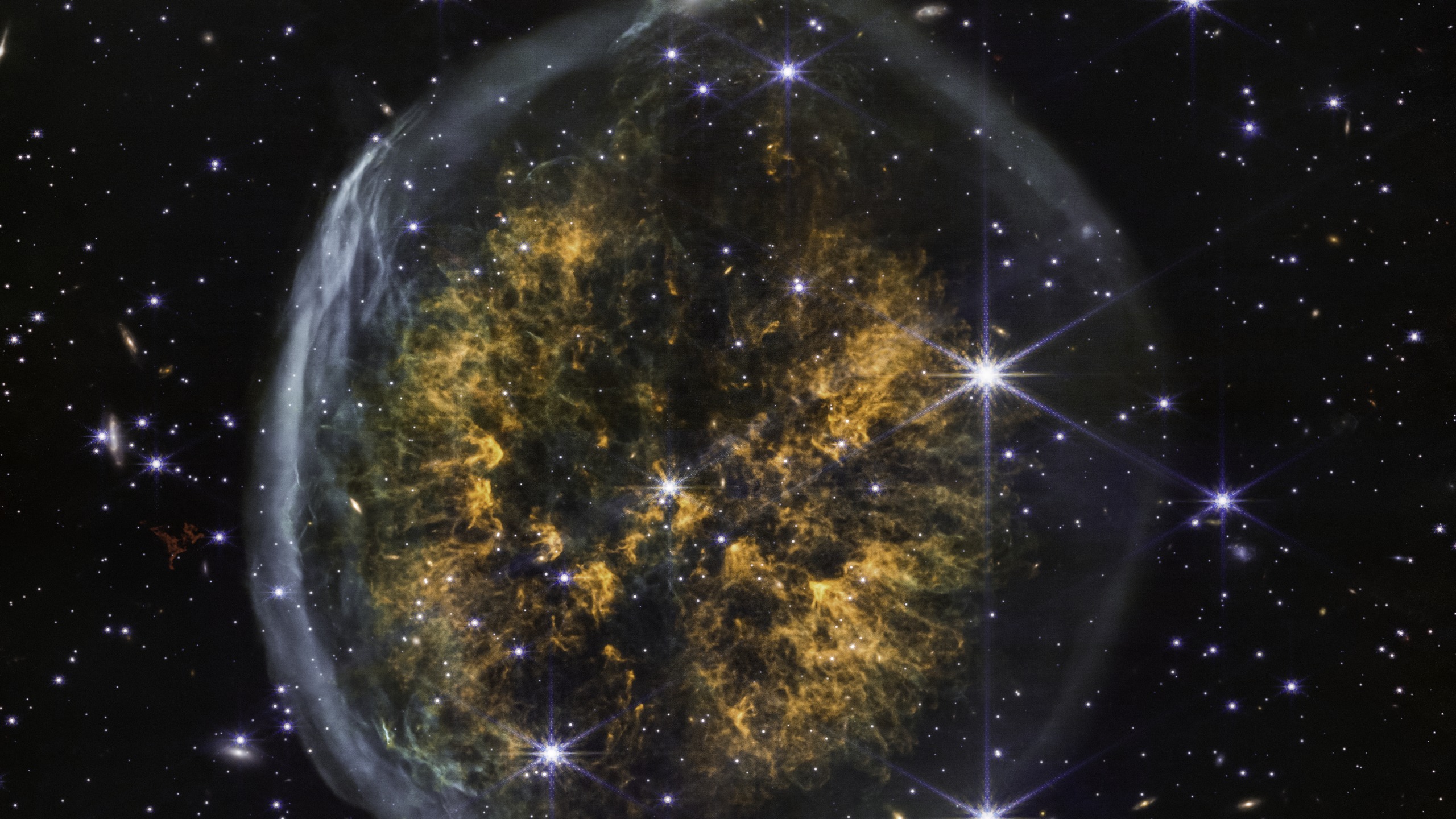
NASA's James Webb Space Telescope captured this near-infrared view of the PMR 1 "Exposed Cranium" nebula using its NIRCam instrument. More stars and background galaxies shine through in this near-infrared light, and the dark center lane that gives the nebula its distinctive brain-like appearance is especially noticeable here.
36k downloads
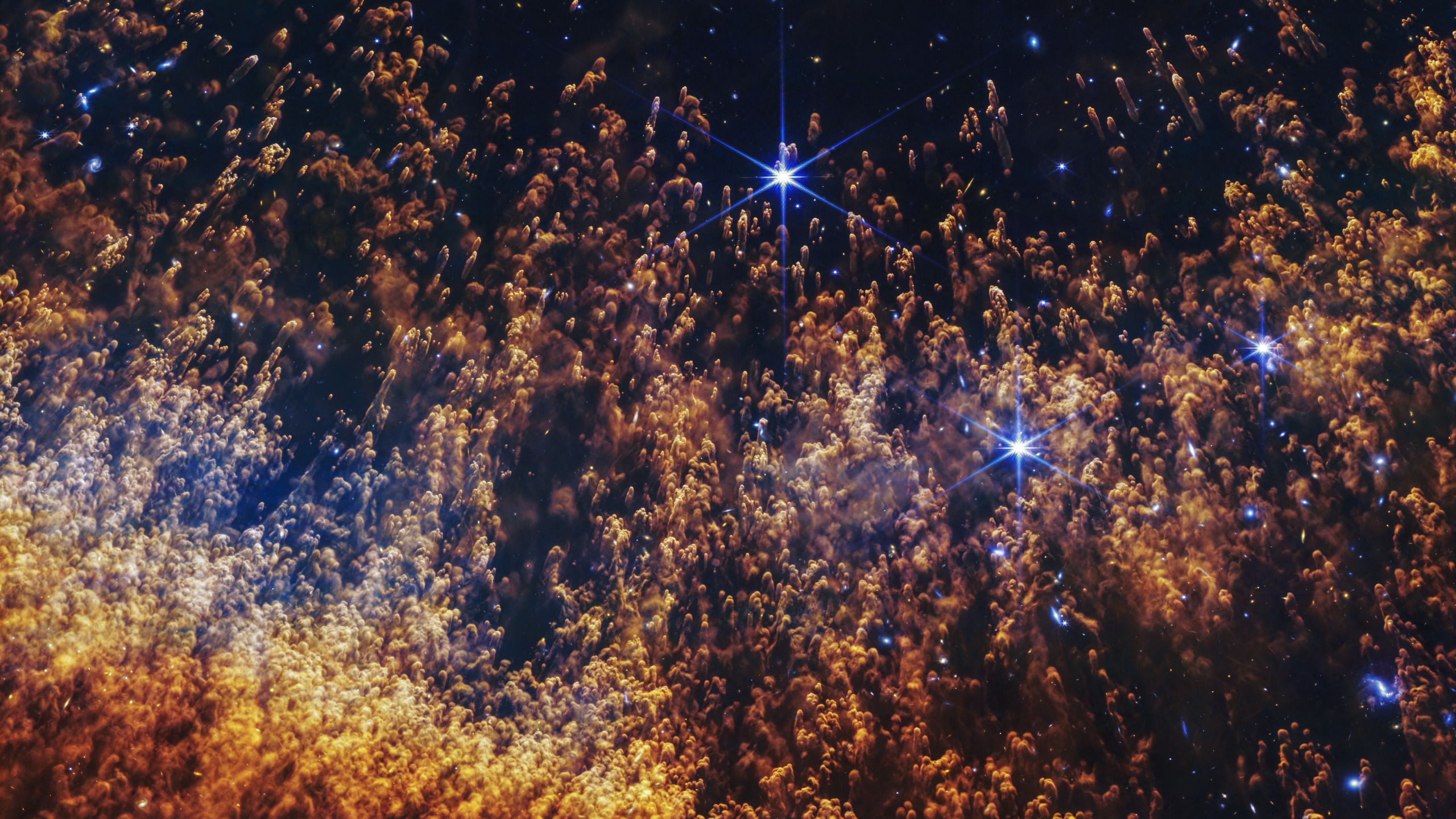
This new image of a portion of the Helix Nebula from NASA’s James Webb Space Telescope highlights comet-like knots shaped by fierce stellar winds and layers of gas and dust shed off by a dying star interacting with its surrounding environment. Webb’s image also shows the stark transition between the hottest gas to the coolest gas as the shell expands out from the central white dwarf.
23.5k downloads
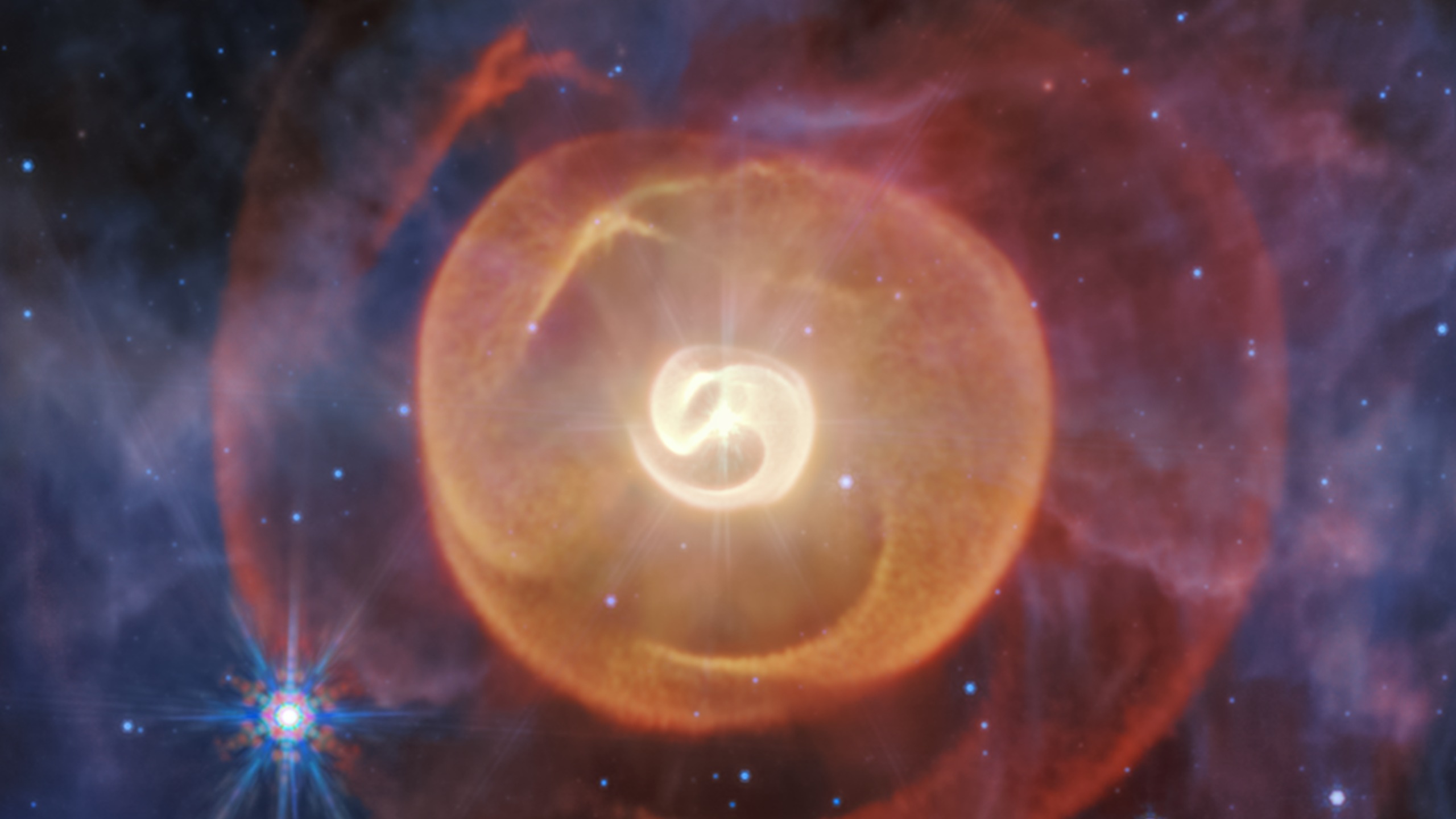
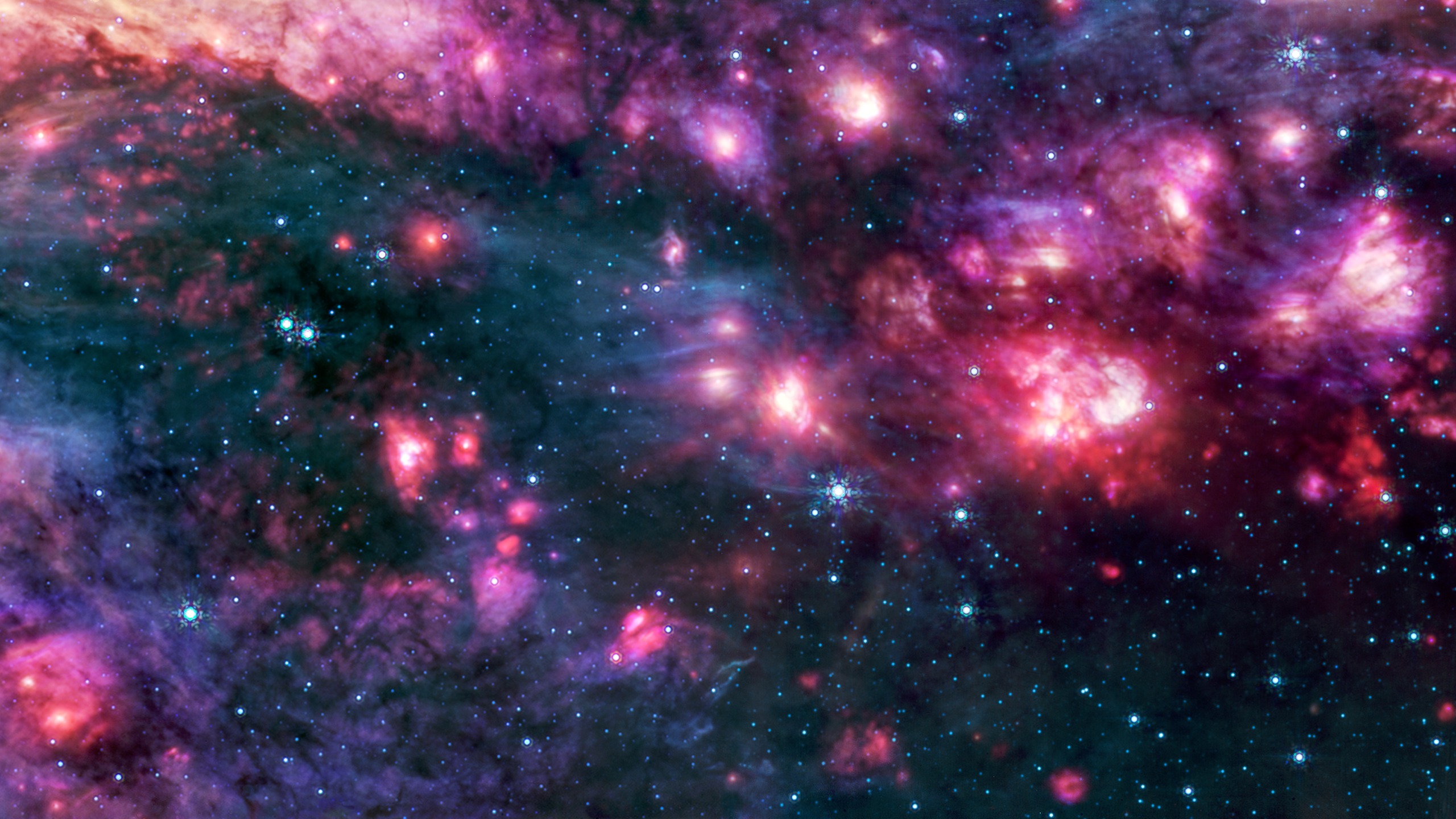
Webb's MIRI (Mid-Infrared Instrument) shows the Sagittarius B2 (Sgr B2) region in mid-infrared light, with warm dust glowing brightly. To the right is one clump of clouds that captured astronomers' attention. It is redder than the rest of the clouds in the image and corresponds to an area that other telescopes have shown to be one of the most molecularly rich regions known.
15k downloads
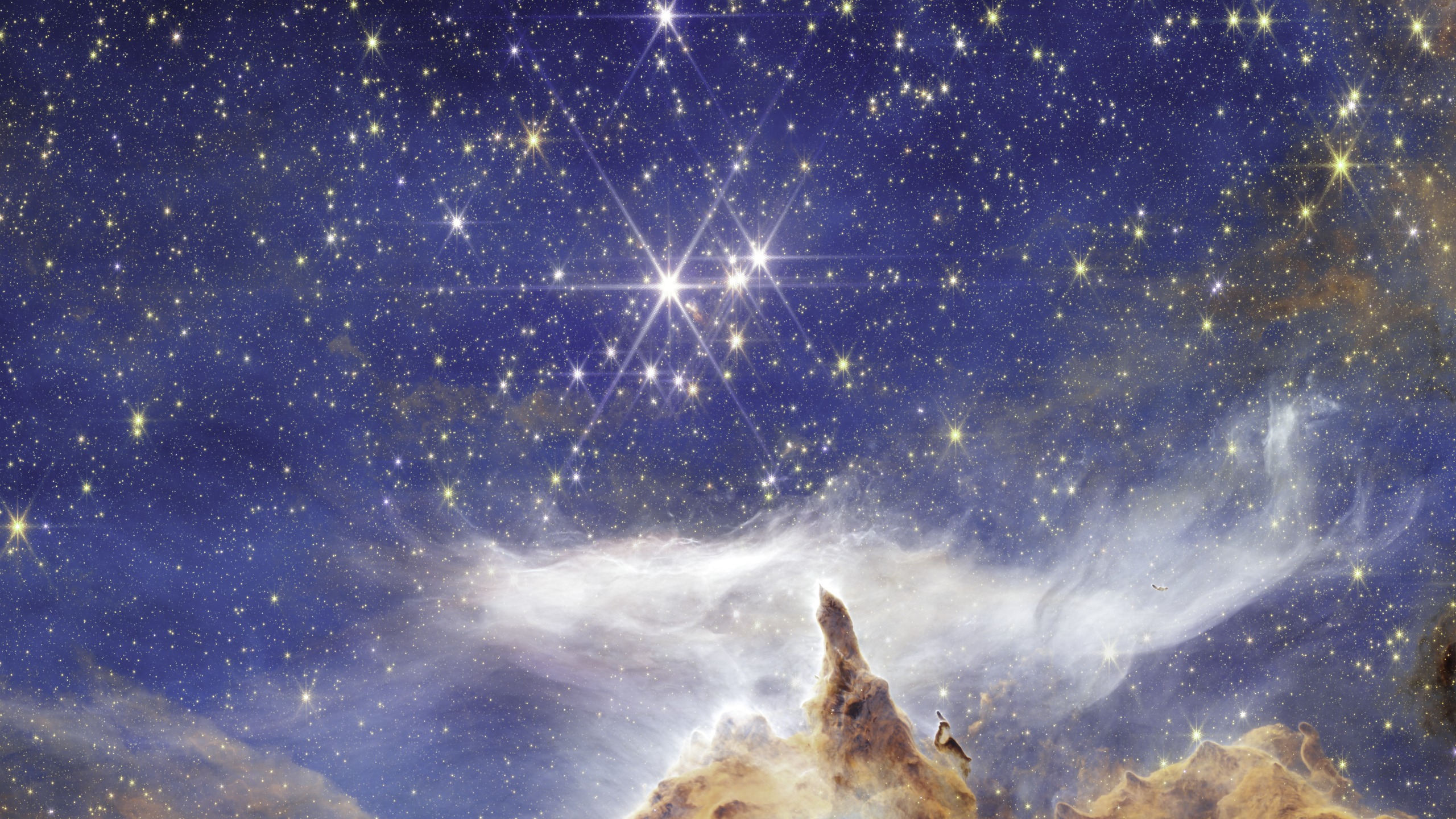
Webb captured this sparkling scene of star birth in Pismis 24, a young star cluster about 5,500 light-years from Earth in the constellation Scorpius. This region is one of the best places to explore the properties of hot young stars and how they evolve. Read the full image description.
16.8k downloads
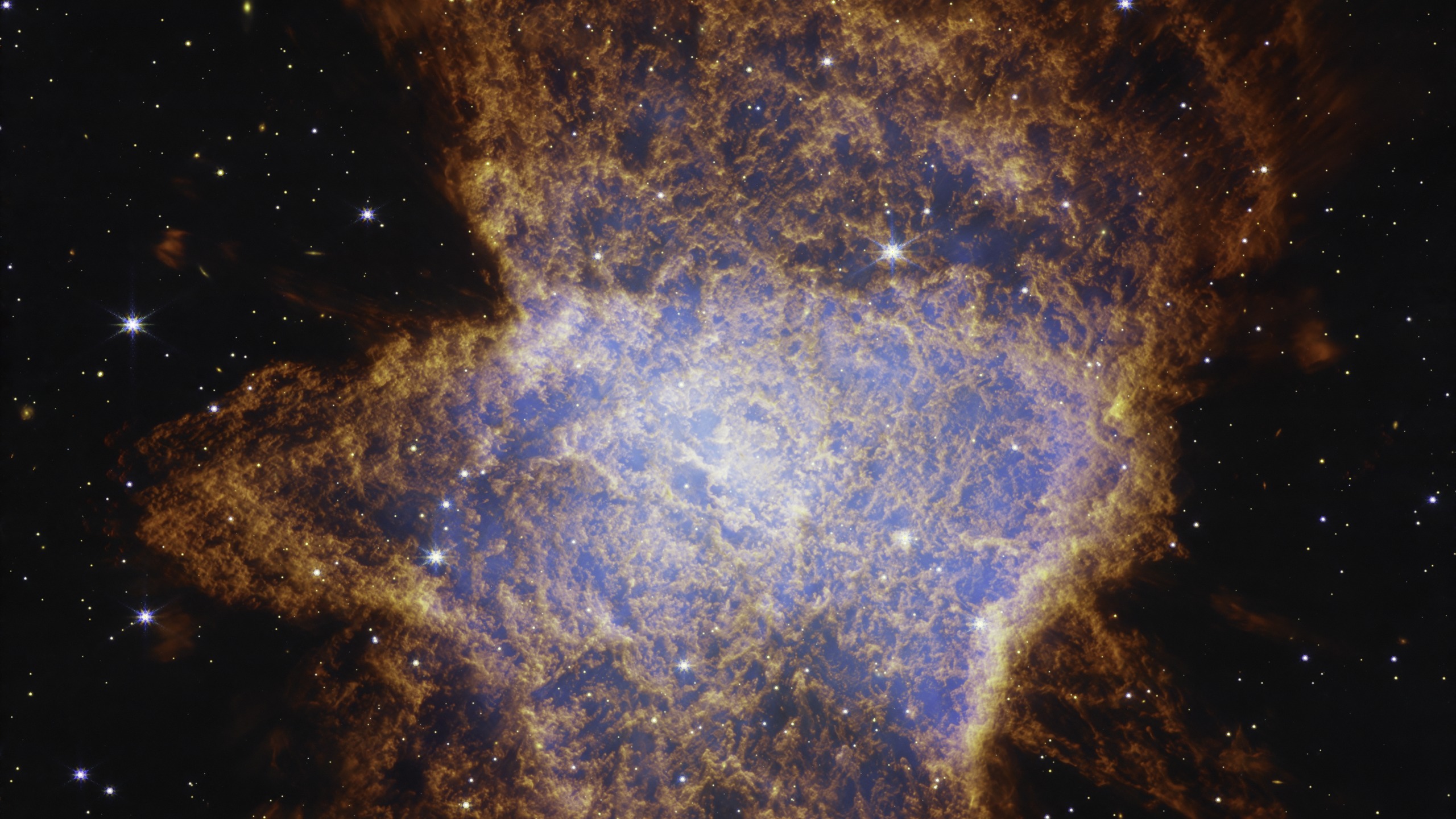
NASA’s James Webb Space Telescope’s view of planetary nebula NGC 6072 in the near-infrared shows a complex scene of multiple outflows expanding out at different angles from a dying star at the center of the scene. There is one stretching from roughly 11 to 5 o’clock, another from 1 to 7 o’clock, and possibly a third from 12 to 6 o’clock. These outflows push gas toward the equatorial plane, forming a disk that appears to span from 9 to 3 o’clock. Astronomers suspect there is at least one other star interacting with the material cast off by the central dying star, creating the abnormal appearance of this planetary nebula. In this image, the red areas represent cool molecular gas, for example, molecular hydrogen. Read the full image description.
27.2k downloads
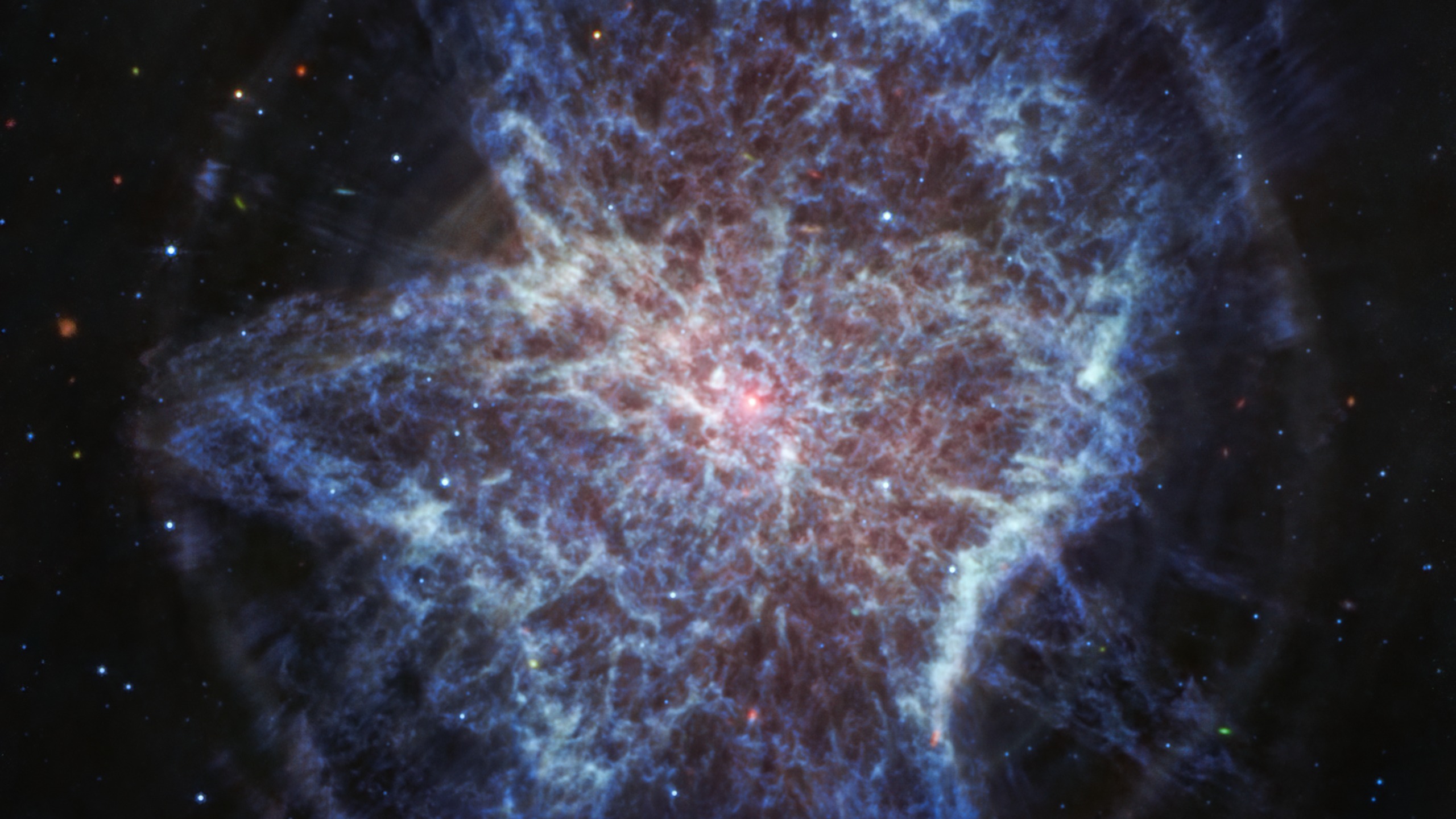
The mid-infrared view of planetary nebula NGC 6072 from NASA's James Webb Space Telescope shows expanding circular shells around the outflows from the dying central star, which astronomers suspect is the pinkish white dot at the center of the image. The longer wavelengths captured by Webb's MIRI (Mid-Infrared Instrument) highlight the dust being cast off by the central dying star. In this image, the blue represents cool molecular gas that is seen in red in the near-infrared image from Webb's NIRCam (Near-Infrared Camera) due to color mapping.
38.7k downloads
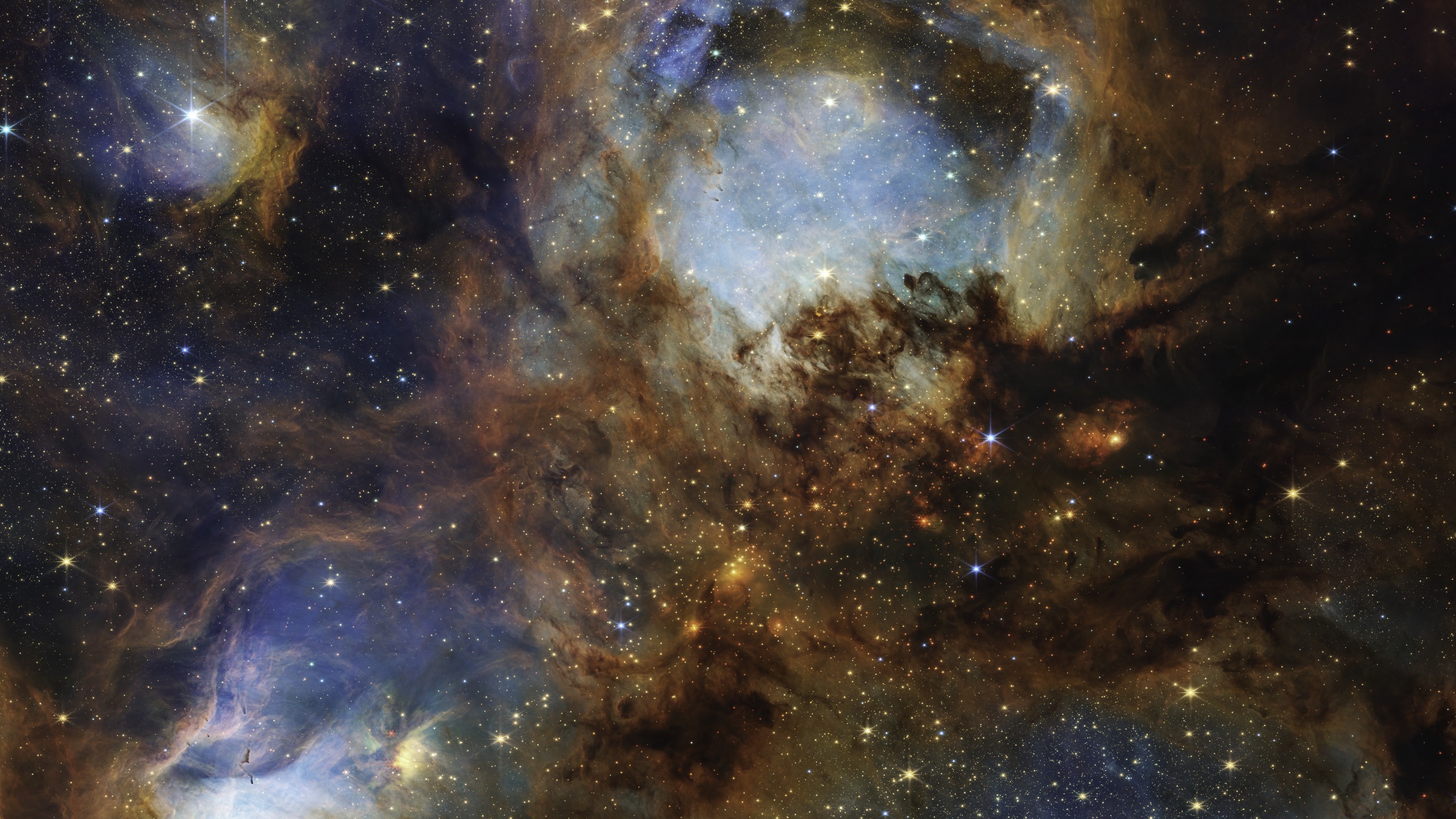
To celebrate NASA’s James Webb Space Telescope’s third year of highly productive science, astronomers used the telescope to scratch beyond the surface of the Cat’s Paw Nebula (NGC 6334), a massive, local star-forming region. This area is of great interest to scientists, having been subject to previous study by NASA’s Hubble and retired Spitzer space telescopes, as they seek to understand the multiple steps required for a turbulent molecular cloud to transition to stars. With its near-infrared capabilities and sharp resolution, the telescope “clawed” back a portion of a singular “toe bean,” revealing a subset of mini toe bean-reminiscent structures composed of gas, dust, and young stars. Webb’s view reveals a chaotic scene still in development: Massive young stars are carving away at nearby gas and dust, while their bright starlight is producing a bright nebulous glow represented in blue. This is only a chapter in the region’s larger story. The disruptive young stars, with their relatively short lifespans and luminosity, will eventually quench the local star formation process. The Cat’s Paw Nebula is located approximately 4,000 light-years away in the constellation Scorpius. To dive deeper into Webb’s image of the Cat’s Paw, embark on a narrated tour, get closer to the image, or read the press release. Additionally, learn more about Webb’s three years of science observations.
38.1k downloads
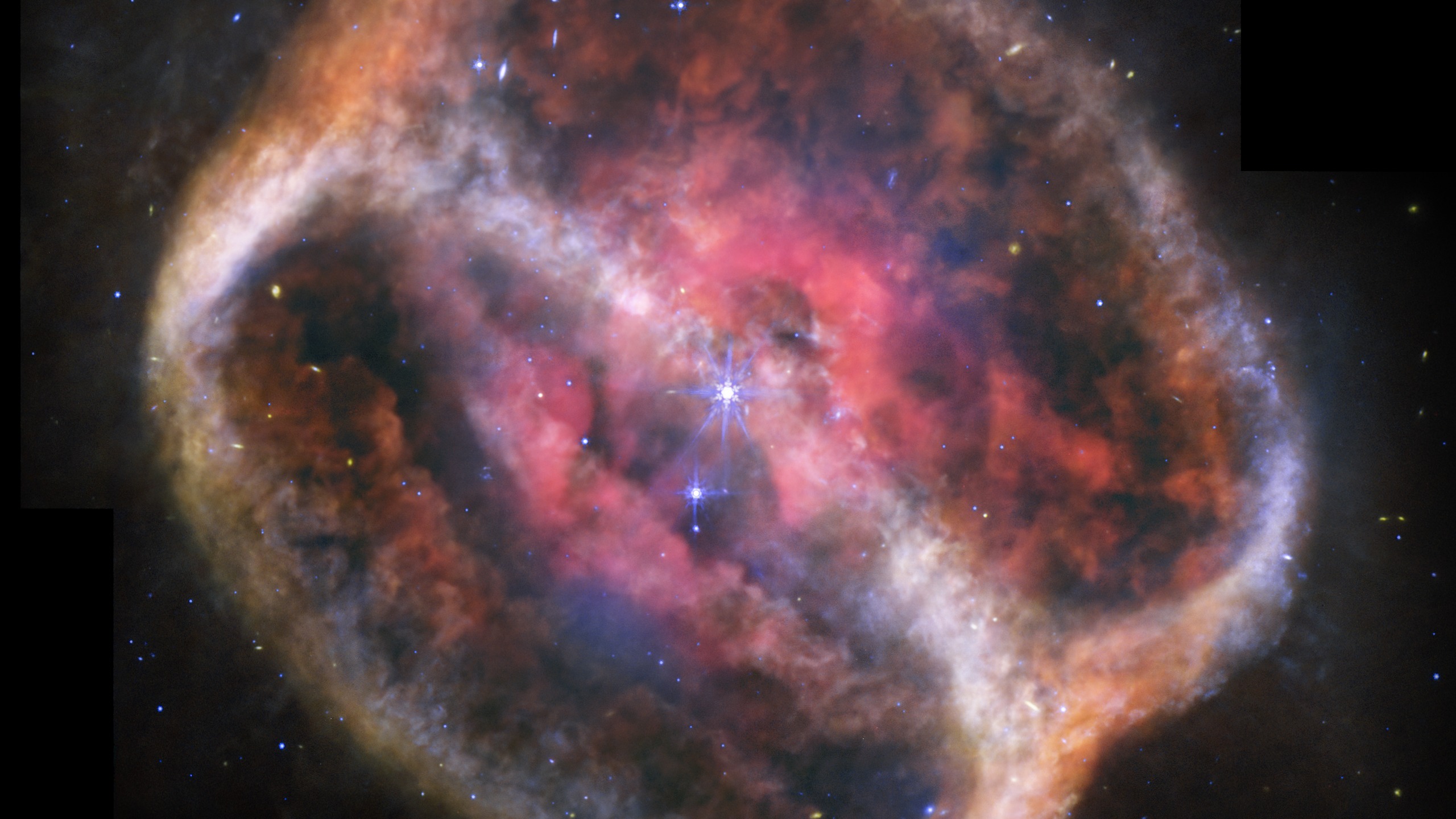
NASA’s James Webb Space Telescope has taken the most detailed image of planetary nebula NGC 1514 to date thanks to its unique mid-infrared observations. Webb shows its rings as intricate clumps of dust. It’s also easier to see holes punched through the bright pink central region.
23.9k downloads
![Serpens Nebula, HBC 672, [EC 92] 82](https://pub-cec02c1cd1fa469cb88cc3510c091268.r2.dev/wallpapers/serpens-nebula/serpens-nebula-2560x1440.jpg)
In this image of the Serpens Nebula from the Near-Infrared Camera (NIRCam) on NASA’s James Webb Space Telescope, astronomers found a grouping of aligned protostellar outflows within one small region (the top left corner). In the Webb image, these jets are signified by bright clumpy streaks that appear red, which are shockwaves from the jet hitting surrounding gas and dust. The Serpens Nebula, located 1,300 light-years from Earth, is home to a particularly dense cluster of newly forming stars (~100,000 years old), some of which will eventually grow to the mass of our Sun. This region has been home to other coincidental discoveries, including the flapping “Bat Shadow,” which earned its name when 2020 data from NASA’s Hubble Space Telescope revealed a shadow from a star’s planet-forming disk to flap, or shift. This feature is visible at the center of the Webb image. To the right of the “Bat Shadow” lies another intriguing feature—an eye-shaped crevice, which appears as if a star is bursting through. However, astronomers say looks may be deceiving here. This could just be gases of different densities layered on top of one another, similar to what is seen in the famous Pillars of Creation. And to the right of that, an extremely dark patch could be a similar occurrence. This gas and dust are so dense in comparison to the rest of the region, no near-infrared light is getting through.
30.3k downloads
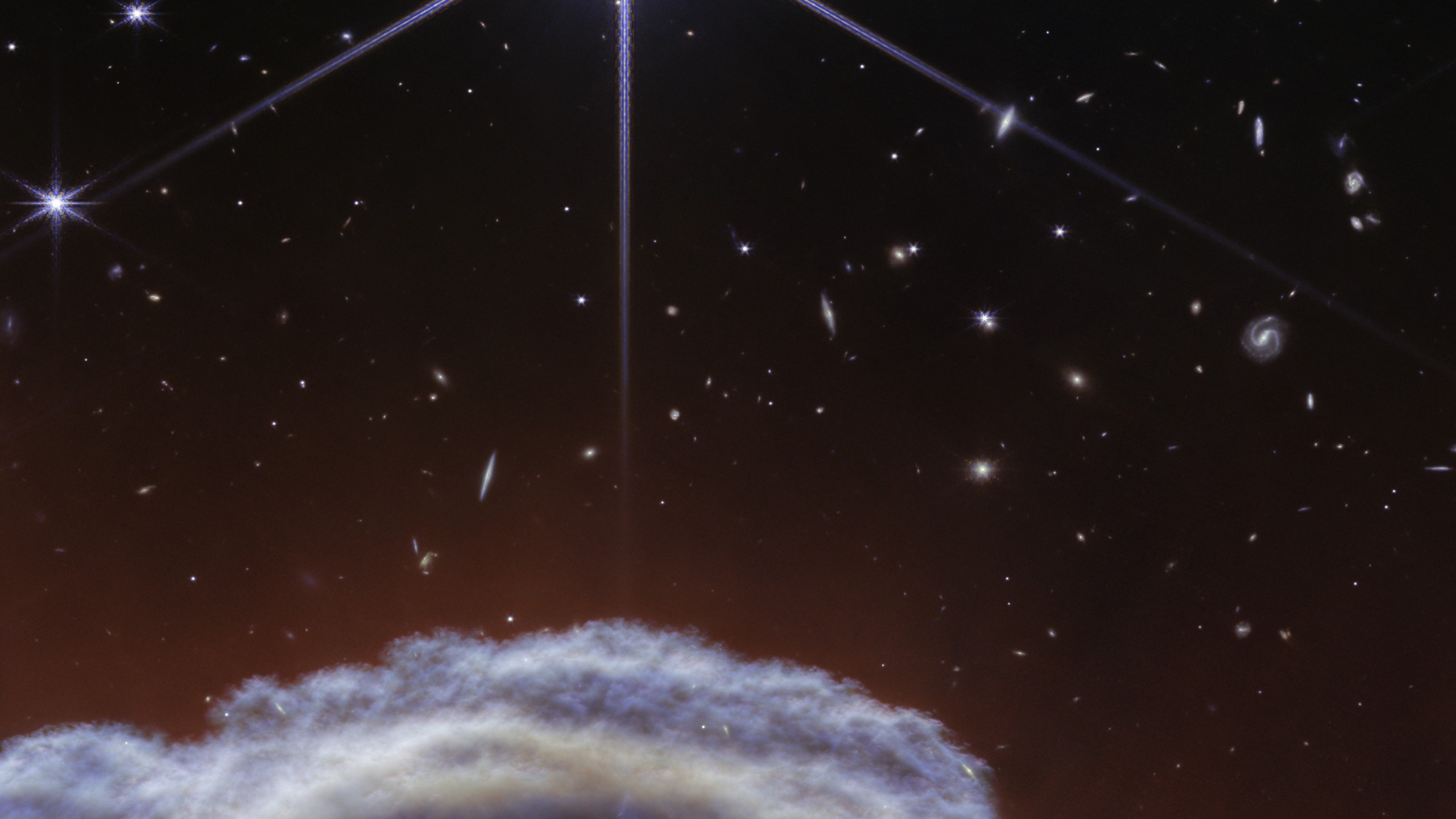
This image of the Horsehead Nebula from NASA’s James Webb Space Telescope focuses on a portion of the horse’s “mane” that is about 0.8 light-years in width. It was taken with Webb’s NIRCam (Near-infrared Camera). The ethereal clouds that appear blue at the bottom of the image are filled with a variety of materials including hydrogen, methane, and water ice. Red-colored wisps extending above the main nebula represent both atomic and molecular hydrogen. In this area, known as a photodissociation region, ultraviolet light from nearby young, massive stars creates a mostly neutral, warm area of gas and dust between the fully ionized gas above and the nebula below. As with many Webb images, distant galaxies are sprinkled in the background. This image is composed of light at wavelengths of 1.4 and 2.5 microns (represented in blue), 3.0 and 3.23 microns (cyan), 3.35 microns (green), 4.3 microns (yellow), and 4.7 and 4.05 microns (red).
24.2k downloads
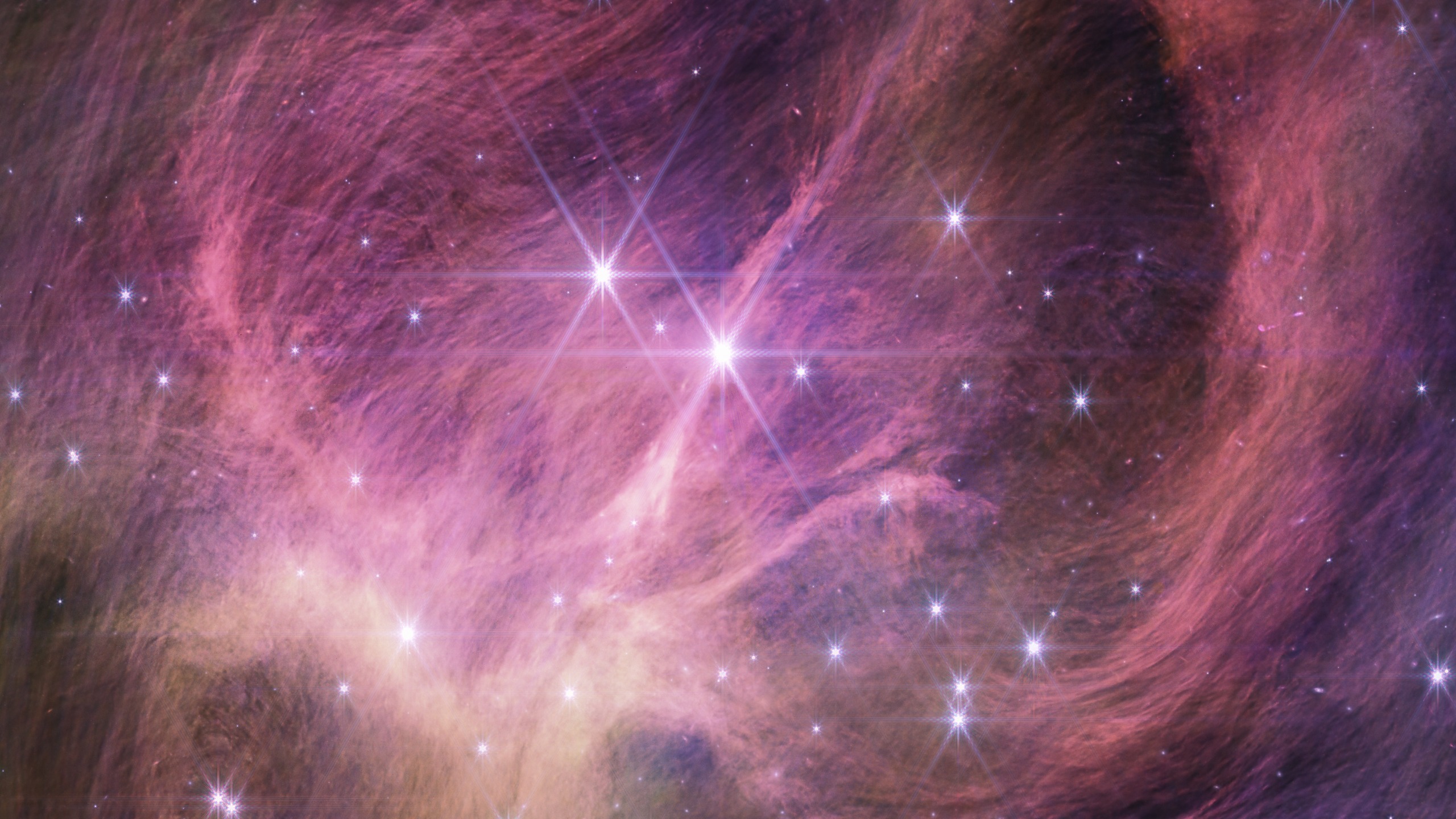
This image from the NIRCam (Near-Infrared Camera) instrument on NASA’s James Webb Space Telescope shows the central portion of the star cluster IC 348. Astronomers combed the cluster in search of tiny, free-floating brown dwarfs: objects too small to be stars but larger than most planets. They found three brown dwarfs that are less than eight times the mass of Jupiter. The smallest weighs just three to four times Jupiter, challenging theories for star formation. The wispy curtains filling the image are interstellar material reflecting the light from the cluster’s stars – what is known as a reflection nebula. The material also includes carbon-containing molecules known as polycyclic aromatic hydrocarbons, or PAHs. The bright star closest to the center of the frame is actually a pair of type B stars in a binary system, which are the most massive stars in the cluster. Winds from these stars may help sculpt the large loop seen on the right side of the field of view.
37.5k downloads
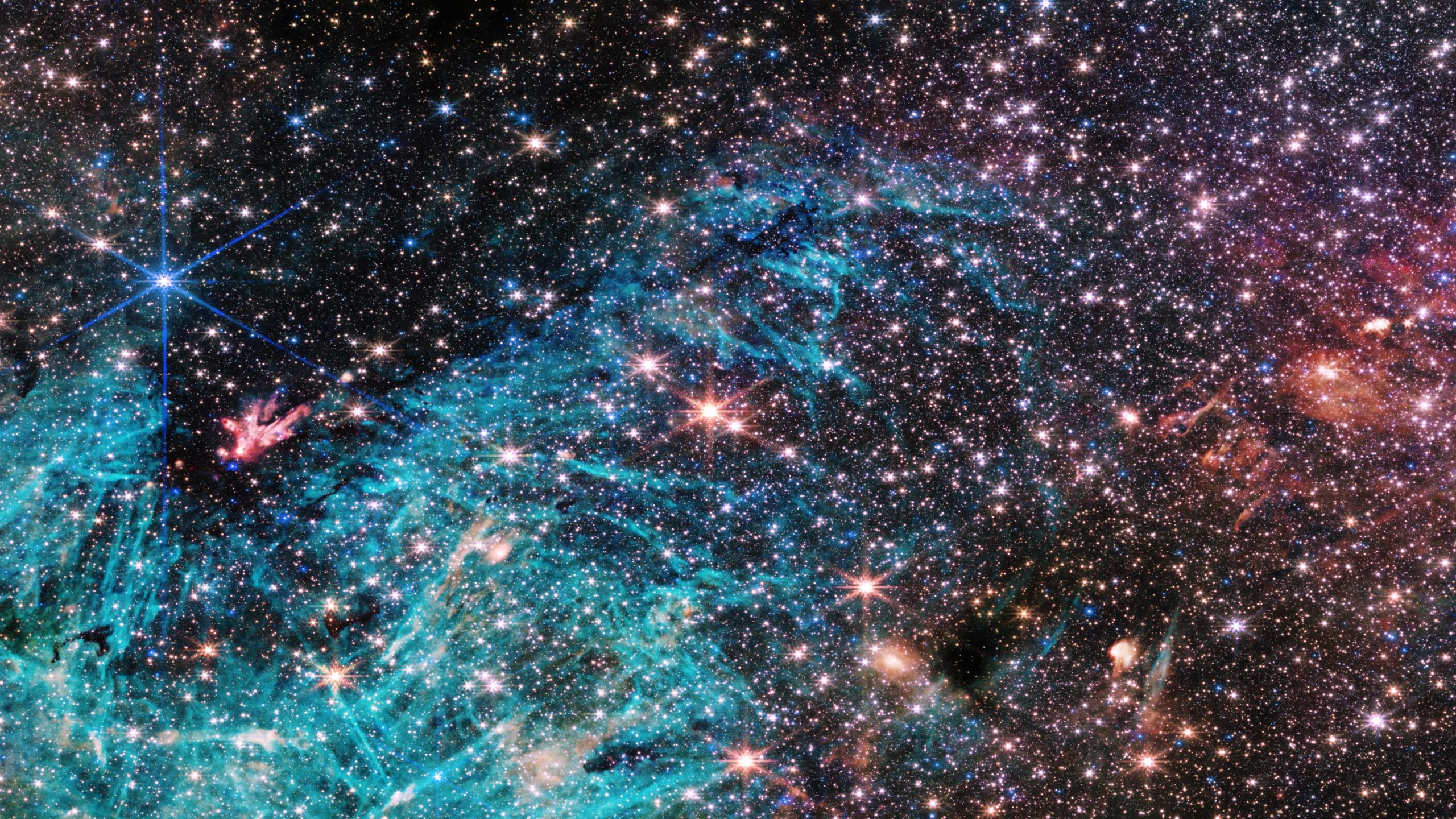
The full view of the James Webb Space Telescope’s NIRCam (Near-Infrared Camera) instrument reveals a 50 light-years-wide portion of the Milky Way’s dense center. An estimated 500,000 stars shine in this image of the Sagittarius C (Sgr C) region, along with some as-yet unidentified features. A vast region of ionized hydrogen, shown in cyan, wraps around an infrared-dark cloud, which is so dense that it blocks the light from distant stars behind it. Intriguing needle-like structures in the ionized hydrogen emission lack any uniform orientation. Researchers note the surprising extent of the ionized region, covering about 25 light-years. A cluster of protostars – stars that are still forming and gaining mass – are producing outflows that glow like a bonfire at the base of the large infrared-dark cloud, indicating that they are emerging from the cloud’s protective cocoon and will soon join the ranks of the more mature stars around them. Smaller infrared-dark clouds dot the scene, appearing like holes in the starfield. Researchers say they have only begun to dig into the wealth of unprecedented high-resolution data that Webb has provided on this region, and many features bear detailed study. This includes the rose-colored clouds on the right side of the image, which have never been seen in such detail.
25.5k downloads
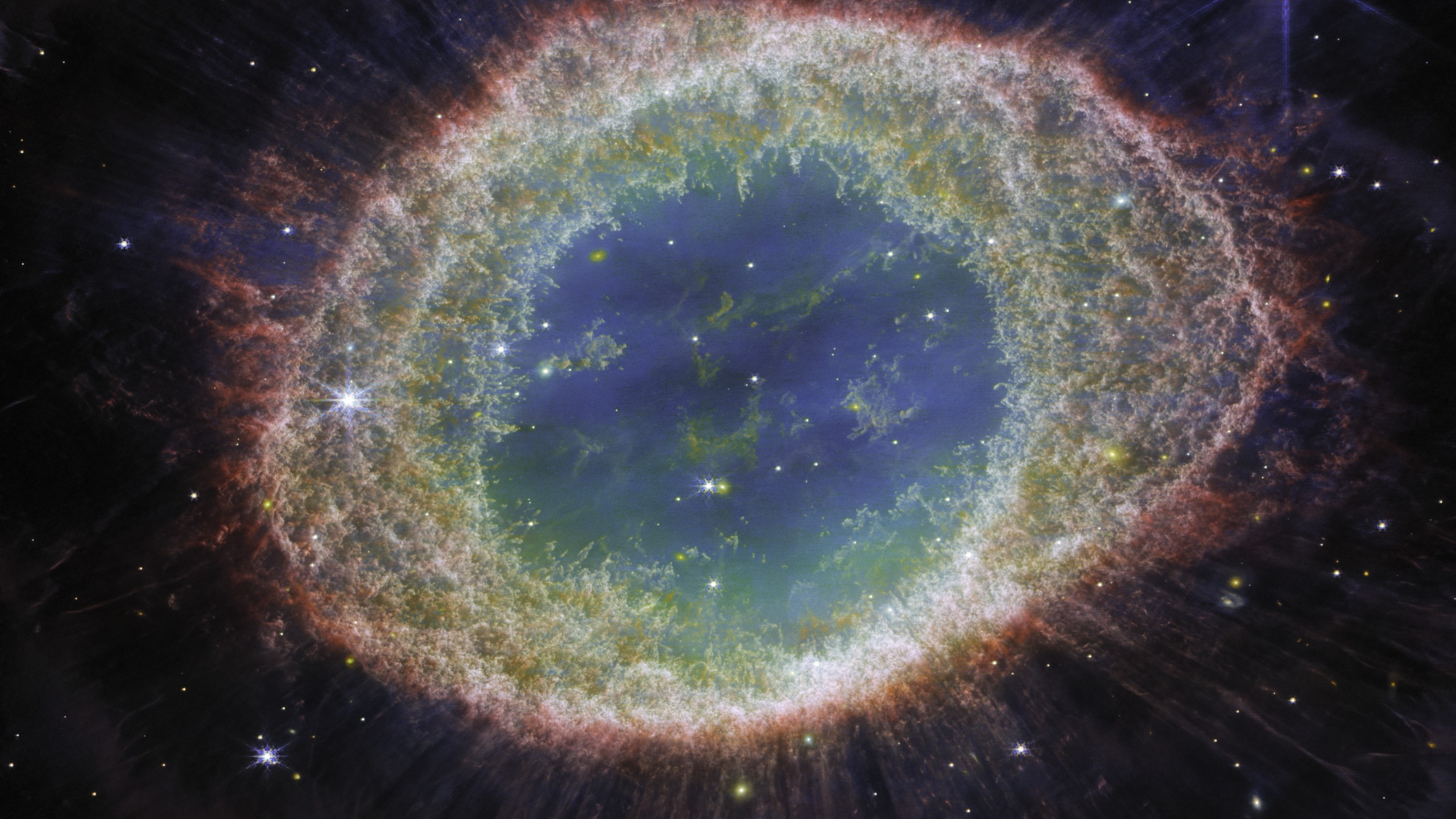
NASA’s James Webb Space Telescope has observed the well-known Ring Nebula in unprecedented detail. Formed by a star throwing off its outer layers as it runs out of fuel, the Ring Nebula is an archetypal planetary nebula. Also known as M57 and NGC 6720, it is relatively close to Earth at roughly 2,500 light-years away. This new image from Webb’s NIRCam (Near-Infrared Camera) provides unprecedented spatial resolution and spectral sensitivity. For example, the intricate details of the filament structure of the inner ring are particularly visible in this dataset. There are some 20,000 dense globules in the nebula, which are rich in molecular hydrogen. In contrast, the inner region shows very hot gas. The main shell contains a thin ring of enhanced emission from carbon-based molecules known as polycyclic aromatic hydrocarbons (PAHs). Roughly ten concentric arcs are located just beyond the outer edge of the main ring. The arcs are thought to originate from the interaction of the central star with a low-mass companion orbiting at a distance comparable to that between the Earth and Pluto. In this way, nebulae like the Ring Nebula reveal a kind of astronomical archaeology, as astronomers study the nebula to learn about the star that created it.
15.6k downloads
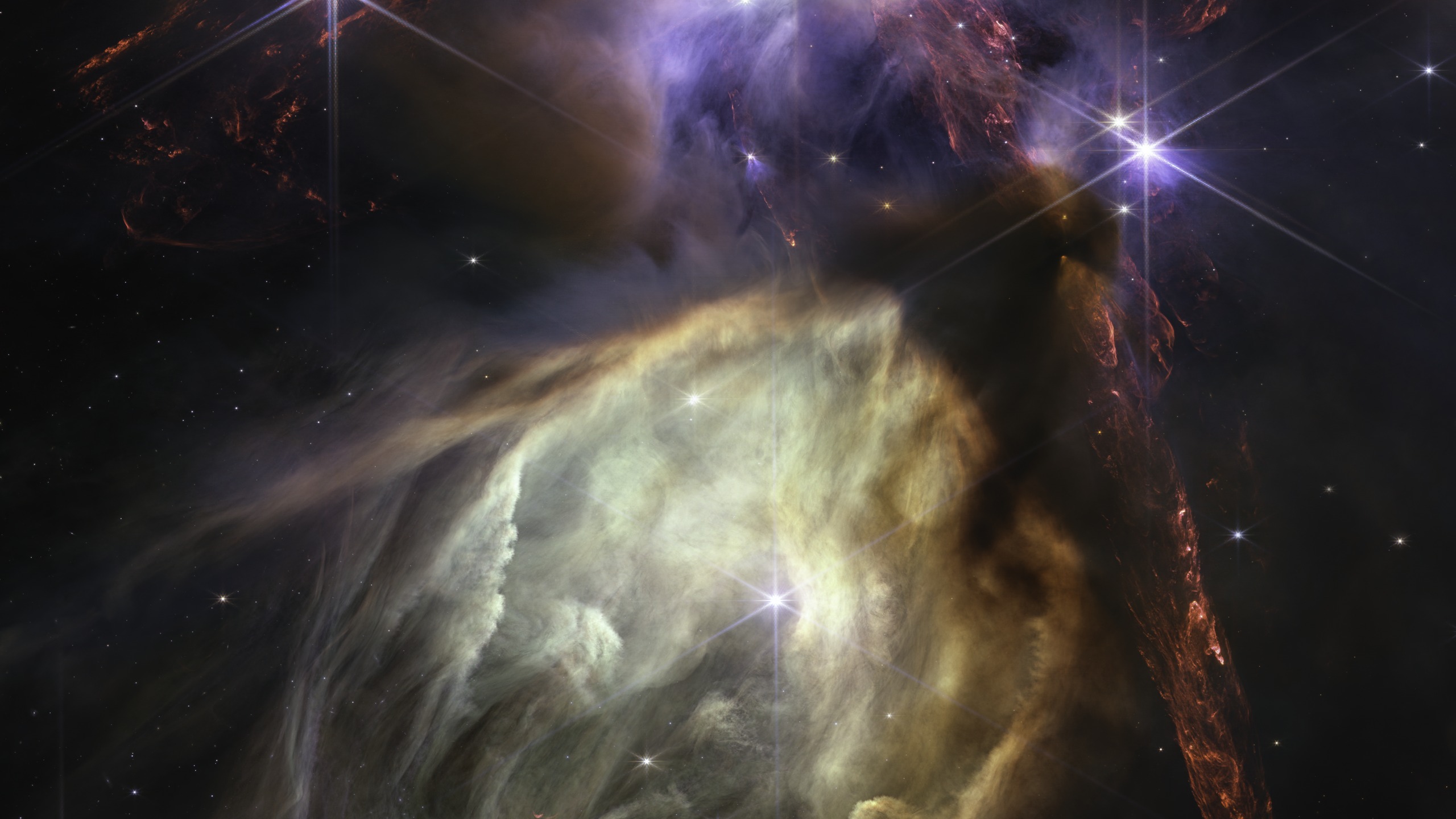
The first anniversary image from NASA’s James Webb Space Telescope displays star birth like it’s never been seen before, full of detailed, impressionistic texture. The subject is the Rho Ophiuchi cloud complex, the closest star-forming region to Earth. It is a relatively small, quiet stellar nursery, but you’d never know it from Webb’s chaotic close-up. Jets bursting from young stars crisscross the image, impacting the surrounding interstellar gas and lighting up molecular hydrogen, shown in red. Some stars display the telltale shadow of a circumstellar disk, the makings of future planetary systems. The young stars at the center of many of these disks are similar in mass to the Sun, or smaller. The heftiest in this image is the star S1, which appears amid a glowing cave it is carving out with its stellar winds in the lower half of the image. The lighter-colored gas surrounding S1 consists of polycyclic aromatic hydrocarbons, a family of carbon-based molecules that are among the most common compounds found in space. For more detail on what is happening where in Webb’s image of Rho Ophiuchi, watch the video tour and read the press release.
7.2k downloads
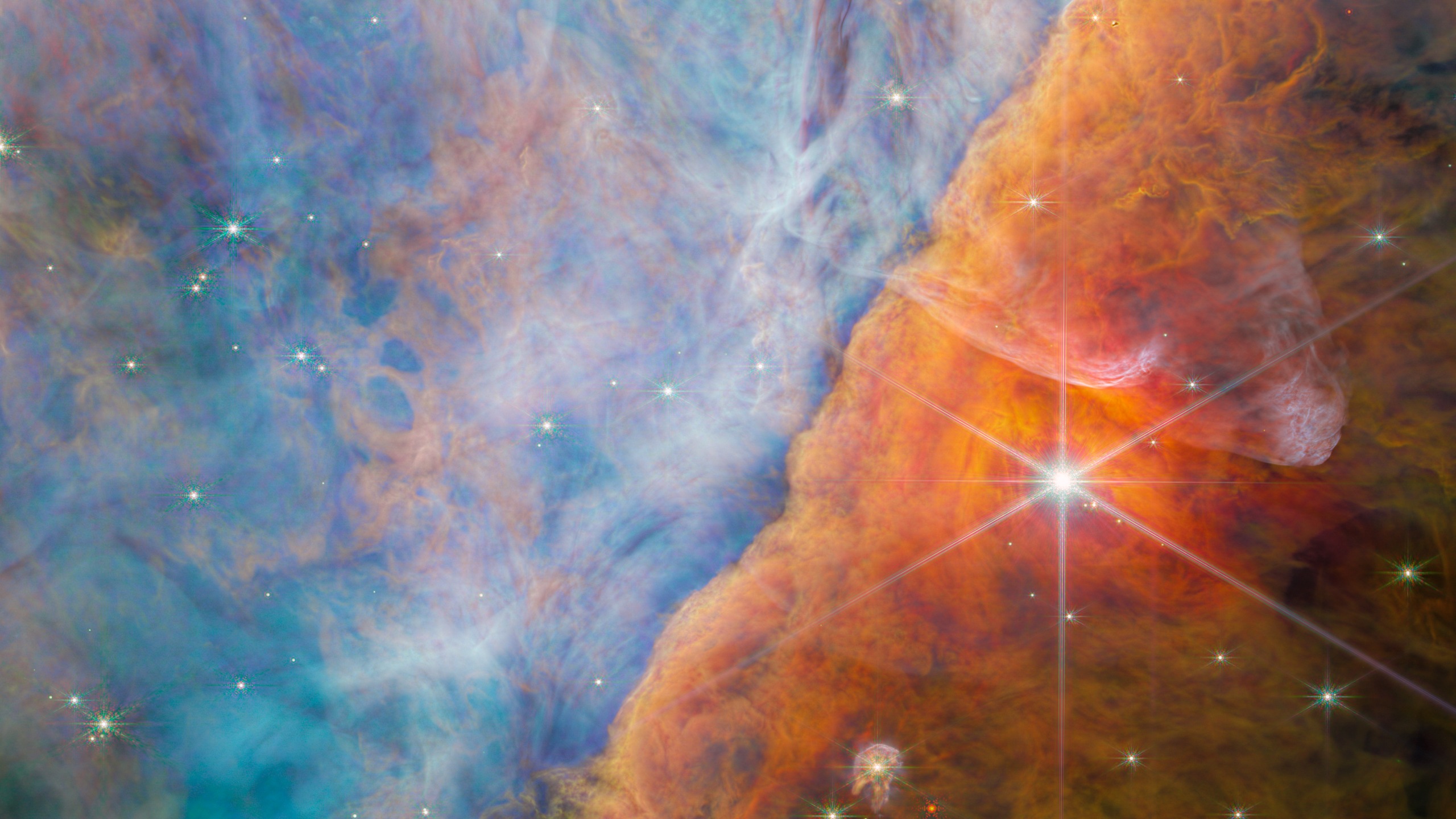
This image taken by Webb’s NIRCam (Near-Infrared Camera) shows a part of the Orion Nebula known as the Orion Bar. It is a region where energetic ultraviolet light from the Trapezium Cluster — located off the upper-left corner — interacts with dense molecular clouds. The energy of the stellar radiation is slowly eroding the Orion Bar, and this has a profound effect on the molecules and chemistry in the protoplanetary disks that have formed around newborn stars here. Within this image lies a young star system known as d203-506, which has a protoplanetary disk. Astronomers used Webb to detect a carbon molecule known as methyl cation in that disk for the first time. That molecule is important because it aids the formation of more complex carbon-based molecules.
18.6k downloads
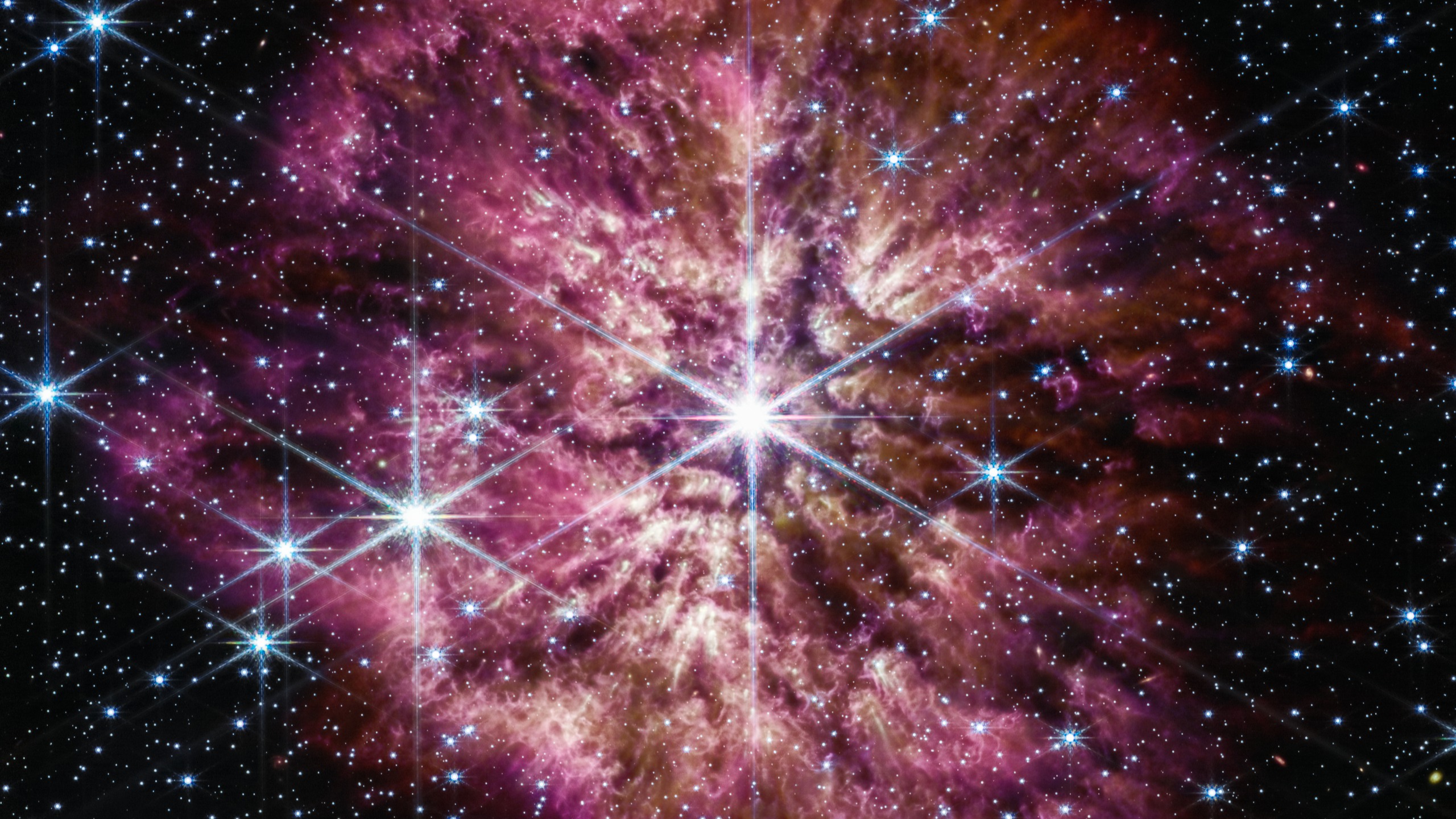
The luminous, hot star Wolf-Rayet 124 (WR 124) is prominent at the center of the James Webb Space Telescope’s composite image combining near-infrared and mid-infrared wavelengths of light. The star displays the characteristic diffraction spikes of Webb’s Near-Infrared Camera (NIRCam), caused by the physical structure of the telescope itself. NIRCam effectively balances the brightness of the star with the fainter gas and dust surrounding it, while Webb’s Mid-Infrared Instrument (MIRI) reveals the nebula’s structure. Background stars and background galaxies populate the field of view and peek through the nebula of gas and dust that has been ejected from the aging massive star to span 10 light-years across space. A history of the star’s past episodes of mass can be read in the nebula’s structure. Rather than smooth shells, the nebula is formed from random, asymmetric ejections. Bright clumps of gas and dust appear like tadpoles swimming toward the star, with tails streaming out behind them, blown back by the stellar wind. This image combines various filters from both Webb imaging instruments, with the color red assigned to wavelengths of 4.44, 4.7, 12.8, and 18 microns (F444W, F470N, F1280W, F1800W), green to 2.1, 3.35, and 11.3 microns (F210M, F335M, F1130W), and blue to 0.9, 1.5, and 7.7 microns (F090W, F150W, F770W).
30.4k downloads
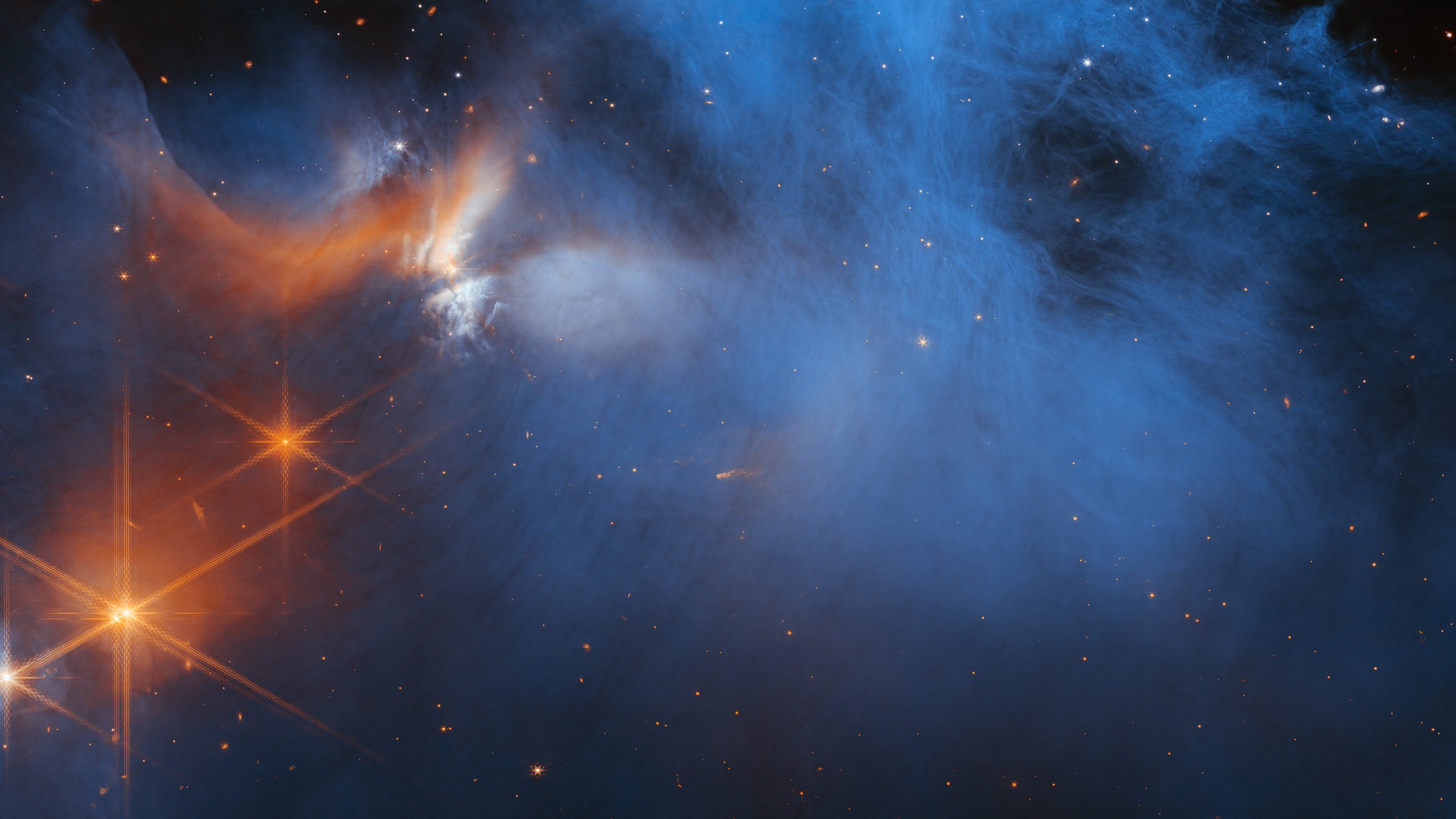
This image by NASA’s James Webb Space Telescope’s Near-Infrared Camera (NIRCam) features the central region of the Chamaeleon I dark molecular cloud, which resides 630 light years away. The cold, wispy cloud material (blue, center) is illuminated in the infrared by the glow of the young, outflowing protostar Ced 110 IRS 4 (orange, upper left). The light from numerous background stars, seen as orange dots behind the cloud, can be used to detect ices in the cloud, which absorb the starlight passing through them. An international team of astronomers has reported the discovery of diverse ices in the darkest regions of a cold molecular cloud measured to date by studying this region. This result allows astronomers to examine the simple icy molecules that will be incorporated into future exoplanets, while opening a new window on the origin of more complex molecules that are the first step in the creation of the building blocks of life.
1.3k downloads
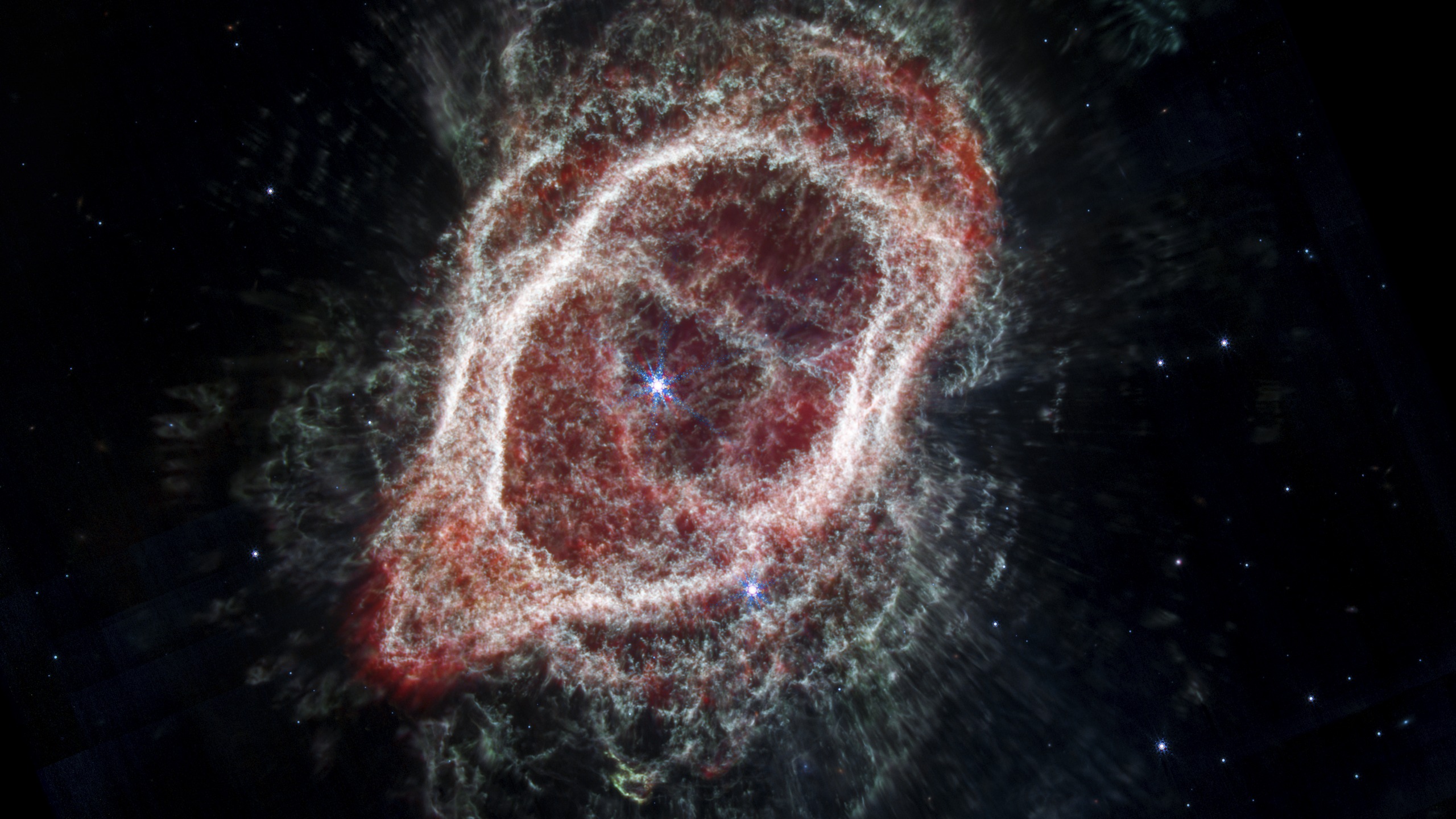
Webb's image traces the star's scattered outflows that have reached farther into the cosmos. Most of the molecular gas that lies outside the band of cooler gas is also cold. It is also far clumpier, consisting of dense knots of molecular gas that form a halo around the central stars. By accounting for the temperatures and gas contents in both areas, inside and outside the band, and by combining Webb's data with precise measurements from other observatories, researchers were able to create far more accurate models to demonstrate when gas was ejected by the central star. What about the third star that is visible at the lower-right edge of the band within the nebula? From Webb's vantage point, it appears within the scene, but isn't part of the nebula itself.
11.4k downloads
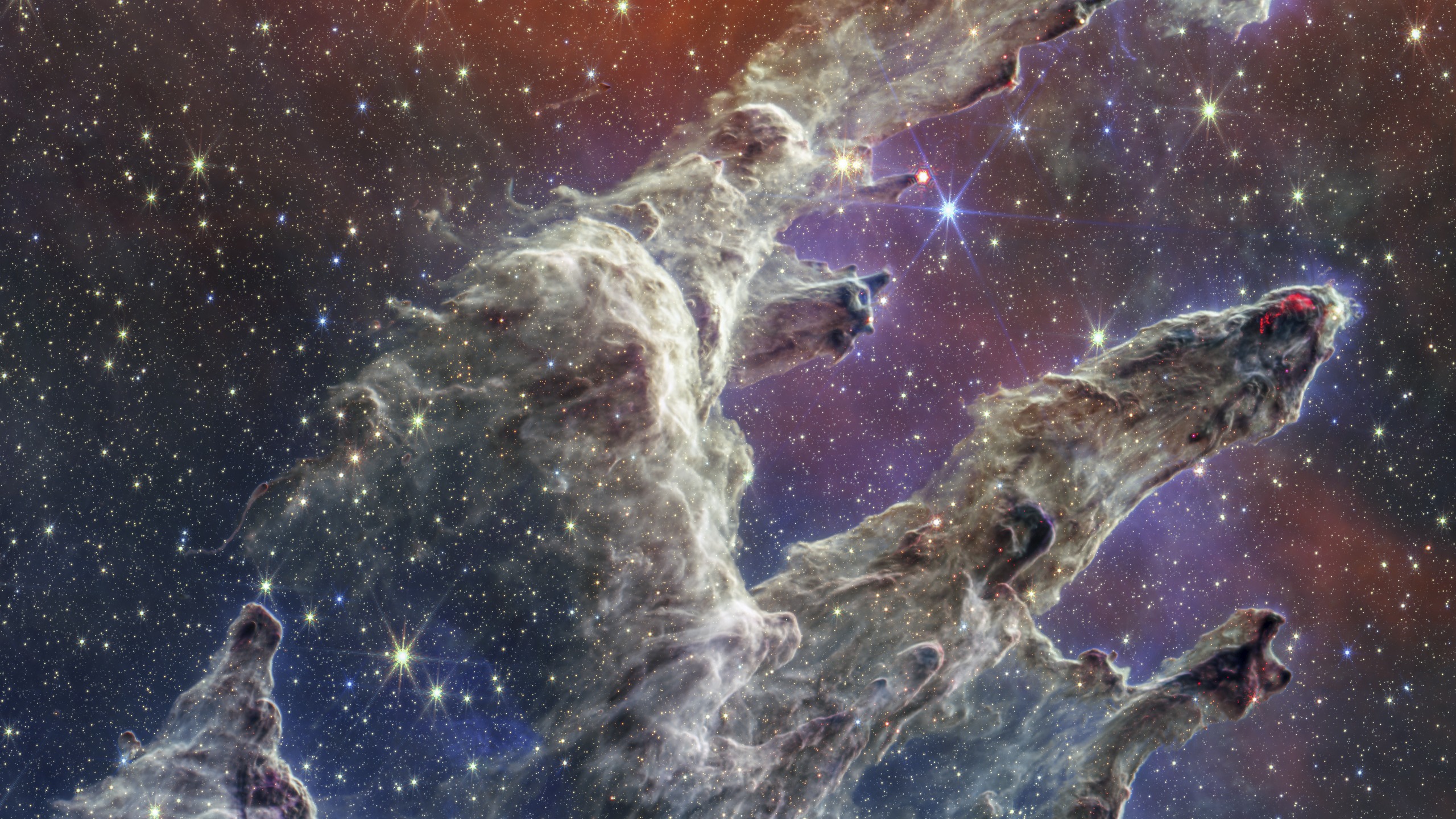
By combining images of the iconic Pillars of Creation from two cameras aboard NASA’s James Webb Space Telescope, the universe has been framed in its infrared glory. Webb’s near-infrared image was fused with its mid-infrared image, setting this star-forming region ablaze with new details. Myriad stars are spread throughout the scene. The stars primarily show up in near-infrared light, marking a contribution of Webb’s Near-Infrared Camera (NIRCam). Near-infrared light also reveals thousands of newly formed stars – look for bright orange spheres that lie just outside the dusty pillars. In mid-infrared light, the dust is on full display. The contributions from Webb’s Mid-Infrared Instrument (MIRI) are most apparent in the layers of diffuse, orange dust that drape the top of the image, relaxing into a V. The densest regions of dust are cast in deep indigo hues, obscuring our view of the activities inside the dense pillars. Dust also makes up the spire-like pillars that extend from the bottom left to the top right. This is one of the reasons why the region is overflowing with stars – dust is a major ingredient of star formation. When knots of gas and dust with sufficient mass form in the pillars, they begin to collapse under their own gravitational attraction, slowly heat up, and eventually form new stars. Newly formed stars are especially apparent at the edges of the top two pillars – they are practically bursting onto the scene. At the top edge of the second pillar, undulating detail in red hints at even more embedded stars. These are even younger, and are quite active as they form. The lava-like regions capture their periodic ejections. As stars form, they periodically send out supersonic jets that can interact within clouds of material, like these thick pillars of gas and dust. These young stars are estimated to be only a few hundred thousand years old, and will continue to form for millions of years. Almost everything you see in this scene is local. The distant universe is largely blocked from our view both by the interstellar medium, which is made up of sparse gas and dust located between the stars, and a thick dust lane in our Milky Way galaxy. As a result, the stars take center stage in Webb’s view of the Pillars of Creation. The Pillars of Creation is a small region within the vast Eagle Nebula, which lies 6,500 light-years away. Revisit Webb’s near-infrared image and its mid-infrared image. The Pillars of Creation was made famous by the Hubble Space Telescope’s 1995 image. NIRCam was built by a team at the University of Arizona and Lockheed Martin’s Advanced Technology Center. MIRI was contributed by ESA and NASA, with the instrument designed and built by a consortium of nationally funded European Institutes (The MIRI European Consortium) in partnership with JPL and the University of Arizona.
20.4k downloads
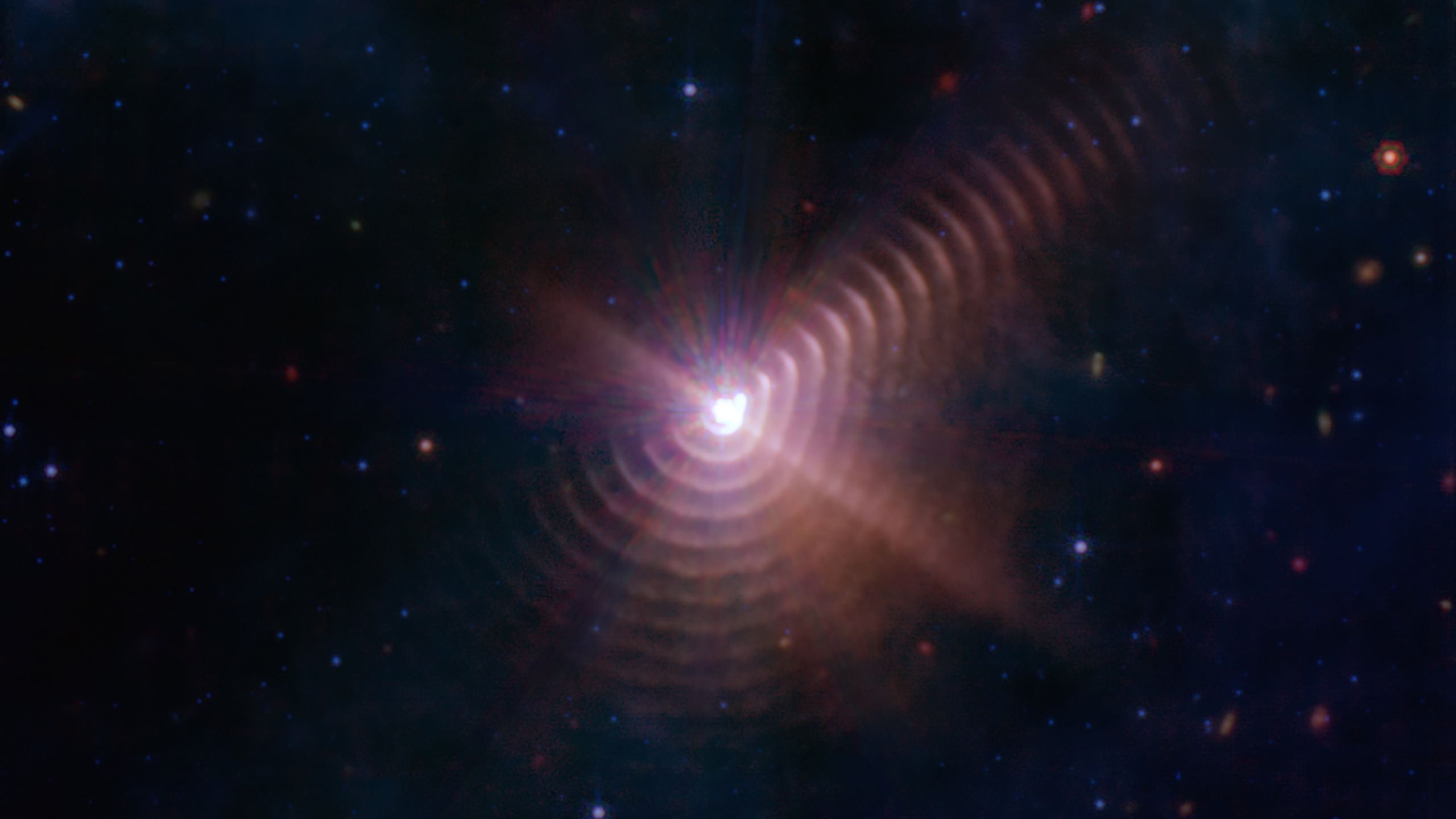
This image from NASA's James Webb Space Telescope reveals at least 17 concentric dust rings emanating from a pair of stars orbiting one another. Located just over 5,000 light-years from Earth, the system is known as Wolf-Rayet 140 because one of the stars is a Wolf-Rayet star. The other is an O-type star, one of the most massive star types known. Each ring was created when the two stars came close together and their stellar winds (streams of gas they blow into space) collided, compressing the gas and forming dust. A ring is produced once per orbit, every 7.93 years. A Wolf-Rayet star is an O-type star born with at least 25 times more mass than our Sun that is nearing the end of its life, when it will likely collapse directly to black hole, or explode as a supernova. These delays between periods of dust production create the unique ring pattern. Some Wolf-Rayet binaries in which the stars are close enough together and have circular orbits produce dust continuously, often forming a pinwheel pattern. WR 140's rings are also referred to as shells because they are not perfectly circular and are thicker and wider than they appear in the image. The rings appear brighter in some areas but are almost invisible in others, rather than forming a perfect "bullseye" pattern. That's because production of dust is variable as the stars get close to one another, and because Webb views the system at an angle and is not looking directly at the orbital plane of the stars. One of the densest regions of dust production creates the bright feature appearing at 2 o'clock. The image was taken by the Mid-Infrared Instrument (MIRI), now managed by the agency's Goddard Space Flight Center. MIRI was developed through a 50-50 partnership between NASA and ESA (European Space Agency).
30.5k downloads
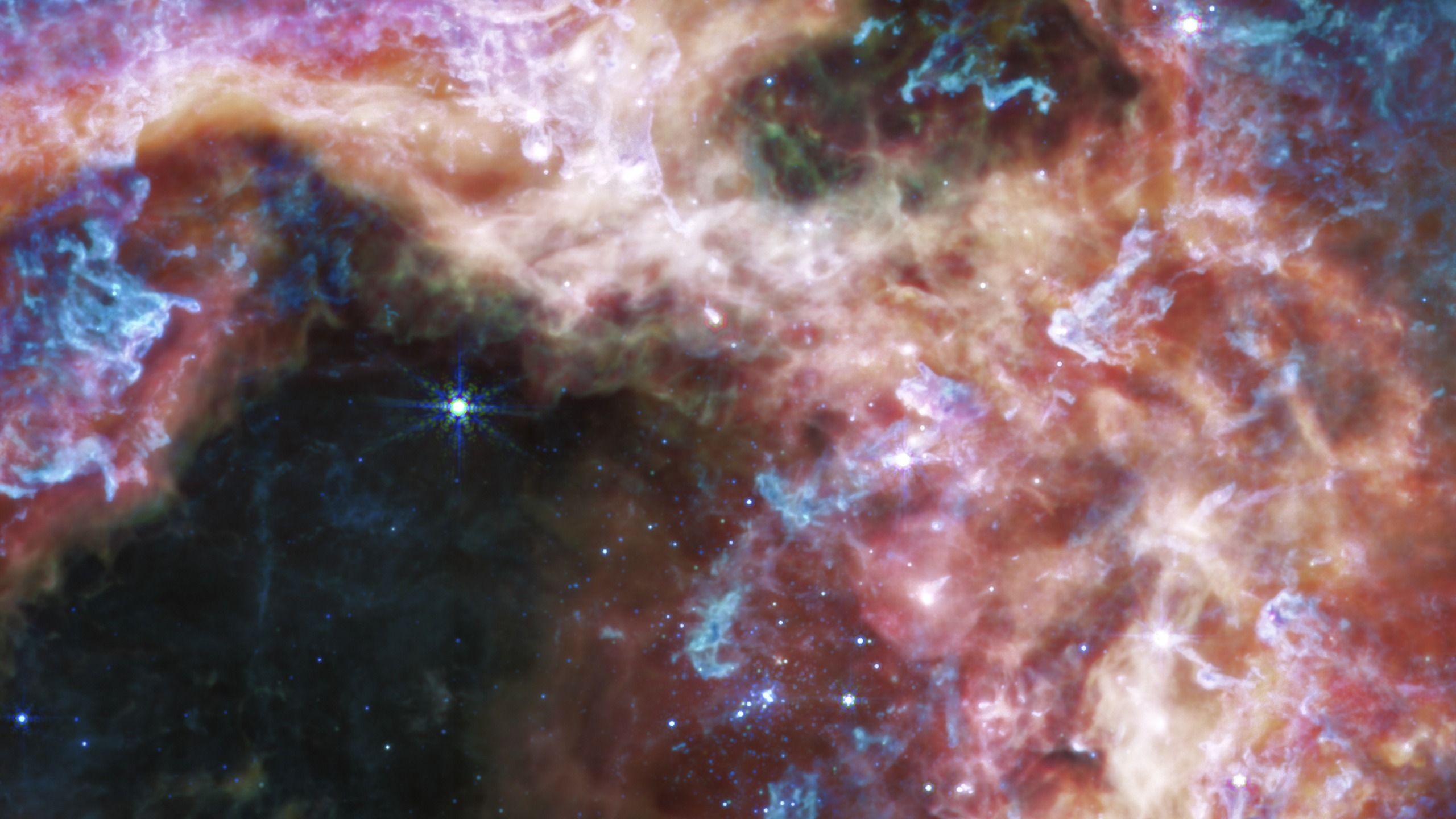
At the longer wavelengths of light captured by its Mid-Infrared Instrument (MIRI), Webb focuses on the area surrounding the central star cluster and unveils a very different view of the Tarantula Nebula. In this light, the young hot stars of the cluster fade in brilliance, and glowing gas and dust come forward. Abundant hydrocarbons light up the surfaces of the dust clouds, shown in blue and purple. Much of the nebula takes on a more ghostly, diffuse appearance because mid-infrared light is able to show more of what is happening deeper inside the clouds. Still-embedded protostars pop into view within their dusty cocoons, including a bright group at the very top edge of the image, left of center. Other areas appear dark, like in the lower-left corner of the image. This indicates the densest areas of dust in the nebula, that even mid-infrared wavelengths cannot penetrate. These could be the sites of future, or current, star formation. MIRI was contributed by ESA and NASA, with the instrument designed and built by a consortium of nationally funded European Institutes (The MIRI European Consortium) in partnership with JPL and the University of Arizona.
38.9k downloads
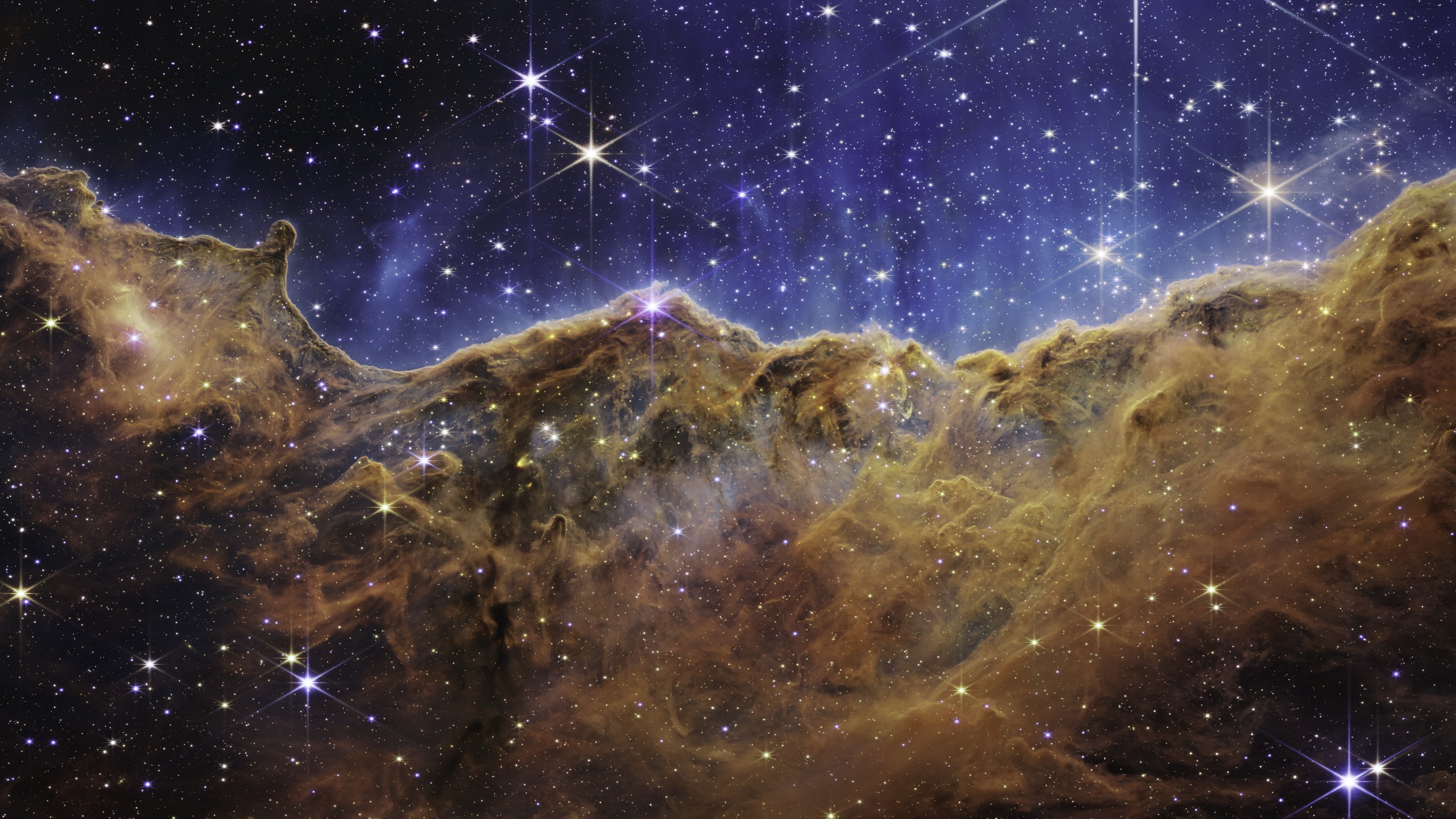
What looks like craggy mountains in moonlight is actually the edge of NGC 3324, a young star-forming region in the Carina Nebula, captured in infrared by Webb's NIRCam. Nicknamed the "Cosmic Cliffs," the region is the edge of a gigantic cavity carved by intense ultraviolet radiation and stellar winds from hot, massive young stars, revealing hundreds of previously hidden stars and background galaxies for the first time.
5.2k downloads
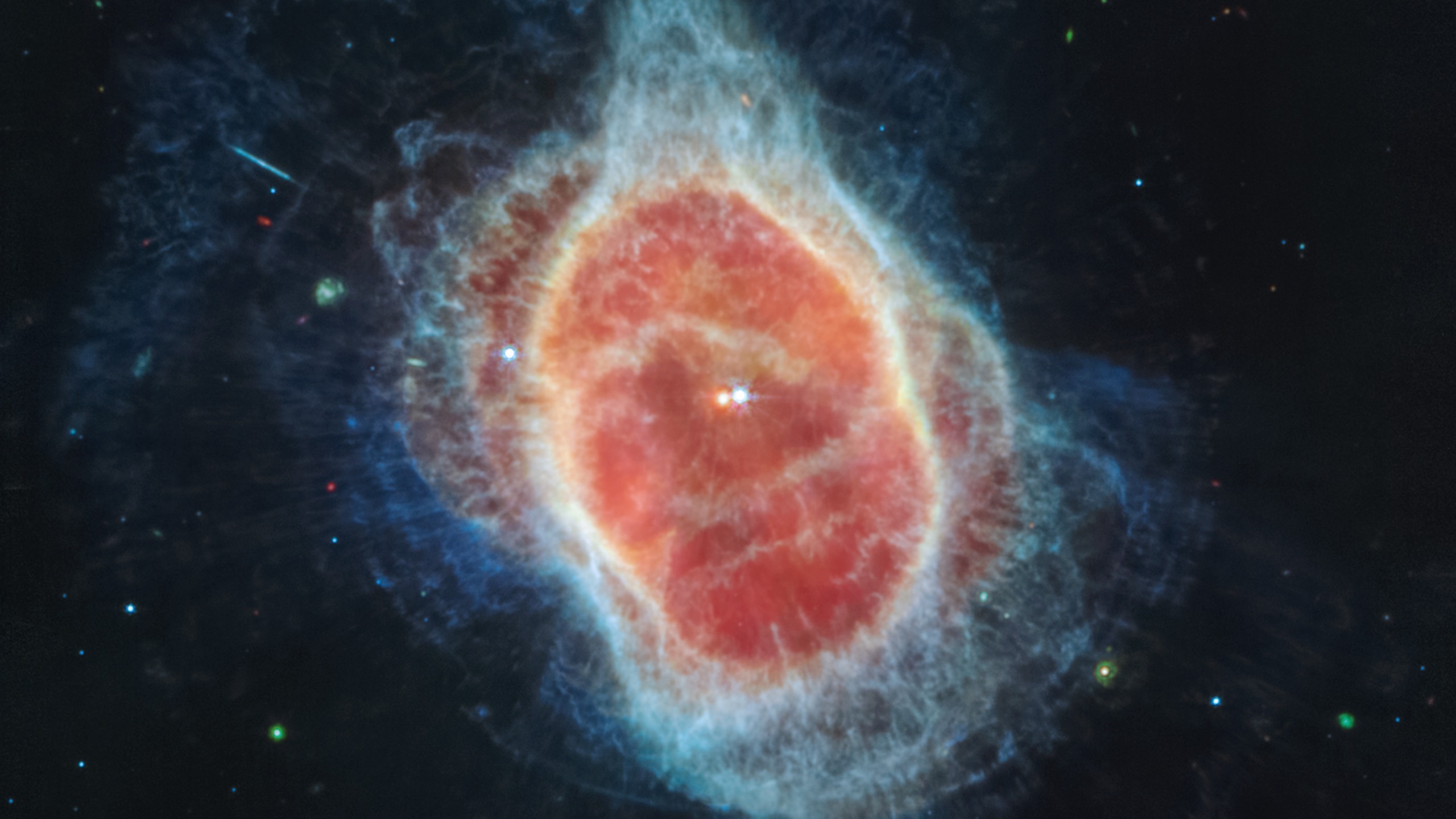
NASA's Webb Telescope has revealed the cloak of dust around the second star, shown at left in red, at the center of the Southern Ring Nebula for the first time. It is a hot, dense white dwarf star. As it transformed into a white dwarf, the star periodically ejected mass, the shells of material you see here. The bluer star at right in this image has also shaped the scene, helping stir up the ejected material. The disk around the stars is also wobbling, shooting out spirals of gas and dust over long periods of time. Webb captured this scene in mid-infrared light, most of which can only be observed from space. Mid-infrared light helps researchers detect objects enshrouded in dust, like the red star. This Mid-Infrared Instrument (MIRI) image also offers an incredible amount of detail, including a cache of distant galaxies in the background.
1k downloads
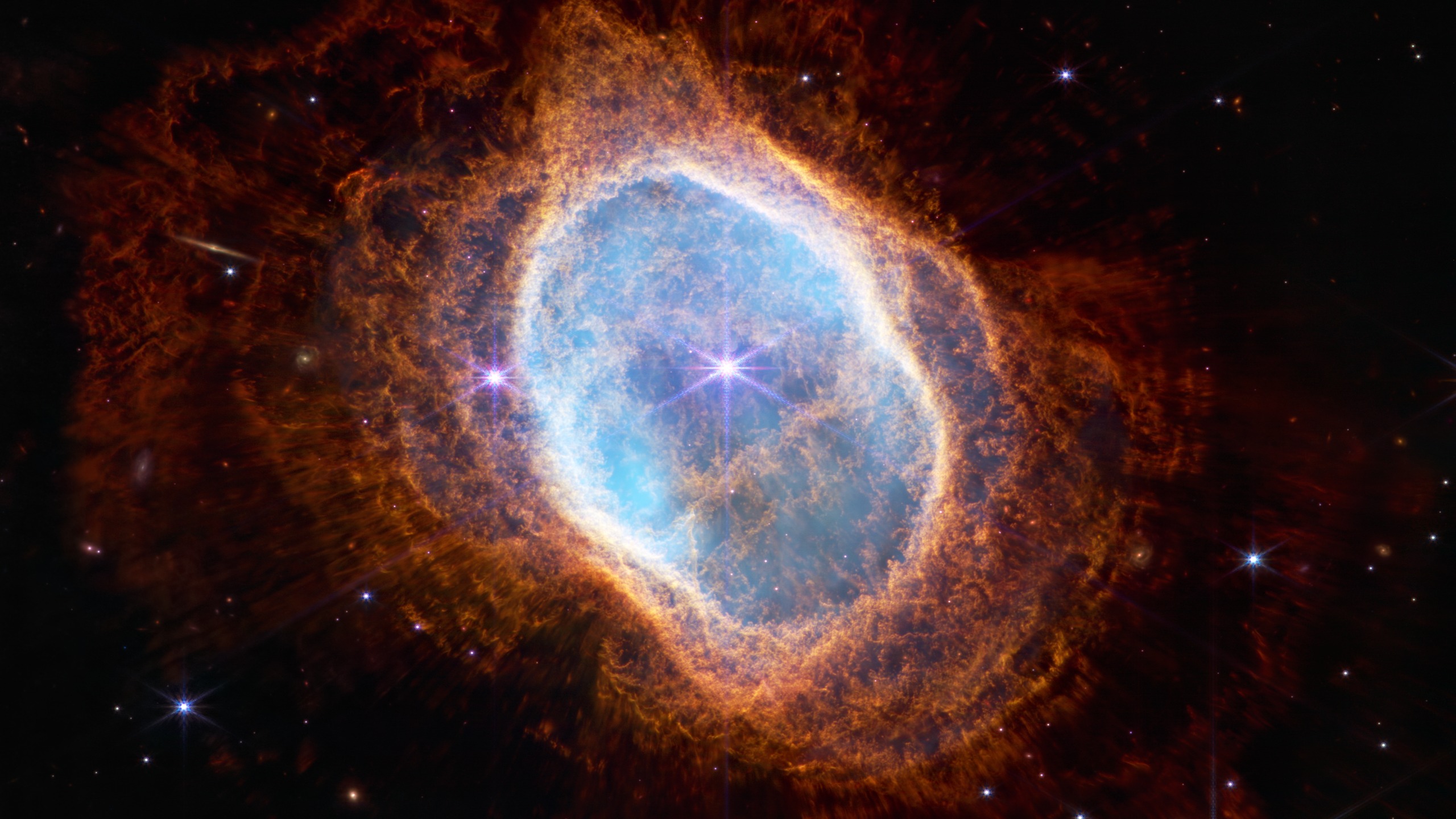
The bright star at the center of NGC 3132, the Southern Ring Nebula, plays a supporting role in sculpting the nebula's rings — a dimmer companion star hidden along one of its diffraction spikes is the true source, having ejected at least eight layers of gas and dust over thousands of years. Webb's near-infrared view also reveals countless background galaxies through the nebula's transparent regions.
2.1k downloads