Blue Wallpapers
Ionized oxygen and reflection nebulae render in cool blues — the color of scattered starlight and the hottest, youngest stars.
26 wallpapers
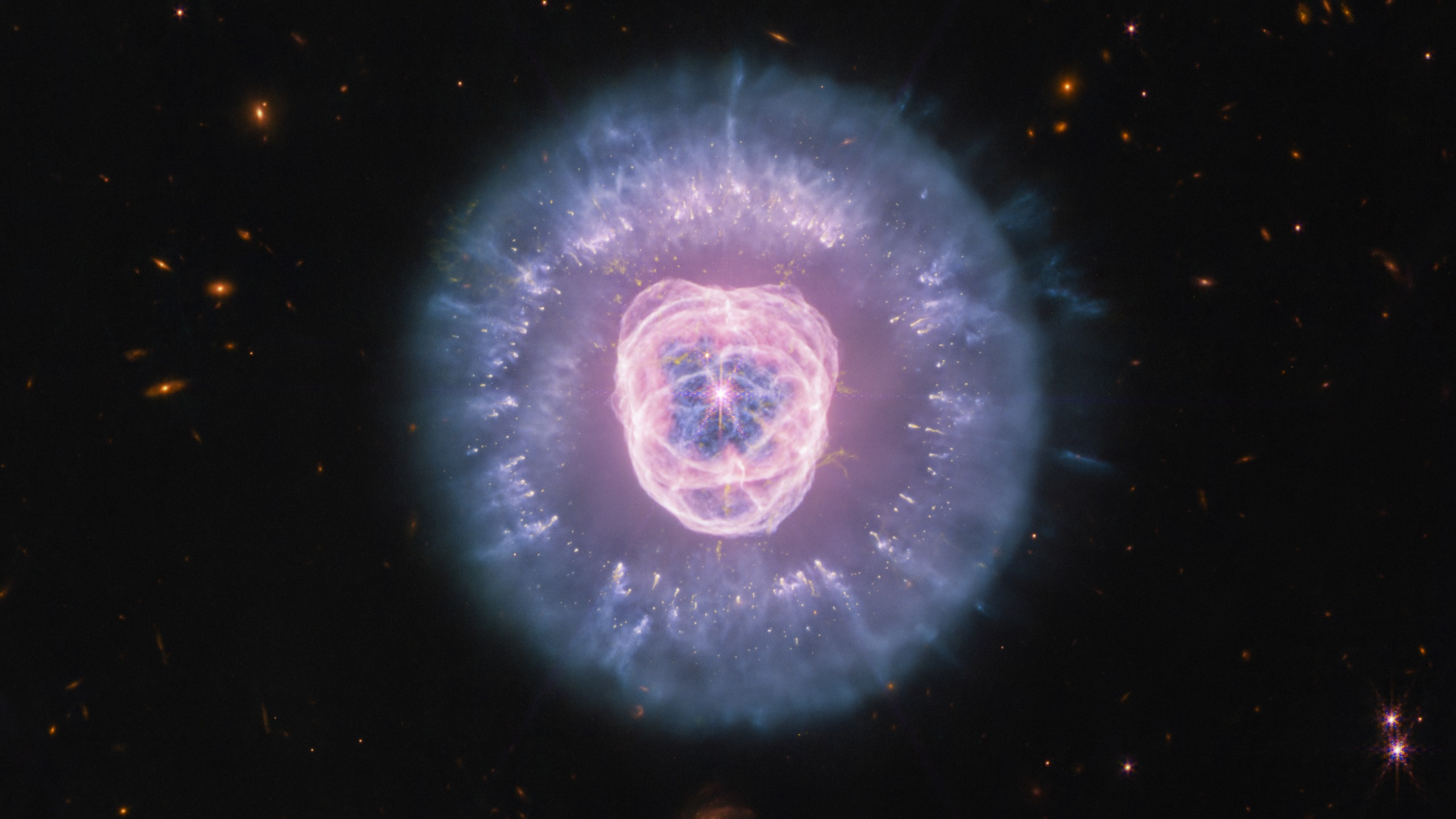
NASA’s James Webb Space Telescope’s NIRCam (Near Infrared Camera) and MIRI (Mid Infrared Instrument) instruments recently imaged planetary nebula NGC 2392, which is nicknamed the Lion Nebula due to its distinct shape. This near- and mid-infrared composite image reveals the complex structure of the nebula, which has formed and continues to be sculpted by the remains of a dying star. The stellar core, also known as a white dwarf, is located at the center and looks like the button nose of the lion. The central dying star is so hot that its radiation is “cooking” everything from the inside and producing a bubble of ionized hydrogen gas as it does. The gas bubble, which is the lion’s “face,” features cavernous shells and rings with tendrils that are expanding and destroying dust upon encounter. However, not all dust is obliterated from the scene. The lion’s mane is the interior of a dust shell that is being illuminated by the central star’s core. Within the mane some compact clumps of dust (red and orange) have managed to survive so far and are protecting the material that lies behind them. Additional clumps of molecular hydrogen appear yellow. The Lion Nebula is a snapshot in time. It’s taken several thousand years for the gas and dust to be shaped in this way, and it continues to change as the star drives away the material. Astronomers estimate NGC 2392 will eventually disperse in about 10,000 years, which is a relatively short period in astronomical terms.
40.5k downloads
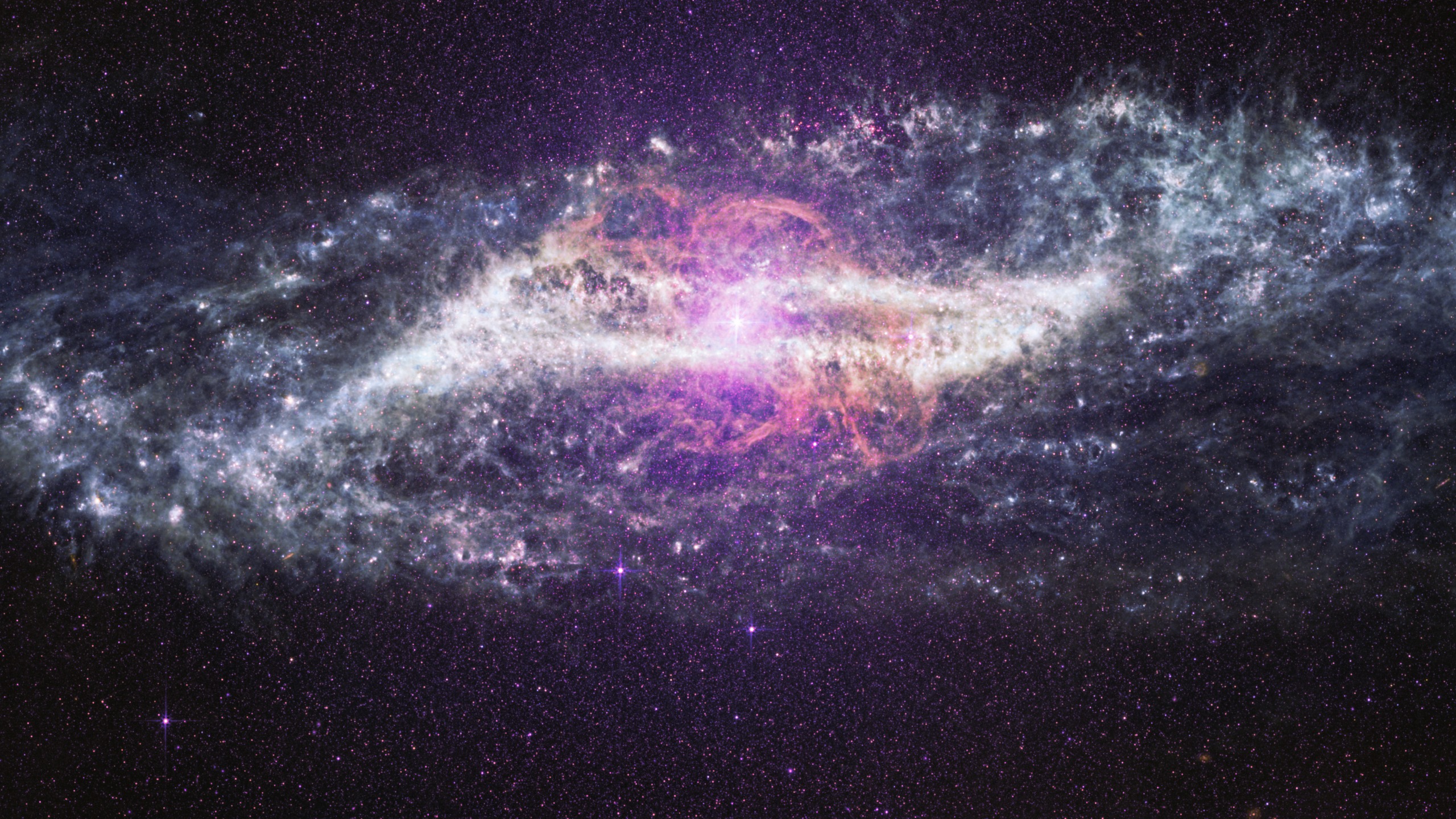
NASA’s James Webb Space Telescope’s Mid-Infrared Instrument (MIRI) reveals the nearby galaxy Centaurus A, exposing the dusty structures and hidden activity that shape this unusual system. Webb’s infrared vision unveils intricate filaments, loops, and glowing clouds of warm dust stretching across its center. At the heart of the galaxy, an actively feeding supermassive black hole shines brightly, surrounded by complex structures sculpted by a past galactic collision and ongoing activity. Deeper Dive Explore tours and points of interest in the interactive map below.
27.3k downloads
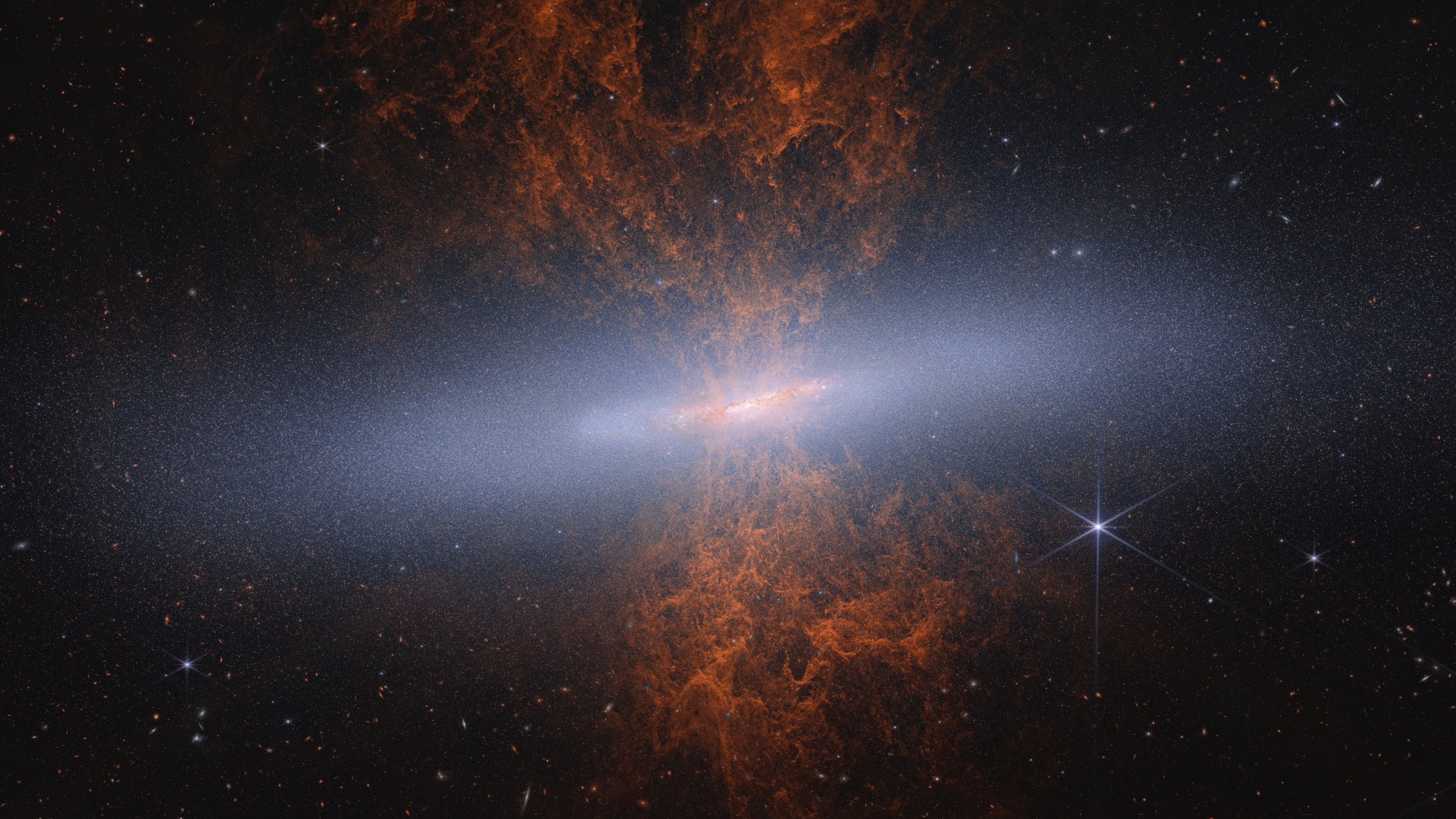
NASA's James Webb Space Telescope recently observed edge-on starburst galaxy Messier 82 (M82), nicknamed the Cigar Galaxy. Webb's near-infrared-light view is a snapshot in time, revealing a scene that has been evolving over a couple hundred million years. In near-infrared light, astronomers can see the galaxy's distended disk structure and millions of individual stars — approximately 16.5 million — for the first time. Webb's imaging survey of the galaxy is helping astronomers investigate the formation history of M82 and will also shed light on the current processes occurring within the starburst galaxy.
40.8k downloads
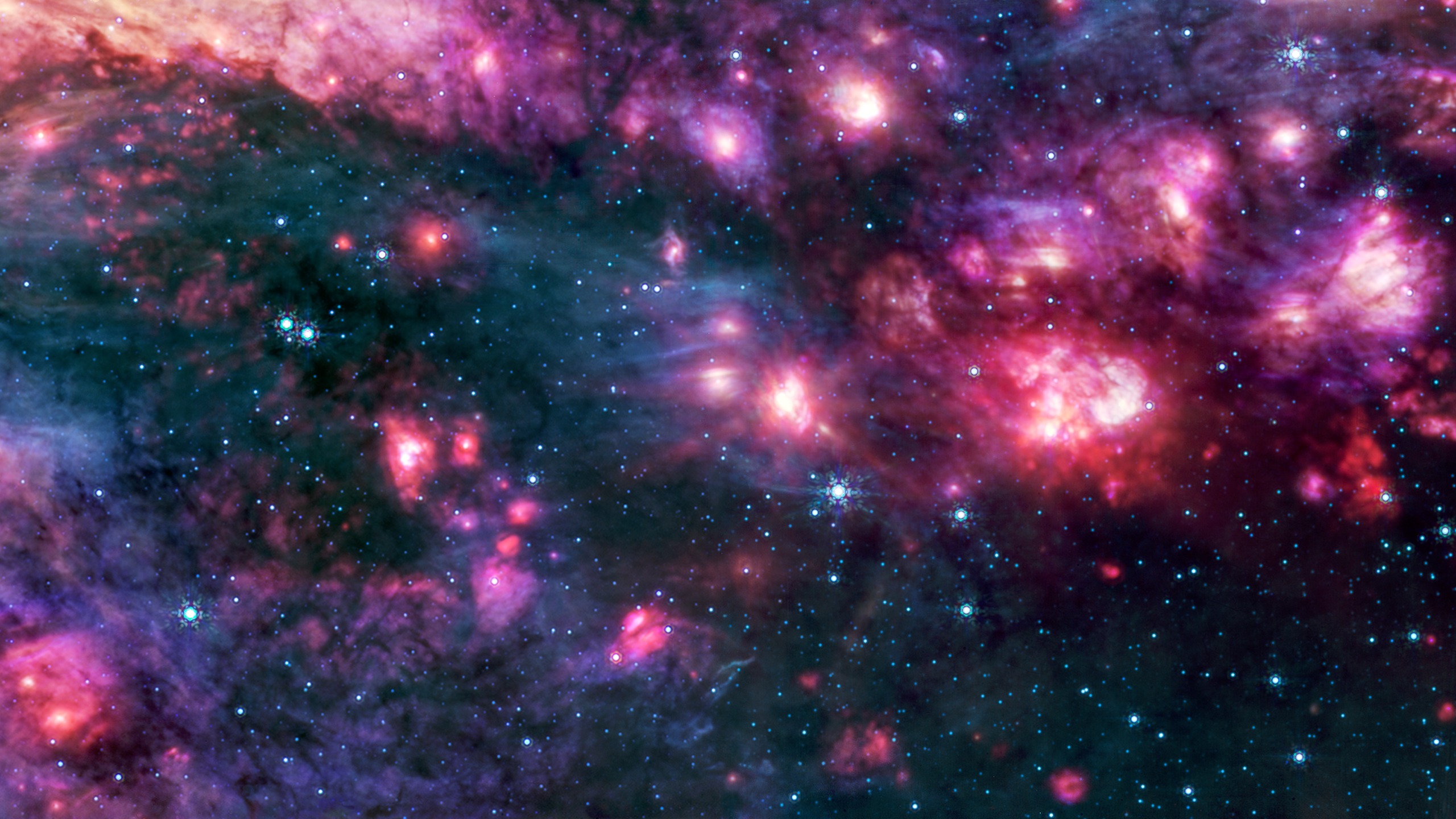
Webb's MIRI (Mid-Infrared Instrument) shows the Sagittarius B2 (Sgr B2) region in mid-infrared light, with warm dust glowing brightly. To the right is one clump of clouds that captured astronomers' attention. It is redder than the rest of the clouds in the image and corresponds to an area that other telescopes have shown to be one of the most molecularly rich regions known.
15k downloads
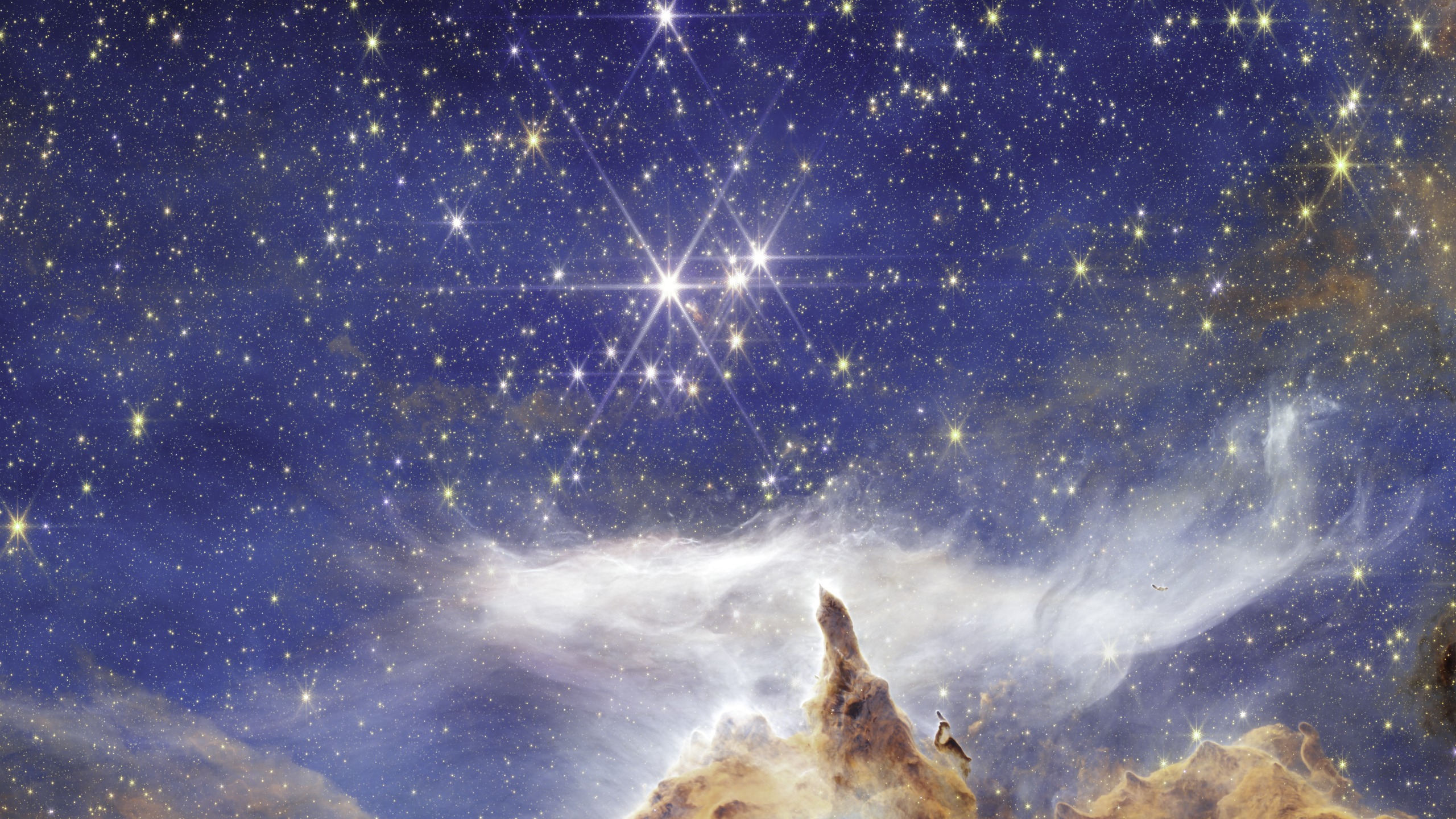
Webb captured this sparkling scene of star birth in Pismis 24, a young star cluster about 5,500 light-years from Earth in the constellation Scorpius. This region is one of the best places to explore the properties of hot young stars and how they evolve. Read the full image description.
16.8k downloads
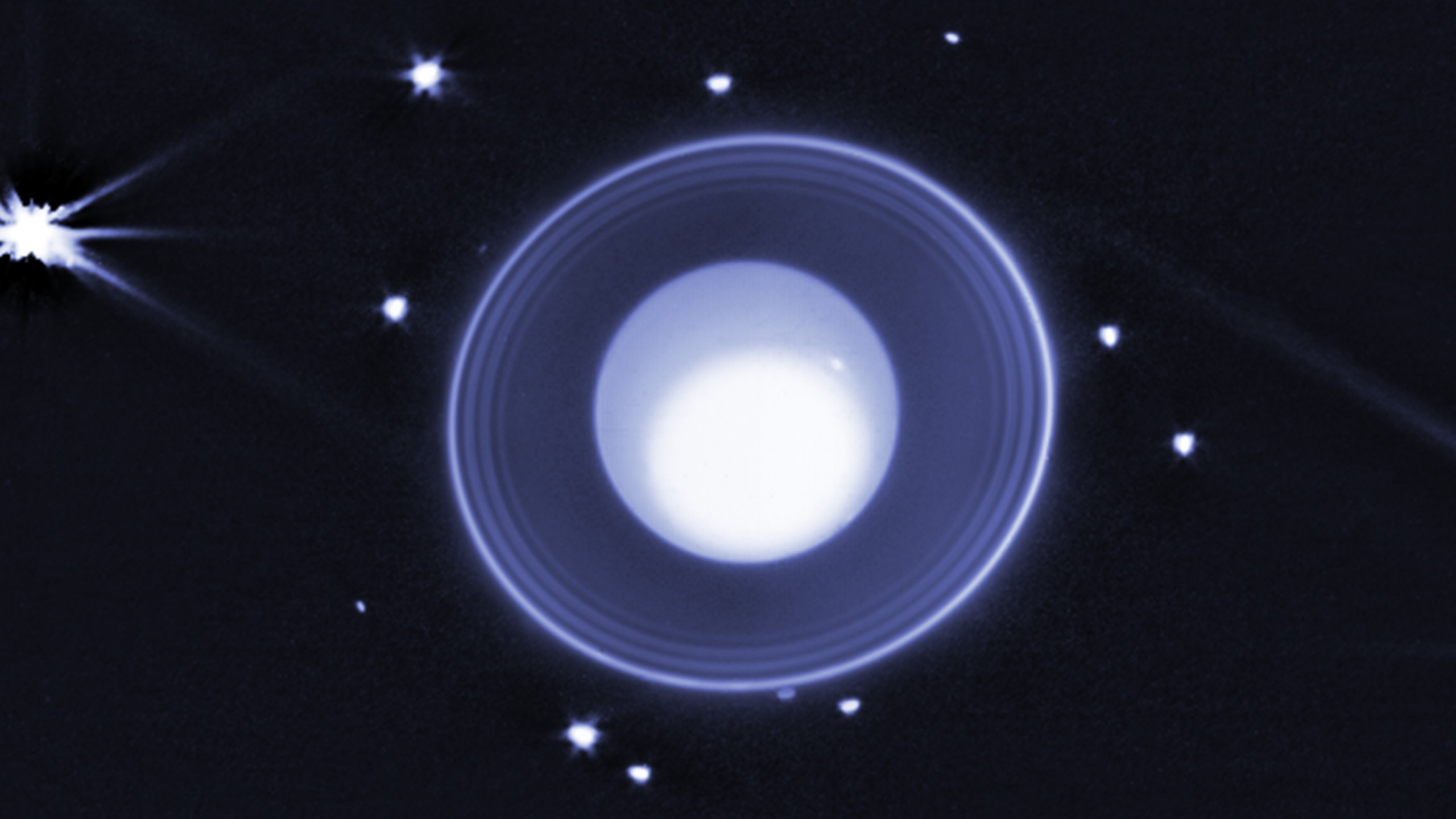
Astronomers using NASA’s James Webb Space Telescope discovered a new moon orbiting Uranus in images taken by Webb’s NIRCam (Near-Infrared Camera). This image shows the moon, designated S/2025 U1, as well as 13 of the 28 other known moons orbiting the planet. (The small moon Cordelia orbits just inside the outermost ring, but is not visible in these views due to glare from the rings.) Due to the drastic differences in brightness levels, the image is a composite of three different treatments of the data, allowing the viewer to see details in the planetary atmosphere, the surrounding rings, and the orbiting moons. The data was taken with NIRCam’s wide band F150W2 filter that transmits infrared wavelengths from about 1.0 to 2.4 microns.
32k downloads
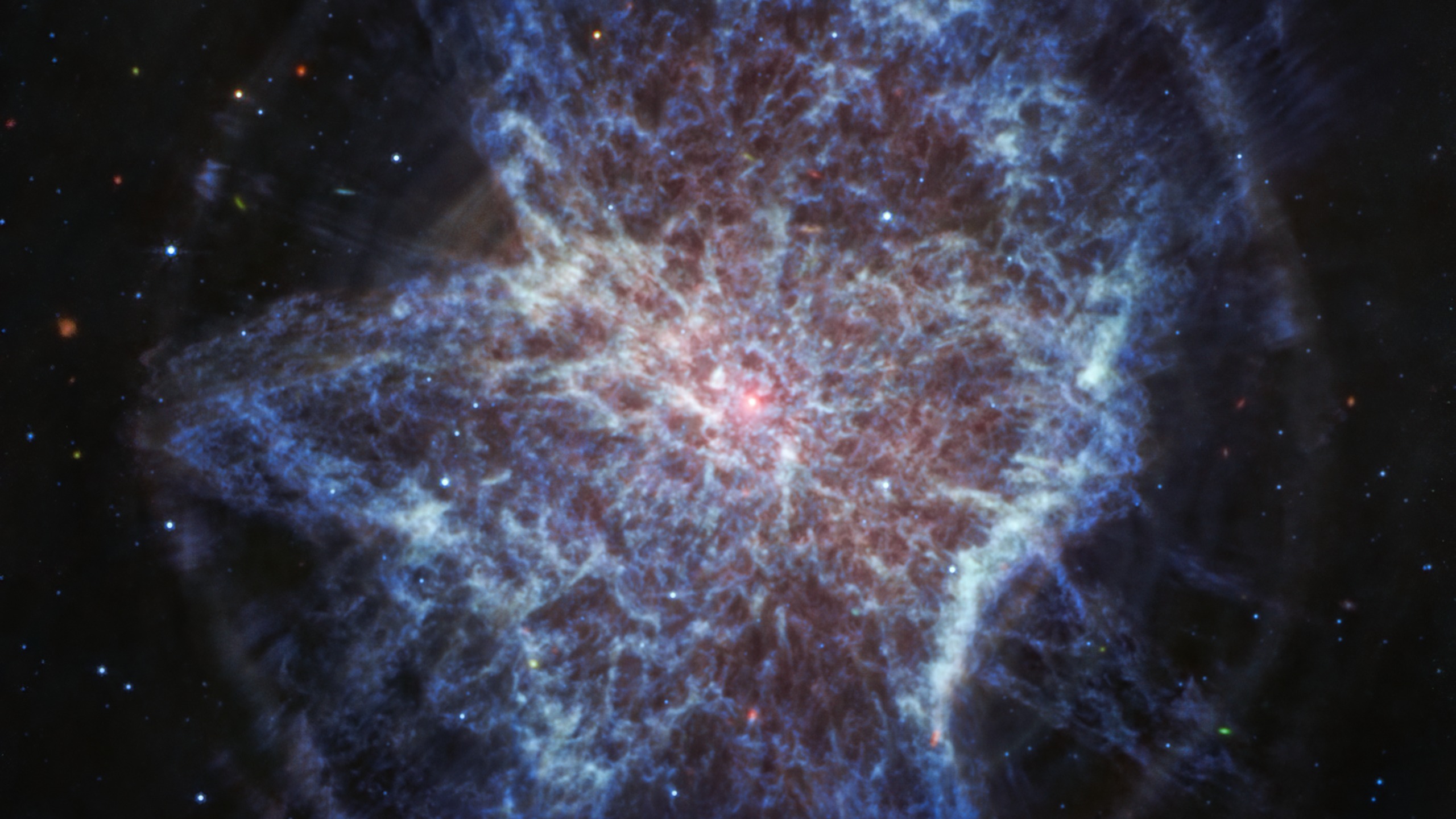
The mid-infrared view of planetary nebula NGC 6072 from NASA's James Webb Space Telescope shows expanding circular shells around the outflows from the dying central star, which astronomers suspect is the pinkish white dot at the center of the image. The longer wavelengths captured by Webb's MIRI (Mid-Infrared Instrument) highlight the dust being cast off by the central dying star. In this image, the blue represents cool molecular gas that is seen in red in the near-infrared image from Webb's NIRCam (Near-Infrared Camera) due to color mapping.
38.7k downloads
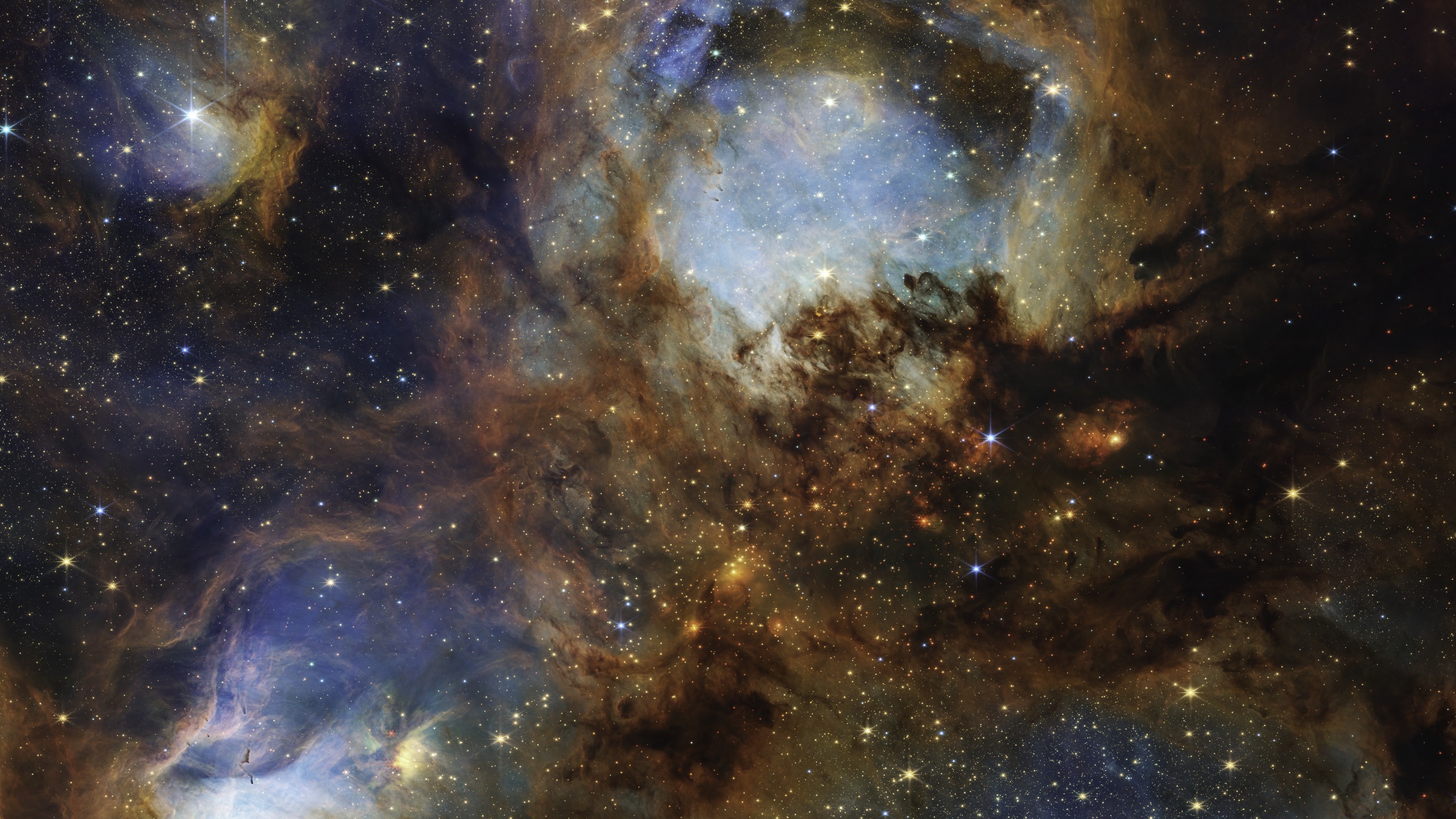
To celebrate NASA’s James Webb Space Telescope’s third year of highly productive science, astronomers used the telescope to scratch beyond the surface of the Cat’s Paw Nebula (NGC 6334), a massive, local star-forming region. This area is of great interest to scientists, having been subject to previous study by NASA’s Hubble and retired Spitzer space telescopes, as they seek to understand the multiple steps required for a turbulent molecular cloud to transition to stars. With its near-infrared capabilities and sharp resolution, the telescope “clawed” back a portion of a singular “toe bean,” revealing a subset of mini toe bean-reminiscent structures composed of gas, dust, and young stars. Webb’s view reveals a chaotic scene still in development: Massive young stars are carving away at nearby gas and dust, while their bright starlight is producing a bright nebulous glow represented in blue. This is only a chapter in the region’s larger story. The disruptive young stars, with their relatively short lifespans and luminosity, will eventually quench the local star formation process. The Cat’s Paw Nebula is located approximately 4,000 light-years away in the constellation Scorpius. To dive deeper into Webb’s image of the Cat’s Paw, embark on a narrated tour, get closer to the image, or read the press release. Additionally, learn more about Webb’s three years of science observations.
38.1k downloads
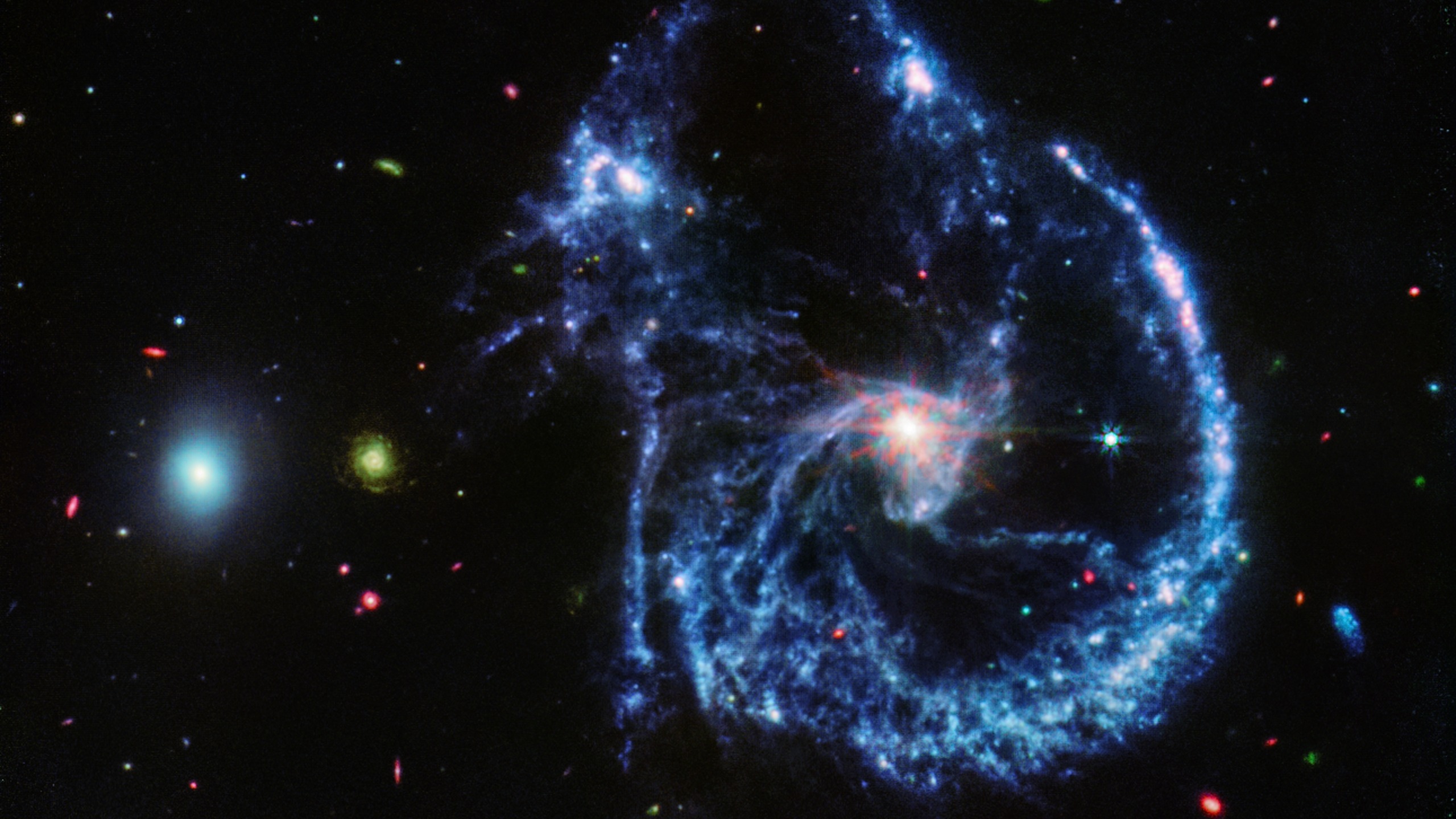
This image of Arp 107, shown by Webb’s MIRI (Mid-Infrared Instrument), reveals the supermassive black hole that lies in the center of the large spiral galaxy to the right. This black hole, which pulls much of the dust into lanes, also display’s Webb’s characteristic diffraction spikes, caused by the light that it emits interacting with the structure of the telescope itself. Perhaps the defining feature of the region, which MIRI reveals, are the millions of young stars that are forming, highlighted in blue. These stars are surrounded by dusty silicates and soot-like molecules known as polycyclic aromatic hydrocarbons. The small elliptical galaxy to the left, which has already gone through much of its star formation, is composed of many of these organic molecules.
36.7k downloads
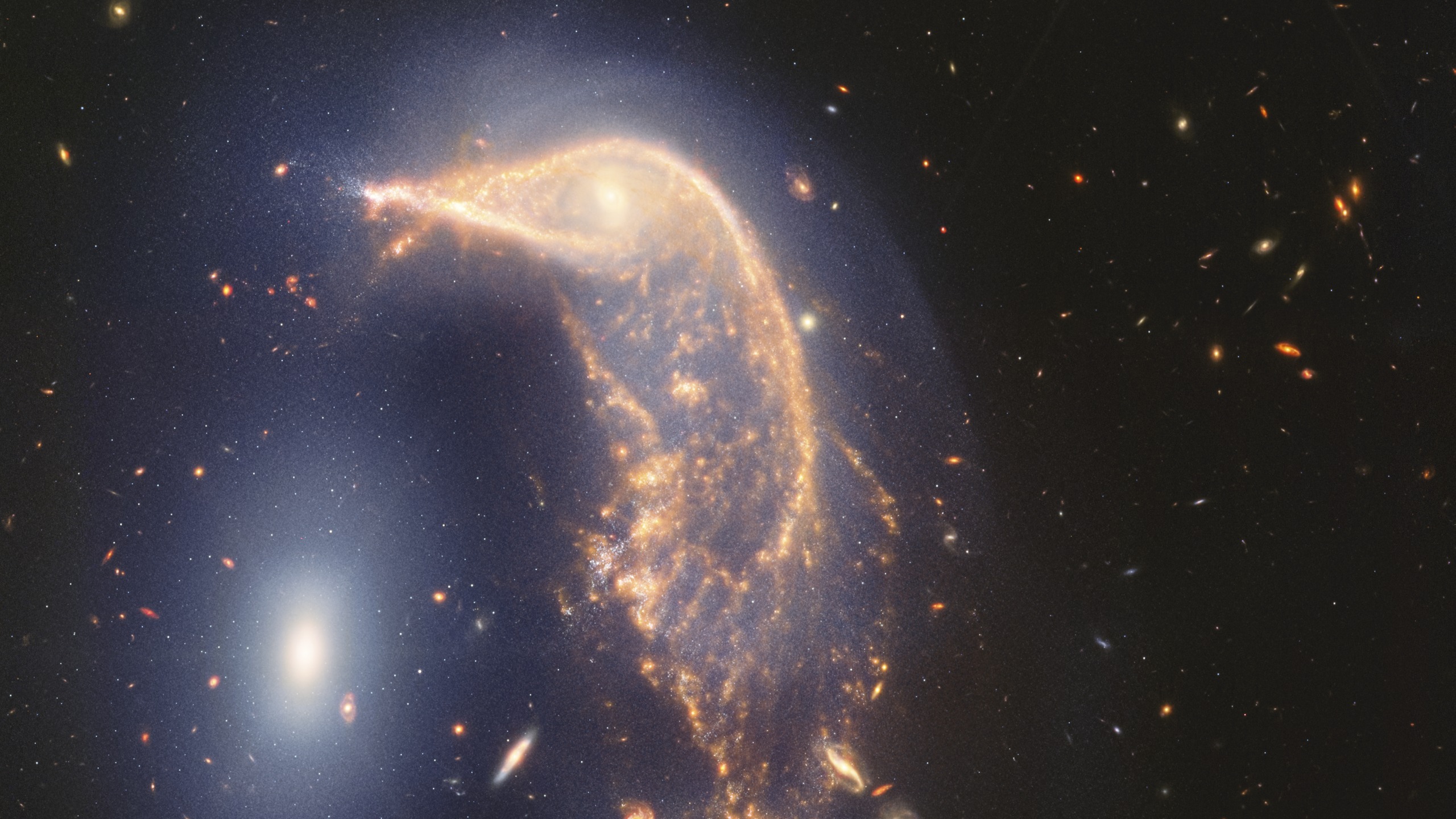
This “penguin party” is loud! The distorted spiral galaxy at center, the Penguin, and the compact elliptical galaxy at left, the Egg, are locked in an active embrace. A new near- and mid-infrared image from the James Webb Space Telescope, taken to mark its second year of science, shows that their interaction is marked by a faint upside-down U-shaped blue glow. The pair, known jointly as Arp 142, made their first pass between 25 and 75 million years ago — causing “fireworks,” or new star formation, in the Penguin. In the most extreme cases, mergers can cause galaxies to form thousands of new stars per year, for a few million years. For the Penguin, research has shown that about 100 to 200 stars have formed per year. By comparison, our Milky Way galaxy (which is not interacting with a galaxy of the same size) forms roughly six to seven new stars per year. This gravitational shimmy also remade the Penguin’s appearance. Its coiled spiral arms unwound, and gas and dust were pulled in an array of directions, like it was releasing confetti. It is rare for individual stars to collide when galaxies interact (space is vast), but galaxies’ mingling disrupts stars’ orbits. Today, the Penguin’s galactic center looks like an eye set within a head, and the galaxy has prominent star trails that take the shape of a beak, backbone, and fanned-out tail. A faint, but prominent dust lane extends from its beak down to its tail. Despite the Penguin appearing far larger than the Egg, these galaxies have approximately the same mass. This is one reason why the smaller-looking Egg hasn’t yet merged with the Penguin. (If one was less massive, it may have merged earlier.) The oval Egg is filled with old stars, and little gas and dust, which is why it isn’t sending out “streamers” or tidal tails of its own and instead has maintained a compact oval shape. If you look closely, the Egg has four prominent diffraction spikes — the galaxy’s stars are so concentrated that it gleams. Now, find the bright, edge-on galaxy at top right. It may look like a party crasher, but it’s not nearby. Cataloged PGC 1237172, it lies 100 million light-years closer to Earth. It is relatively young and isn’t overflowing with dust, which is why it practically disappears in Webb’s mid-infrared view. The background of this image is overflowing with far more distant galaxies. This is a testament to the sensitivity and resolution of Webb’s infrared cameras. Additional images of Arp 142 are available at left, under the Download Options, including a cropped image (like the one above) that features only near-infrared light, and a wider near-infrared field of view, which features an even greater number of distant galaxies. Arp 142 lies 326 million light-years from Earth in the constellation Hydra. Extended Description and Image Alt Text
36.8k downloads
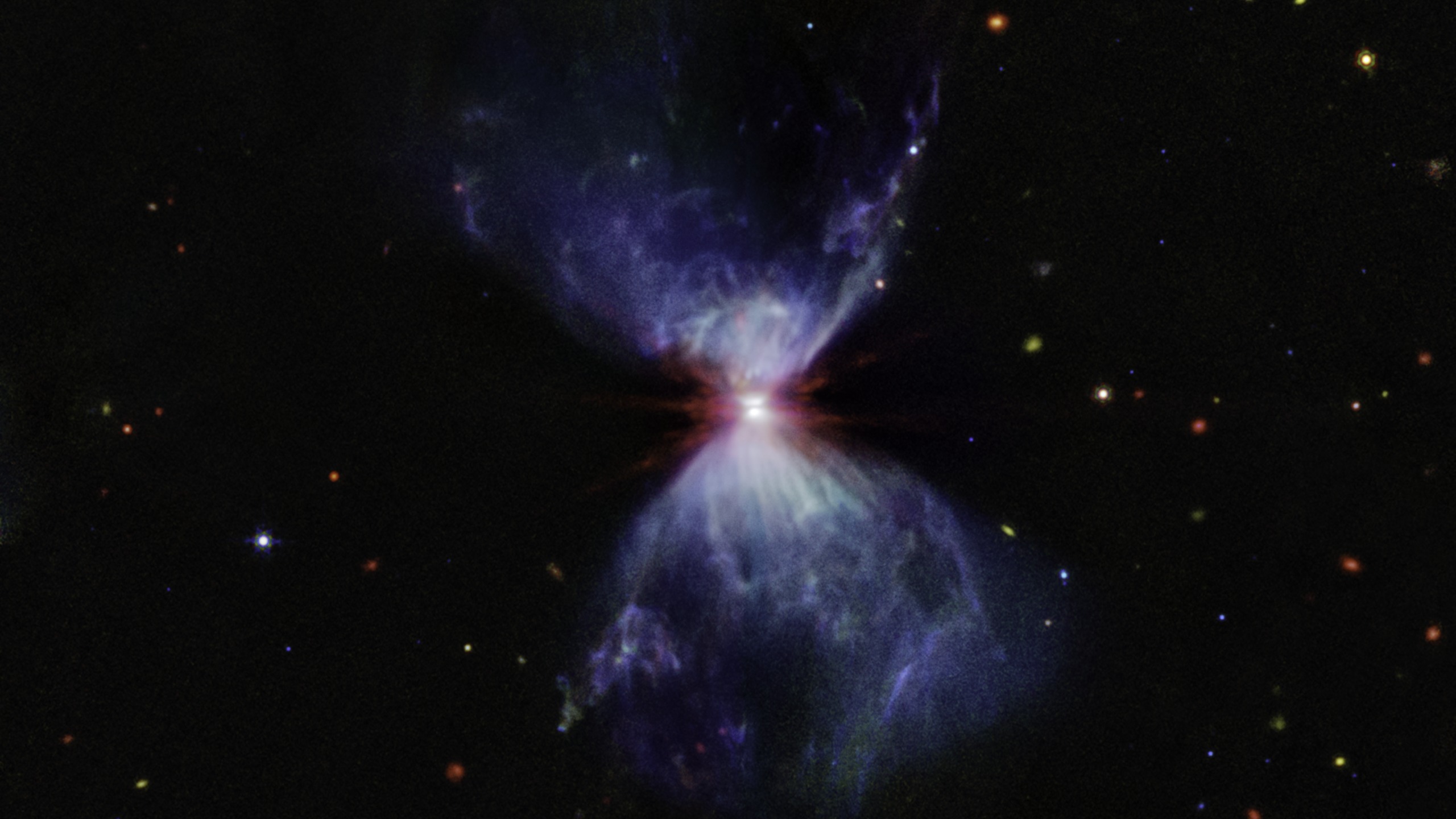
L1527, shown in this image from NASA’s James Webb Space Telescope’s MIRI (Mid-Infrared Instrument), is a molecular cloud that harbors a protostar. It resides about 460 light-years from Earth in the constellation Taurus. The more diffuse blue light and the filamentary structures in the image come from organic compounds known as polycyclic aromatic hydrocarbons (PAHs), while the red at the center of this image is an energized, thick layer of gases and dust that surrounds the protostar. The region in between, which shows up in white, is a mixture of PAHs, ionized gas, and other molecules. This image includes filters representing 7.7 microns light as blue, 12.8 microns light as green, and 18 microns light as red.
831 downloads
![Serpens Nebula, HBC 672, [EC 92] 82](https://pub-cec02c1cd1fa469cb88cc3510c091268.r2.dev/wallpapers/serpens-nebula/serpens-nebula-2560x1440.jpg)
In this image of the Serpens Nebula from the Near-Infrared Camera (NIRCam) on NASA’s James Webb Space Telescope, astronomers found a grouping of aligned protostellar outflows within one small region (the top left corner). In the Webb image, these jets are signified by bright clumpy streaks that appear red, which are shockwaves from the jet hitting surrounding gas and dust. The Serpens Nebula, located 1,300 light-years from Earth, is home to a particularly dense cluster of newly forming stars (~100,000 years old), some of which will eventually grow to the mass of our Sun. This region has been home to other coincidental discoveries, including the flapping “Bat Shadow,” which earned its name when 2020 data from NASA’s Hubble Space Telescope revealed a shadow from a star’s planet-forming disk to flap, or shift. This feature is visible at the center of the Webb image. To the right of the “Bat Shadow” lies another intriguing feature—an eye-shaped crevice, which appears as if a star is bursting through. However, astronomers say looks may be deceiving here. This could just be gases of different densities layered on top of one another, similar to what is seen in the famous Pillars of Creation. And to the right of that, an extremely dark patch could be a similar occurrence. This gas and dust are so dense in comparison to the rest of the region, no near-infrared light is getting through.
30.3k downloads
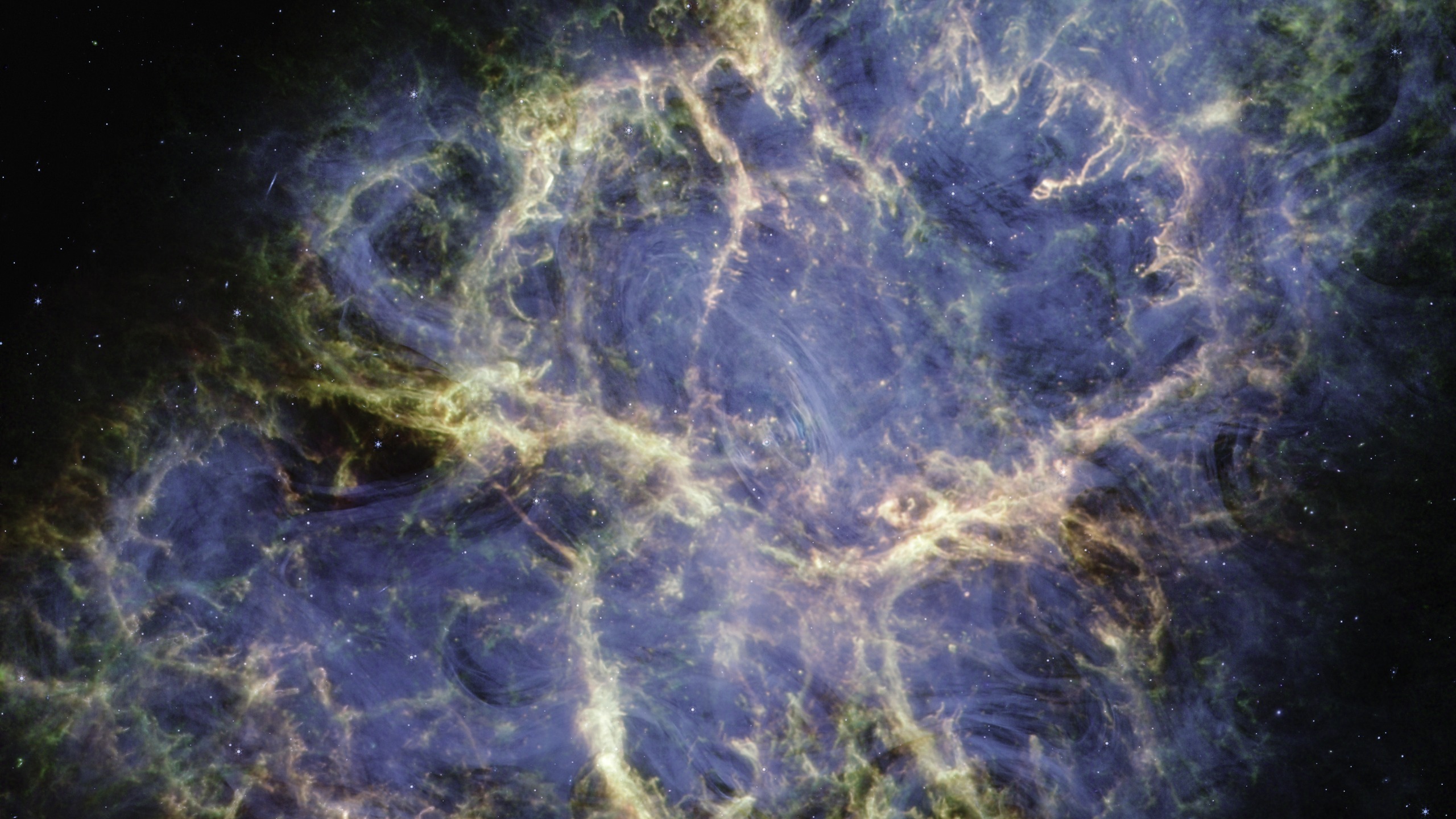
NASA’s James Webb Space Telescope dissected the Crab Nebula’s structure, aiding astronomers as they continue to evaluate leading theories about the supernova remnant’s origins. With the data collected by Webb’s NIRCam (Near-Infrared Camera) and MIRI (Mid-Infrared Instrument), a team of scientists were able to closely inspect some of the Crab Nebula’s major components. For the first time ever, astronomers mapped the warm dust emission throughout this supernova remnant. Represented as fluffy magenta material, the dust grains form a cage-like structure that is most apparent toward the lower left and upper right portions of the remnant. Filaments of dust are also threaded throughout the Crab’s interior and sometimes coincide with regions of doubly ionized sulfur (sulfur III) colored in green. Yellow-white mottled filaments, which form large loop-like structures around the supernova remnant’s center, represent areas where dust and doubly ionized sulfur overlap. The dust’s cage-like structure helps constrain some, but not all of the ghostly synchrotron emission represented in blue. The emission resembles wisps of smoke, most notable toward the Crab’s center. The thin blue ribbons follow the magnetic field lines created by the Crab’s pulsar heart — a rapidly rotating neutron star.
13.1k downloads
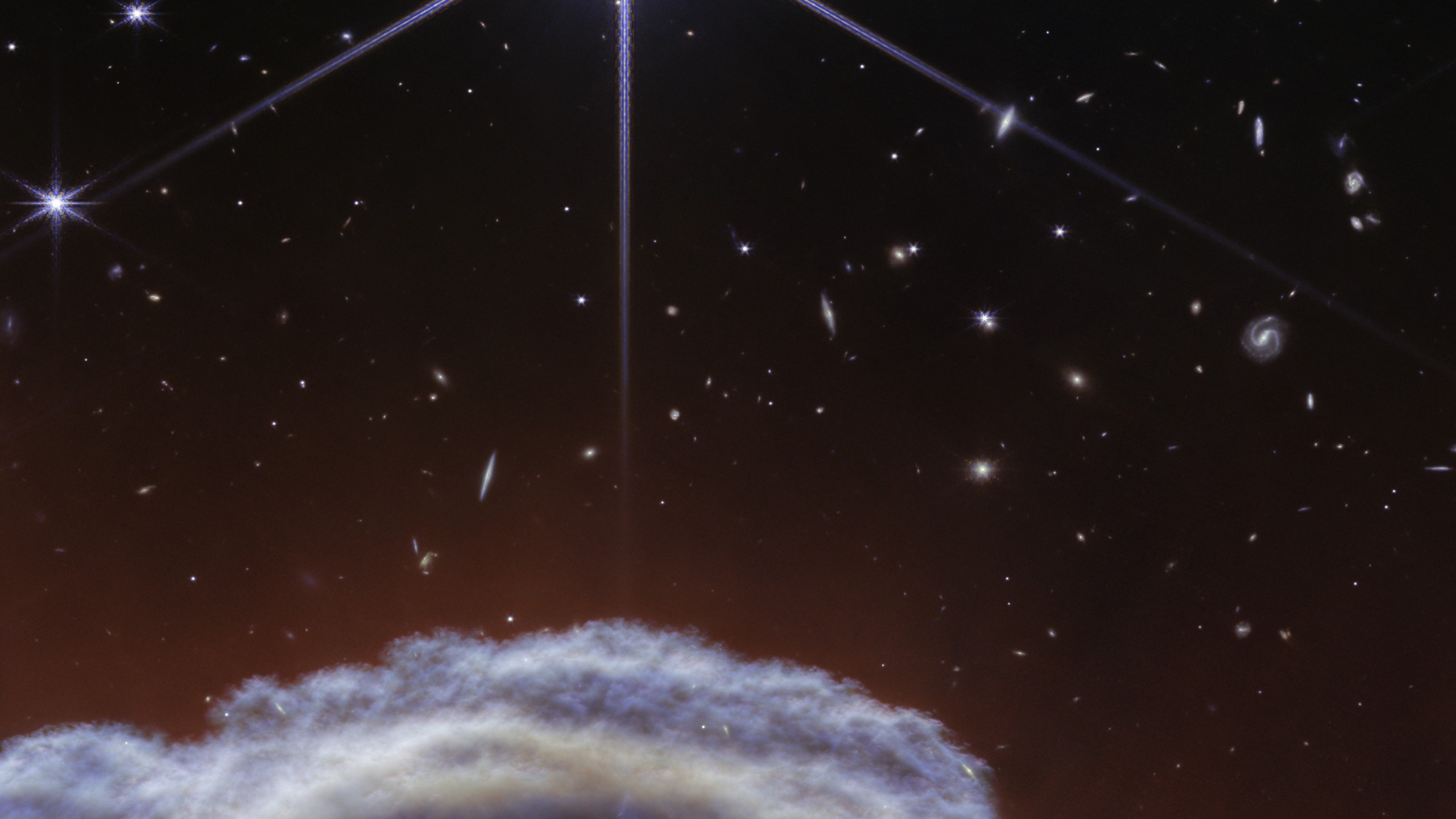
This image of the Horsehead Nebula from NASA’s James Webb Space Telescope focuses on a portion of the horse’s “mane” that is about 0.8 light-years in width. It was taken with Webb’s NIRCam (Near-infrared Camera). The ethereal clouds that appear blue at the bottom of the image are filled with a variety of materials including hydrogen, methane, and water ice. Red-colored wisps extending above the main nebula represent both atomic and molecular hydrogen. In this area, known as a photodissociation region, ultraviolet light from nearby young, massive stars creates a mostly neutral, warm area of gas and dust between the fully ionized gas above and the nebula below. As with many Webb images, distant galaxies are sprinkled in the background. This image is composed of light at wavelengths of 1.4 and 2.5 microns (represented in blue), 3.0 and 3.23 microns (cyan), 3.35 microns (green), 4.3 microns (yellow), and 4.7 and 4.05 microns (red).
24.2k downloads
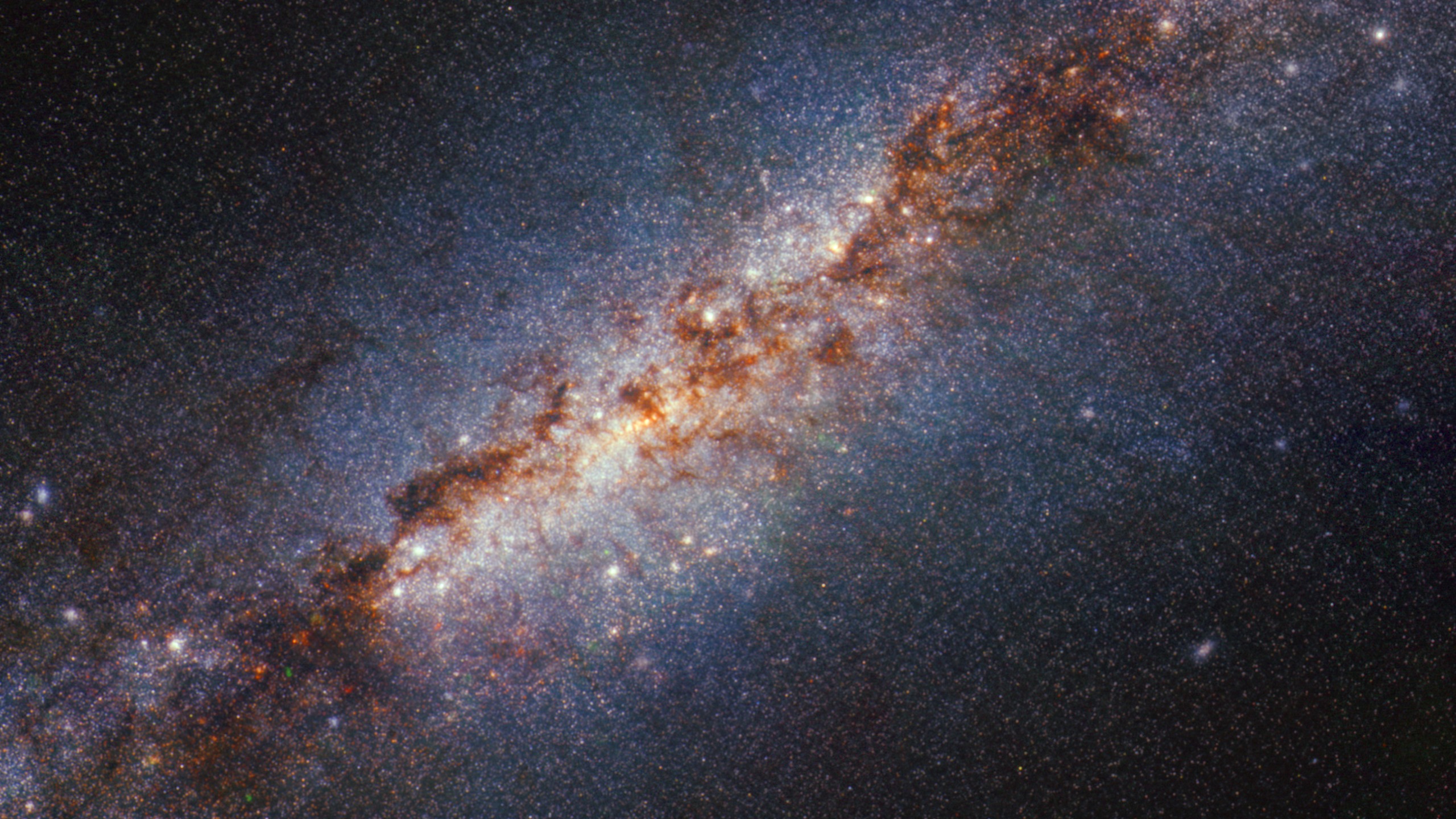
A team of astronomers used NASA’s James Webb Space Telescope to survey the starburst galaxy Messier 82 (M82), which is located 12 million light-years away in the constellation Ursa Major. M82 hosts a frenzy of star formation, sprouting new stars 10 times faster than the Milky Way galaxy. Webb’s infrared capabilities enabled scientists to peer through curtains of dust and gas that have historically obscured the star formation process. This image from Webb’s NIRCam (Near-Infrared Camera) instrument shows M82’s center in an unprecedented level of detail. With Webb’s resolution, astronomers can distinguish small, bright compact sources that are either individual stars or star clusters. Obtaining an accurate count of the stars and clusters that compose M82’s center can help astronomers understand the different phases of star formation and the timelines for each stage. In this image, light at 2.12 microns is colored red, 1.64 microns is green, and 1.40 microns is blue (filters F212N, 164N, and F140M, respectively).
34.5k downloads
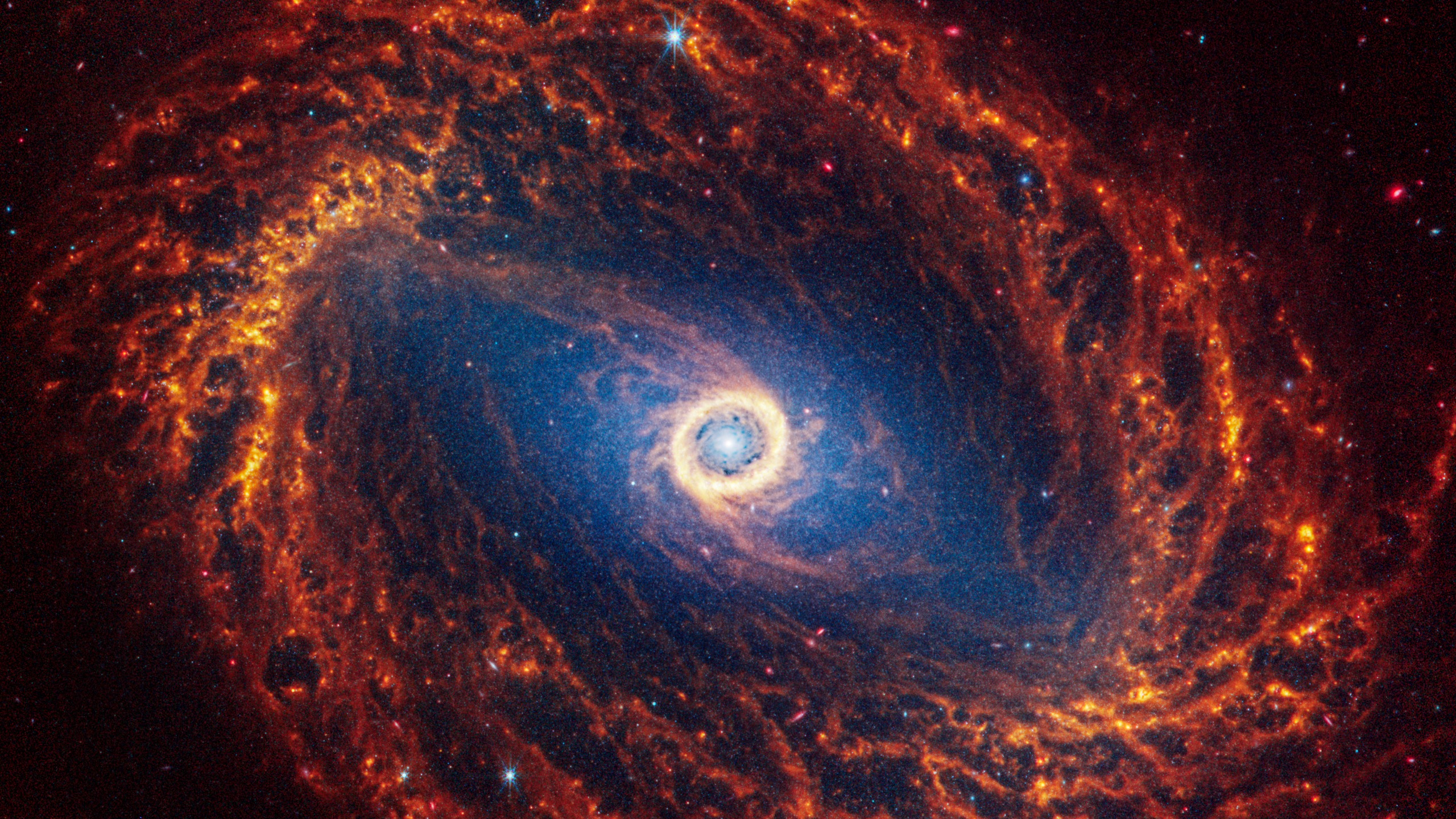
Face-on barred spiral galaxy, NGC 1512, is split diagonally in this image: The James Webb Space Telescope’s observations appear at top left, and the Hubble Space Telescope’s on bottom right. Webb and Hubble’s images show a striking contrast, an inverse of darkness and light. Why? Webb’s observations combine near- and mid-infrared light and Hubble’s showcase visible and ultraviolet light. Dust absorbs ultraviolet and visible light, and then re-emits it in the infrared. In Webb's images, we see dust glowing in infrared light. In Hubble’s images, dark regions are where starlight is absorbed by dust. The individual Webb and Hubble images are available for download using the links on the left side of this page. Background galaxies Webb’s image includes distant galaxies that are located well behind the tightly cropped foreground galaxy. Look for bright blue and pink disks, some seen edge-on, like a plate with a central sphere. Redder galaxies are more distant. In Hubble’s view, distant galaxies are often light orange if they are slightly closer. Like in Webb's image, those that are deeper red are also more distant. Galaxy NGC 1512 was observed as part of the Physics at High Angular resolution in Nearby GalaxieS (PHANGS) program, a large project that includes observations from several space- and ground-based telescopes of many galaxies to help researchers study all phases of the star formation cycle, from the formation of stars within dusty gas clouds to the energy released in the process that creates the intricate structures revealed by Webb’s new images. NGC 1512 is 30 million light-years away in the constellation Horologium. Extended Description and Image Alt Text
23.9k downloads
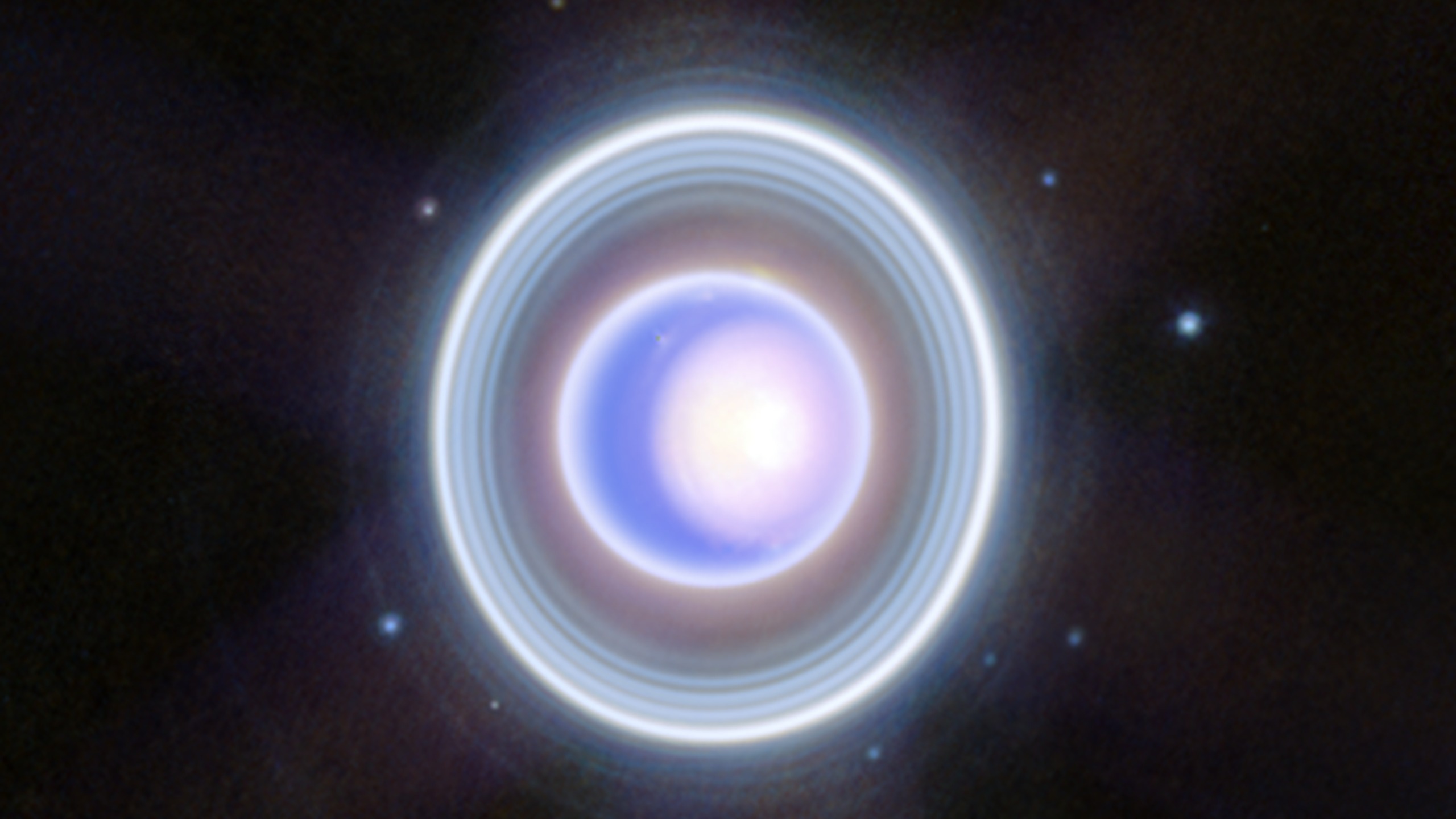
This image of Uranus from NIRCam (Near-Infrared Camera) on NASA's James Webb Space Telescope shows the planet and its rings in new clarity. The Webb image exquisitely captures Uranus's seasonal north polar cap, including the bright, white, inner cap and the dark lane in the bottom of the polar cap. Uranus' dim inner and outer rings are also visible in this image, including the elusive Zeta ring, the extremely faint and diffuse ring closest to the planet. Nine of the planet's 27 known moons are also visible around the rings: Rosalind, Puck, Belinda, Desdemona, Cressida, Bianca, Portia, Juliet, and Perdita.
8.8k downloads
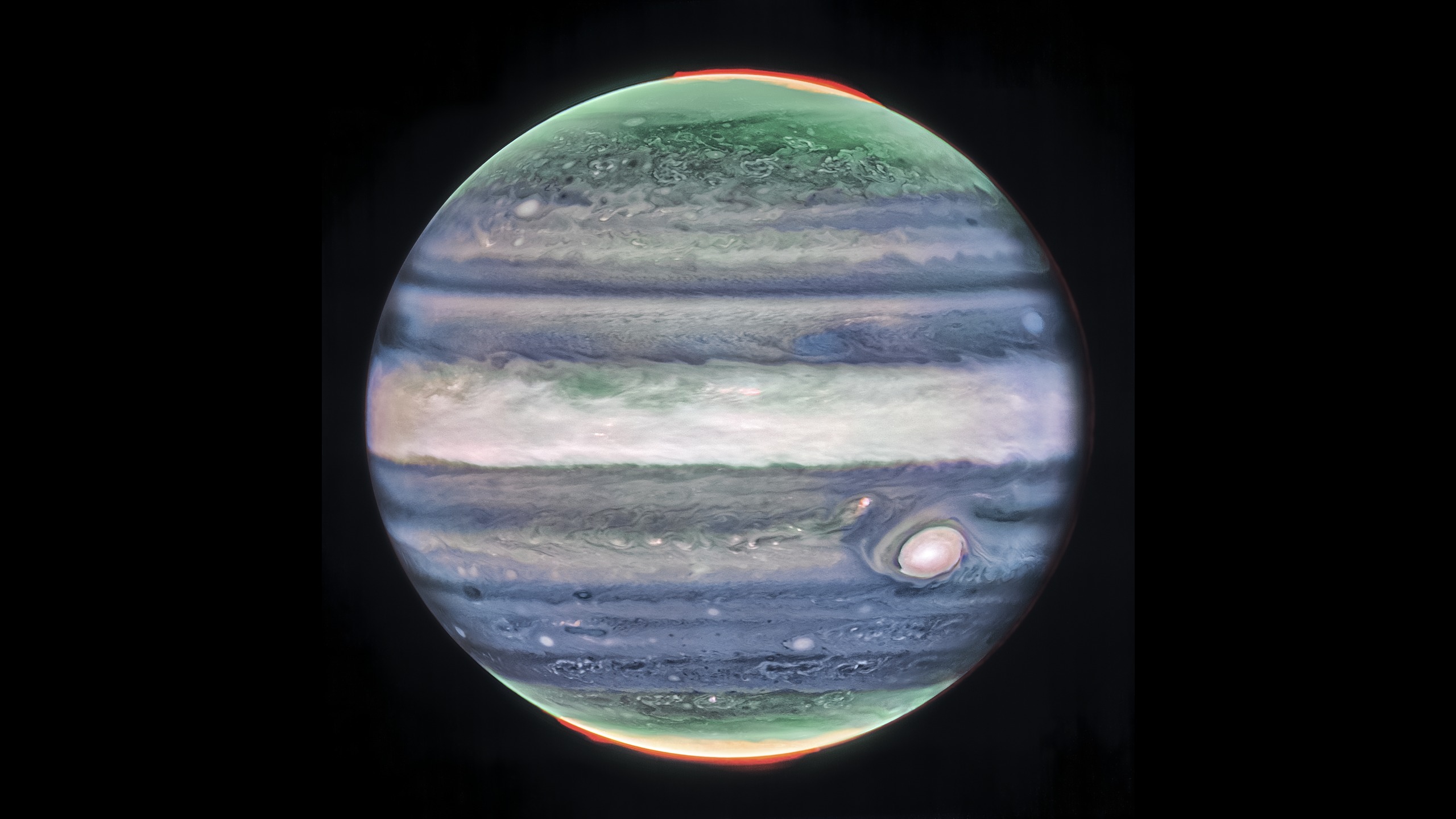
This image of Jupiter from NASA's James Webb Space Telescope's NIRCam (Near-Infrared Camera) shows stunning details of the majestic planet in infrared light. In this image, brightness indicates high altitude. The numerous bright white "spots" and "streaks" are likely very high-altitude cloud tops of condensed convective storms. Auroras, appearing in red in this image, extend to higher altitudes above both the northern and southern poles of the planet. By contrast, dark ribbons north of the equatorial region have little cloud cover. In Webb's images of Jupiter from July 2022, researchers recently discovered a narrow jet stream traveling 320 miles per hour (515 kilometers per hour) sitting over Jupiter's equator above the main cloud decks.
2.3k downloads
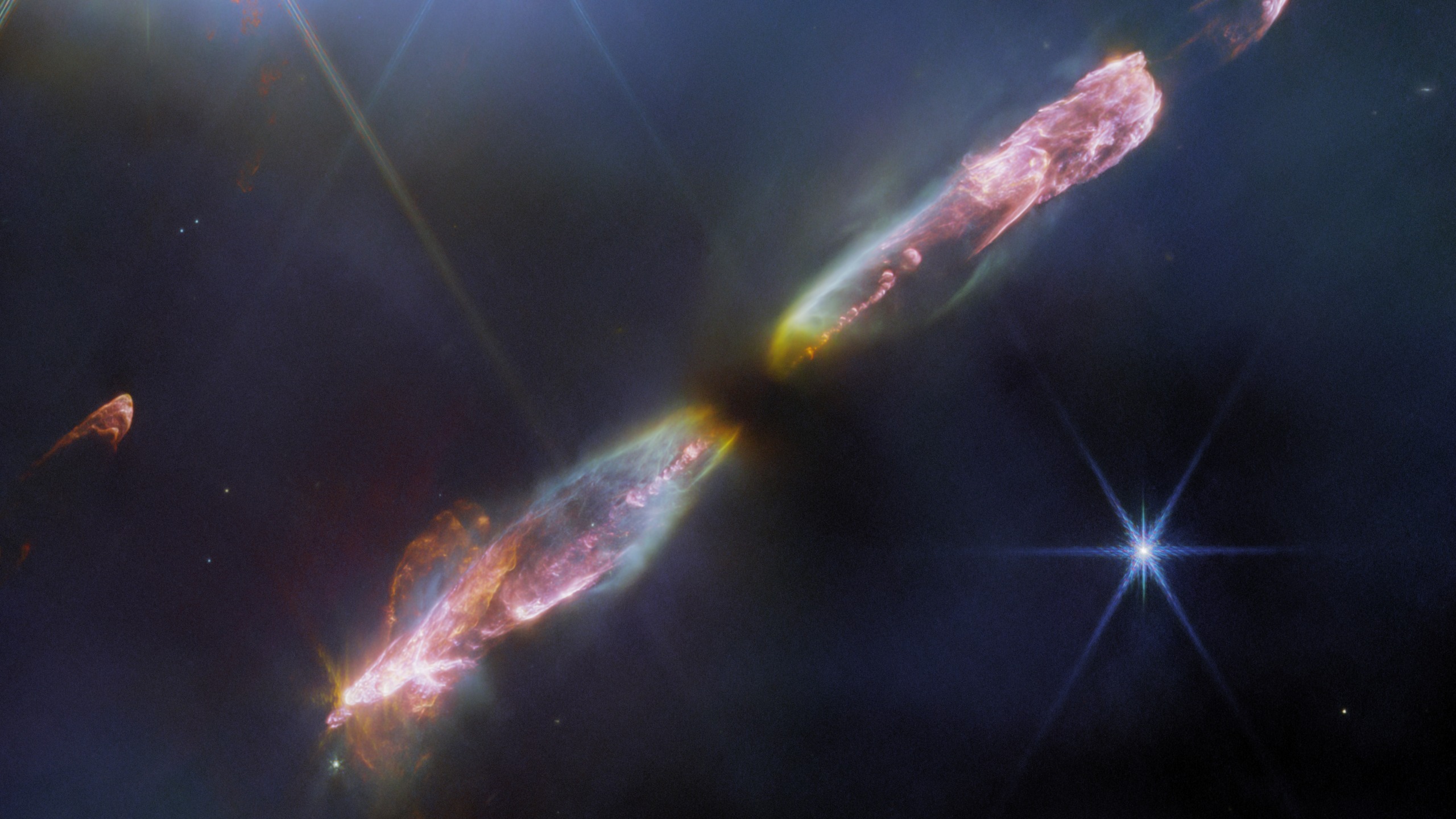
NASA’s James Webb Space Telescope’s high resolution, near-infrared look at Herbig-Haro 211 reveals exquisite detail of the outflow of a young star, an infantile analogue of our Sun. Herbig-Haro objects are formed when stellar winds or jets of gas spewing from newborn stars form shock waves colliding with nearby gas and dust at high speeds The image showcases a series of bow shocks to the southeast (lower-left) and northwest (upper-right) as well as the narrow bipolar jet that powers them in unprecedented detail. Molecules excited by the turbulent conditions, including molecular hydrogen, carbon monoxide and silicon monoxide, emit infrared light, collected by Webb, that map out the structure of the outflows.
6.9k downloads
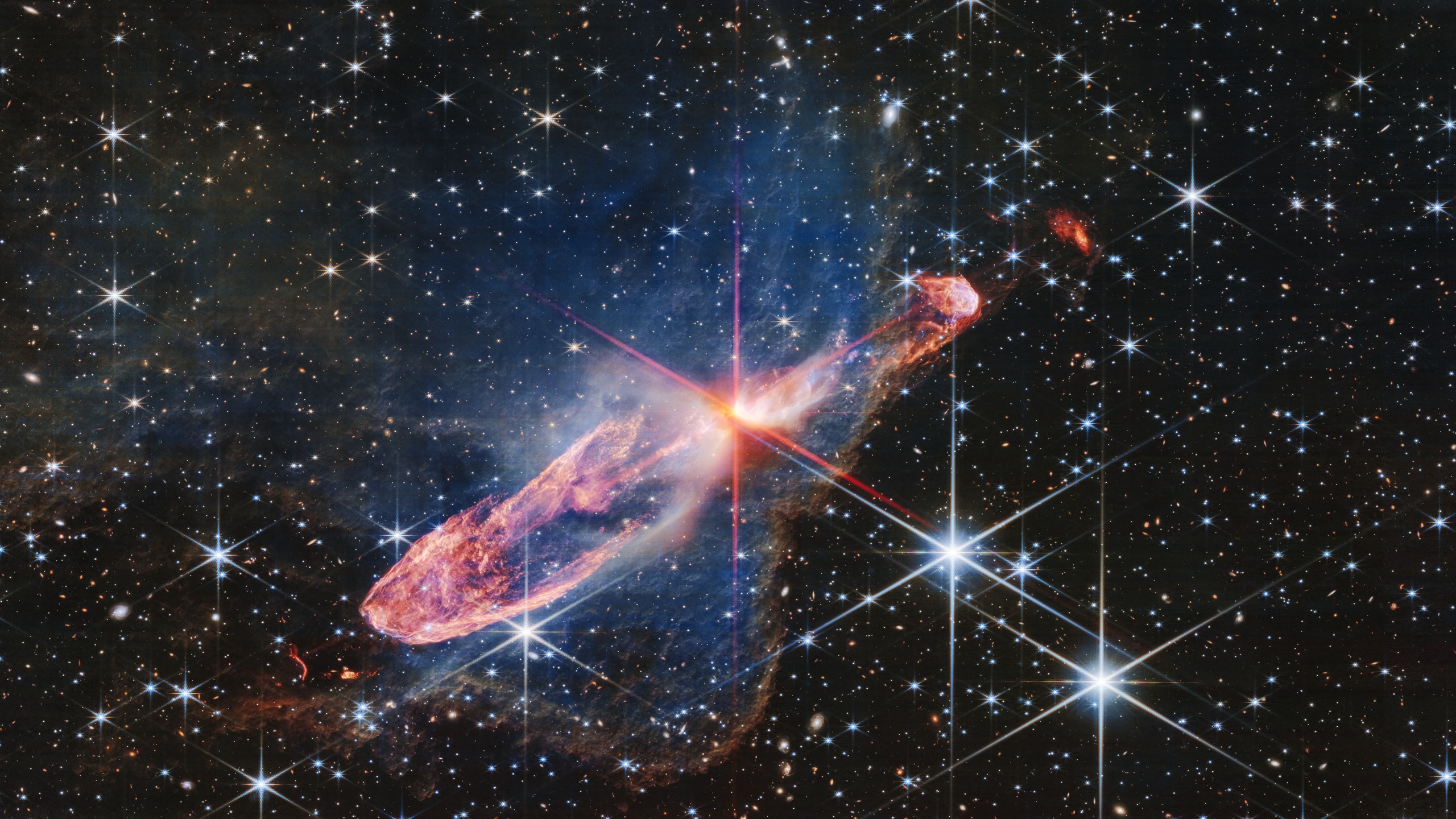
These stars have a lot of energy to let loose! NASA’s James Webb Space Telescope has captured a tightly bound pair of actively forming stars, known as Herbig-Haro 46/47, in high-resolution near-infrared light. Look for them at the center of the red diffraction spikes. The stars are buried deeply, appearing as an orange-white splotch. They are surrounded by a disk of gas and dust that continues to add to their mass. Herbig-Haro 46/47 is an important object to study because it is relatively young – only a few thousand years old. Stars take millions of years to fully form. Targets like this also give researchers insight into how stars gather mass over time, potentially allowing them to model how our own Sun, a low-mass star, formed. The two-sided orange lobes were created by earlier ejections from these stars. The stars’ more recent ejections appear in a thread-like blue, running along the angled diffraction spike that covers the orange lobes. Actively forming stars ingest the gas and dust that immediately surrounds them in a disk (imagine an edge-on circle encasing them). When the stars “eat” too much material in too short a time, they respond by sending out two-sided jets along the opposite axis, settling down the star’s spin, and removing mass from the area. Over millennia, these ejections regulate how much mass the stars retain. Don’t miss the delicate, semi-transparent blue cloud. This is a region of dense dust and gas, known as a nebula. Webb’s crisp near-infrared image lets us see through its gauzy layers, showing off a lot more of Herbig-Haro 46/47, while also revealing a deep range of stars and galaxies that lie far beyond it. The nebula’s edges transform into a soft orange outline, like a backward L along the right and bottom. The blue nebula influences the shapes of the orange jets shot out by the central stars. As ejected material rams into the nebula on the lower left, it takes on wider shapes, because there is more opportunity for the jets to interact with molecules within the nebula. Its material also causes the stars’ ejections to light up. Over millions of years, the stars in Herbig-Haro 46/47 will fully form – clearing the scene. Take a moment to linger on the background. A profusion of extremely distant galaxies dot Webb’s view. Its composite NIRCam (Near-Infrared Camera) image is made up of several exposures, highlighting distant galaxies and stars. Blue objects with diffraction spikes are stars, and the closer they are, the larger they appear. White-and-pink spiral galaxies sometimes appear larger than these stars, but are significantly father away. The tiniest red dots, Webb’s infrared specialty, are often the oldest, most distant galaxies.
12k downloads
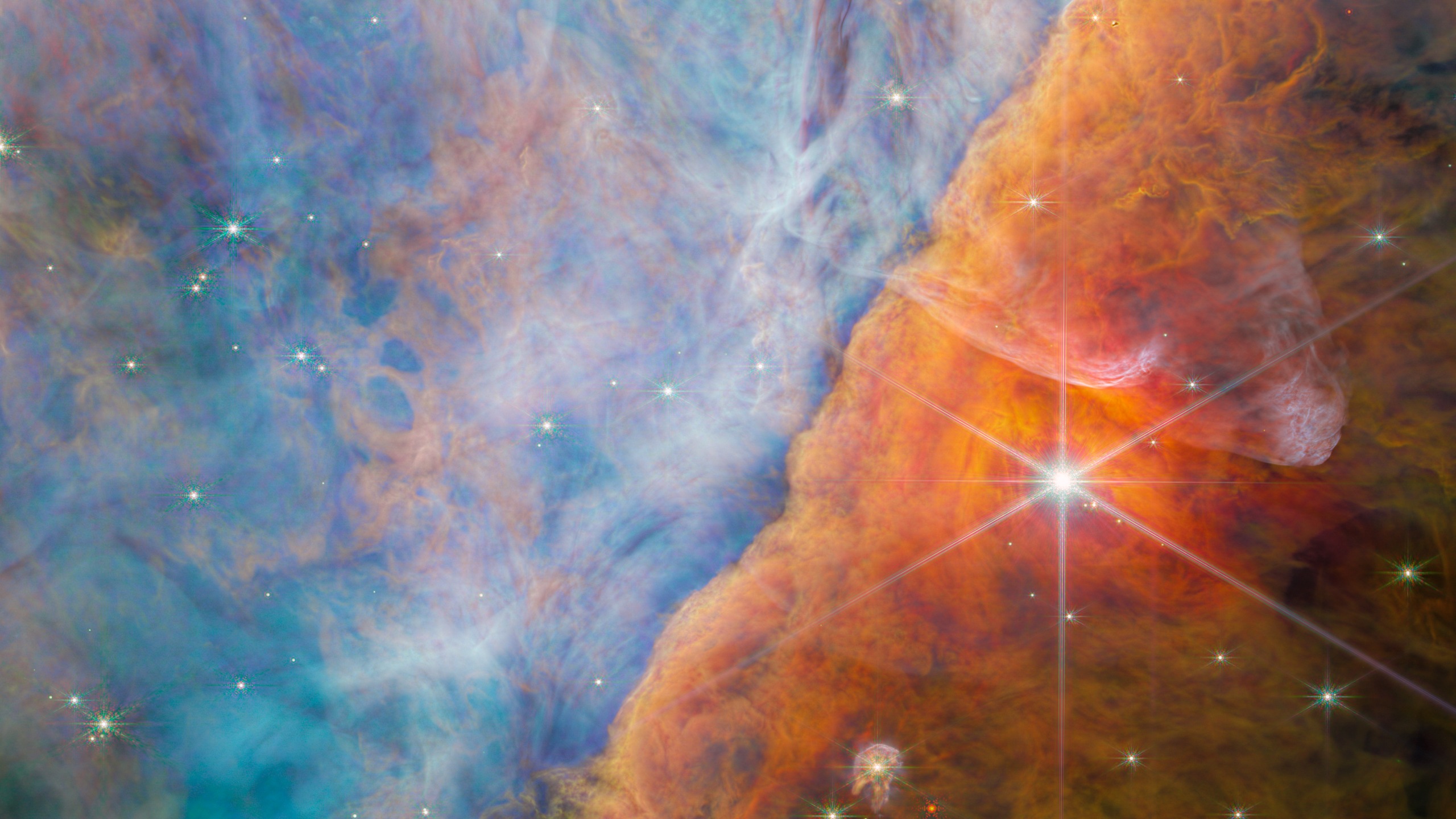
This image taken by Webb’s NIRCam (Near-Infrared Camera) shows a part of the Orion Nebula known as the Orion Bar. It is a region where energetic ultraviolet light from the Trapezium Cluster — located off the upper-left corner — interacts with dense molecular clouds. The energy of the stellar radiation is slowly eroding the Orion Bar, and this has a profound effect on the molecules and chemistry in the protoplanetary disks that have formed around newborn stars here. Within this image lies a young star system known as d203-506, which has a protoplanetary disk. Astronomers used Webb to detect a carbon molecule known as methyl cation in that disk for the first time. That molecule is important because it aids the formation of more complex carbon-based molecules.
18.6k downloads
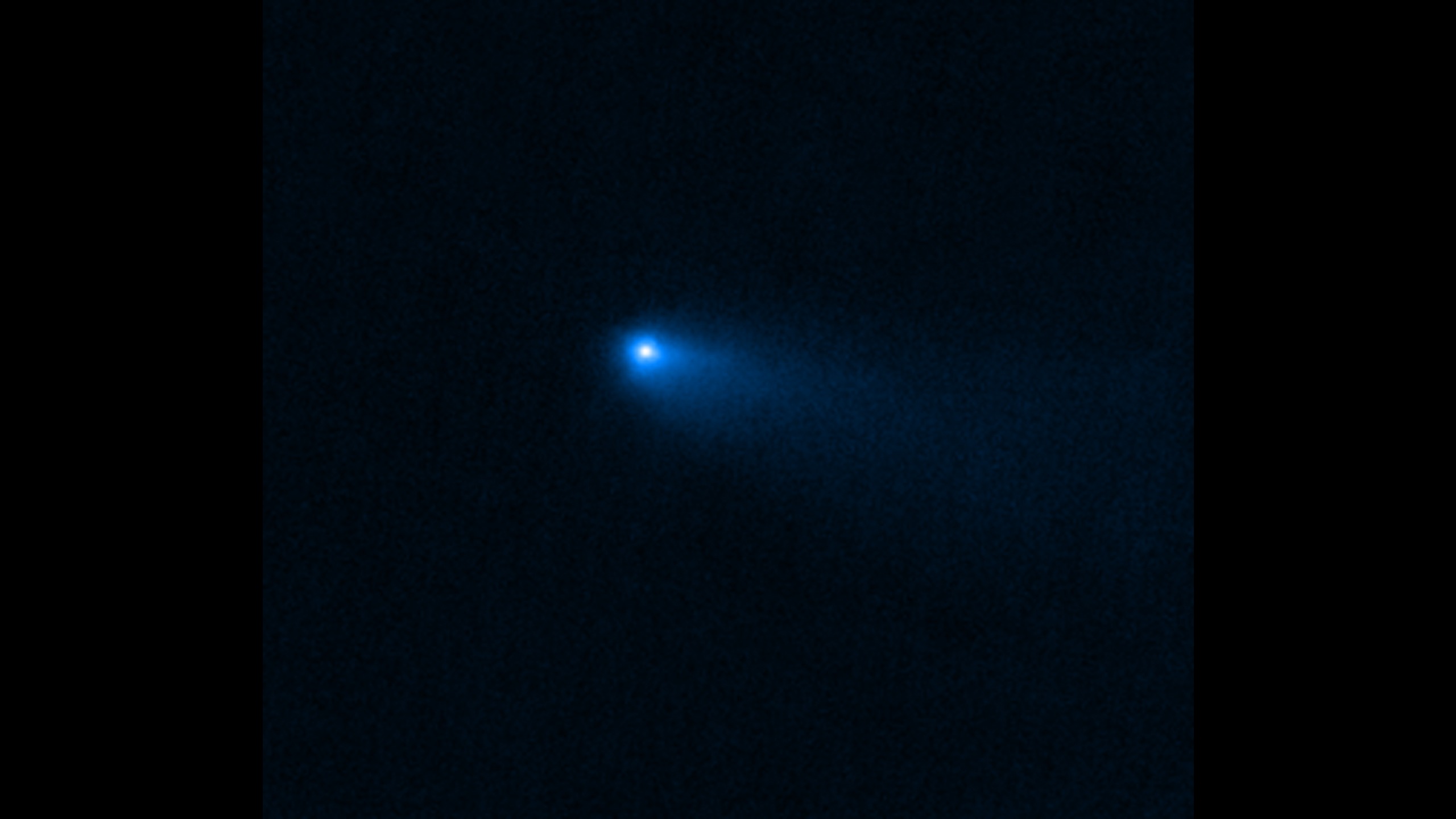
This image of Comet 238P/Read was captured by the NIRCam (Near-Infrared Camera) instrument on NASA’s James Webb Space Telescope on September 8, 2022. It displays the hazy halo, called the coma, and tail that are characteristic of comets, as opposed to asteroids. The dusty coma and tail result from the vaporization of ices as the Sun warms the main body of the comet. Comet Read was among three objects used to define the category of main belt comets in 2006. Before that, comets were understood to reside in the Kuiper Belt and Oort Cloud, beyond the orbit of Neptune, where their ices were preserved farther from the Sun. Since that time scientists have sought to confirm the presence of sublimating material in main belt comets, proving that their coma and tail were due to the same processes that other comets exhibit. With the detection of water vapor on Comet Read, Webb’s sensitive NIRSpec (Near-Infrared Spectrograph) instrument has achieved this goal.
5.9k downloads
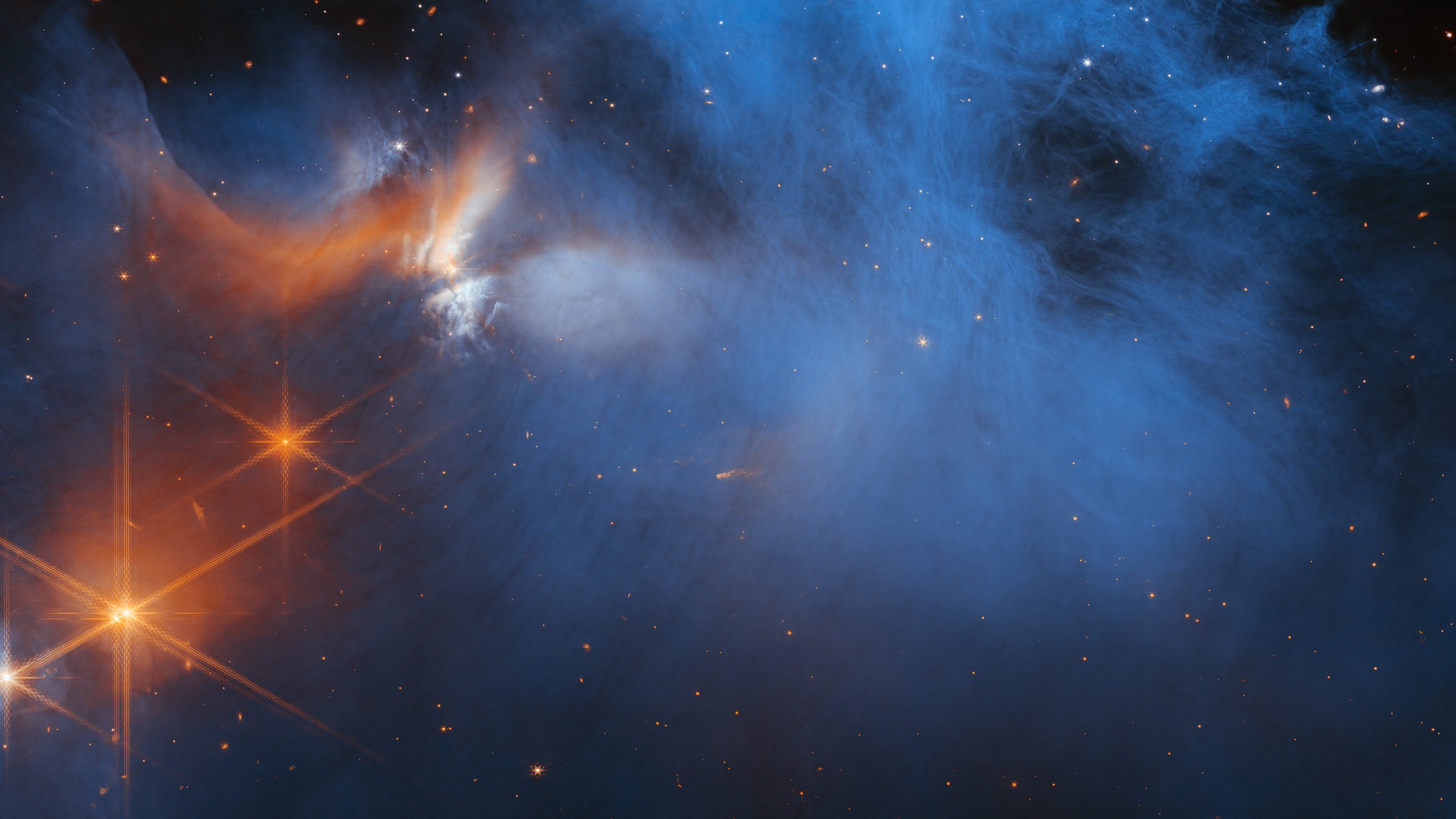
This image by NASA’s James Webb Space Telescope’s Near-Infrared Camera (NIRCam) features the central region of the Chamaeleon I dark molecular cloud, which resides 630 light years away. The cold, wispy cloud material (blue, center) is illuminated in the infrared by the glow of the young, outflowing protostar Ced 110 IRS 4 (orange, upper left). The light from numerous background stars, seen as orange dots behind the cloud, can be used to detect ices in the cloud, which absorb the starlight passing through them. An international team of astronomers has reported the discovery of diverse ices in the darkest regions of a cold molecular cloud measured to date by studying this region. This result allows astronomers to examine the simple icy molecules that will be incorporated into future exoplanets, while opening a new window on the origin of more complex molecules that are the first step in the creation of the building blocks of life.
1.3k downloads
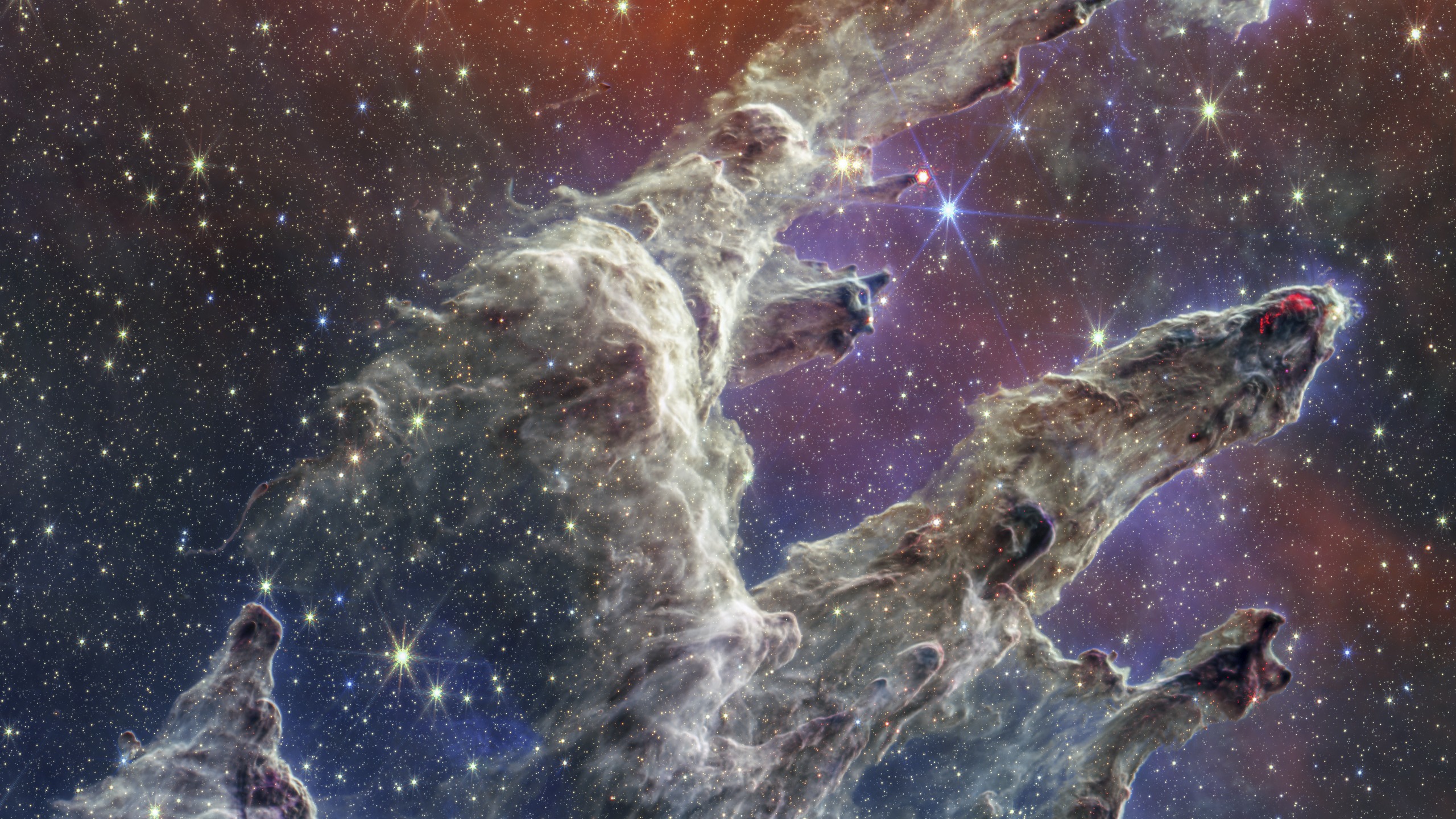
By combining images of the iconic Pillars of Creation from two cameras aboard NASA’s James Webb Space Telescope, the universe has been framed in its infrared glory. Webb’s near-infrared image was fused with its mid-infrared image, setting this star-forming region ablaze with new details. Myriad stars are spread throughout the scene. The stars primarily show up in near-infrared light, marking a contribution of Webb’s Near-Infrared Camera (NIRCam). Near-infrared light also reveals thousands of newly formed stars – look for bright orange spheres that lie just outside the dusty pillars. In mid-infrared light, the dust is on full display. The contributions from Webb’s Mid-Infrared Instrument (MIRI) are most apparent in the layers of diffuse, orange dust that drape the top of the image, relaxing into a V. The densest regions of dust are cast in deep indigo hues, obscuring our view of the activities inside the dense pillars. Dust also makes up the spire-like pillars that extend from the bottom left to the top right. This is one of the reasons why the region is overflowing with stars – dust is a major ingredient of star formation. When knots of gas and dust with sufficient mass form in the pillars, they begin to collapse under their own gravitational attraction, slowly heat up, and eventually form new stars. Newly formed stars are especially apparent at the edges of the top two pillars – they are practically bursting onto the scene. At the top edge of the second pillar, undulating detail in red hints at even more embedded stars. These are even younger, and are quite active as they form. The lava-like regions capture their periodic ejections. As stars form, they periodically send out supersonic jets that can interact within clouds of material, like these thick pillars of gas and dust. These young stars are estimated to be only a few hundred thousand years old, and will continue to form for millions of years. Almost everything you see in this scene is local. The distant universe is largely blocked from our view both by the interstellar medium, which is made up of sparse gas and dust located between the stars, and a thick dust lane in our Milky Way galaxy. As a result, the stars take center stage in Webb’s view of the Pillars of Creation. The Pillars of Creation is a small region within the vast Eagle Nebula, which lies 6,500 light-years away. Revisit Webb’s near-infrared image and its mid-infrared image. The Pillars of Creation was made famous by the Hubble Space Telescope’s 1995 image. NIRCam was built by a team at the University of Arizona and Lockheed Martin’s Advanced Technology Center. MIRI was contributed by ESA and NASA, with the instrument designed and built by a consortium of nationally funded European Institutes (The MIRI European Consortium) in partnership with JPL and the University of Arizona.
20.4k downloads
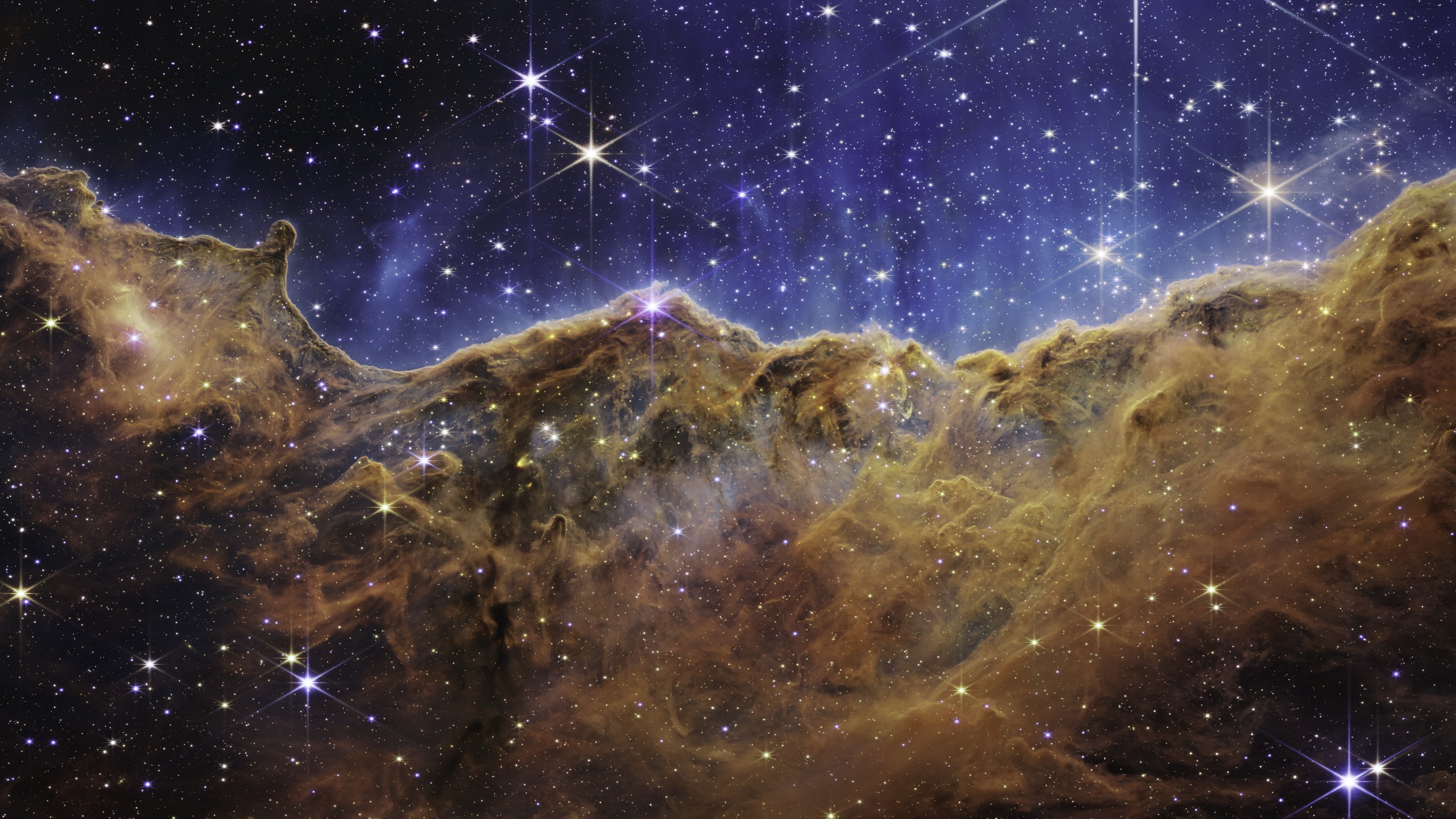
What looks like craggy mountains in moonlight is actually the edge of NGC 3324, a young star-forming region in the Carina Nebula, captured in infrared by Webb's NIRCam. Nicknamed the "Cosmic Cliffs," the region is the edge of a gigantic cavity carved by intense ultraviolet radiation and stellar winds from hot, massive young stars, revealing hundreds of previously hidden stars and background galaxies for the first time.
5.2k downloads
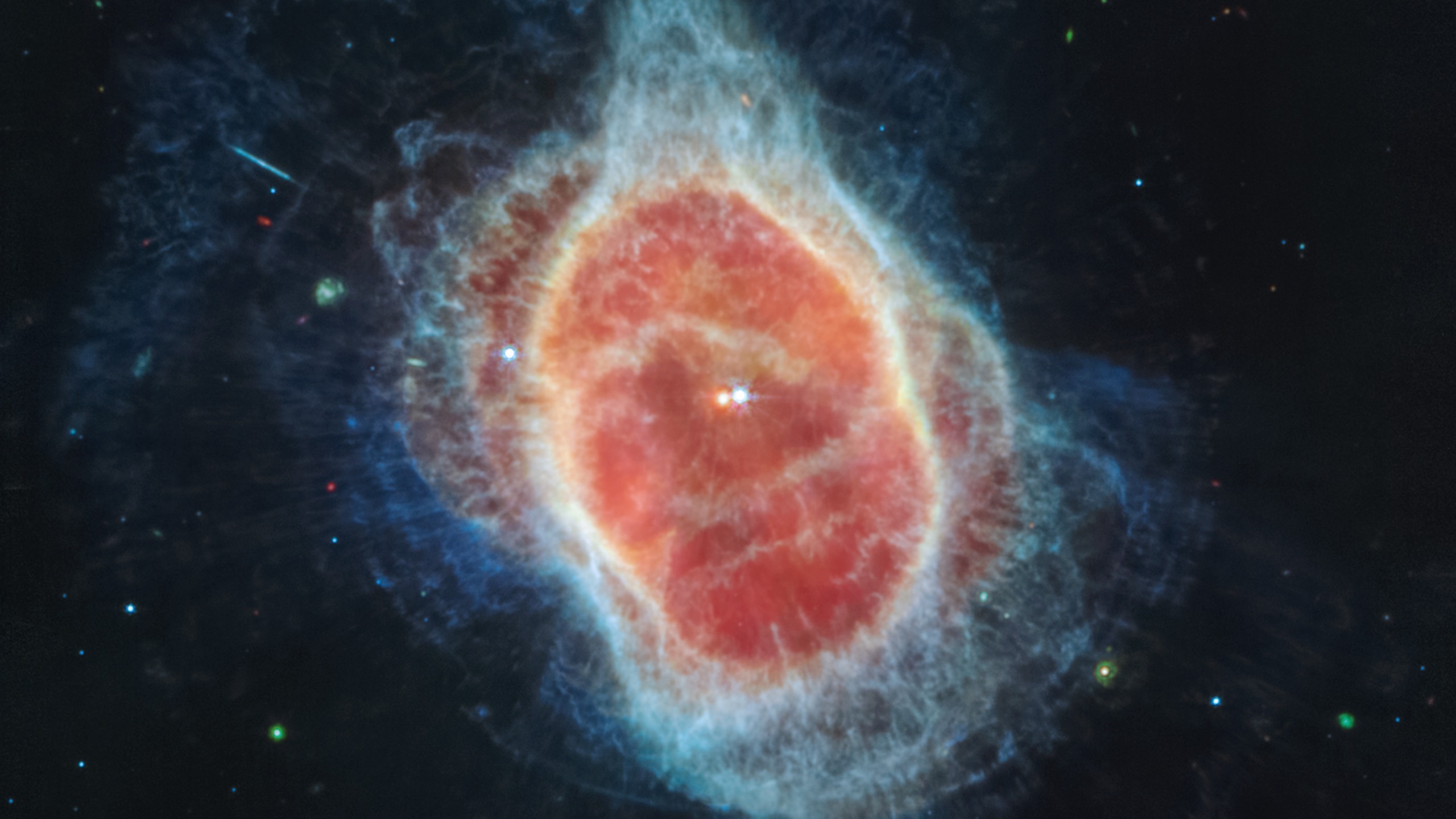
NASA's Webb Telescope has revealed the cloak of dust around the second star, shown at left in red, at the center of the Southern Ring Nebula for the first time. It is a hot, dense white dwarf star. As it transformed into a white dwarf, the star periodically ejected mass, the shells of material you see here. The bluer star at right in this image has also shaped the scene, helping stir up the ejected material. The disk around the stars is also wobbling, shooting out spirals of gas and dust over long periods of time. Webb captured this scene in mid-infrared light, most of which can only be observed from space. Mid-infrared light helps researchers detect objects enshrouded in dust, like the red star. This Mid-Infrared Instrument (MIRI) image also offers an incredible amount of detail, including a cache of distant galaxies in the background.
1k downloads