#dusty debris disk
2 wallpapers tagged "dusty debris disk"
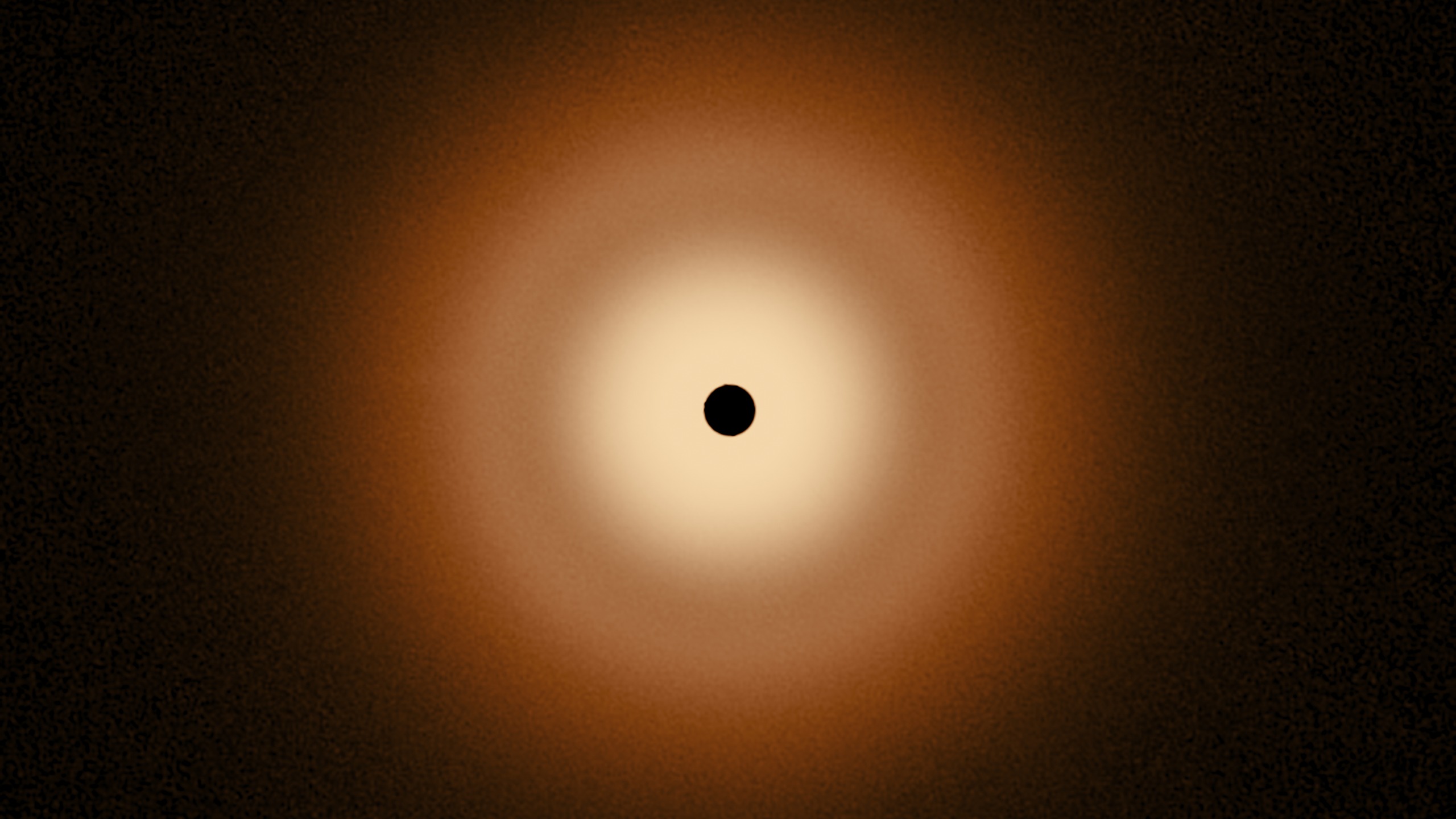
The James Webb Space Telescope resolves the glow of warm dust in a disk halo, at 23 billion miles out. The outer disk (analogous to the solar system's Kuiper Belt) extends from 7 billion miles to 15 billion miles. The inner disk extends from the inner edge of the outer disk down to close proximity to the star. There is a notable dip in surface brightness of the inner disk from approximately 3.7 to 7.2 billion miles. The black spot at the center is due to lack of data from saturation.
4.5k downloads
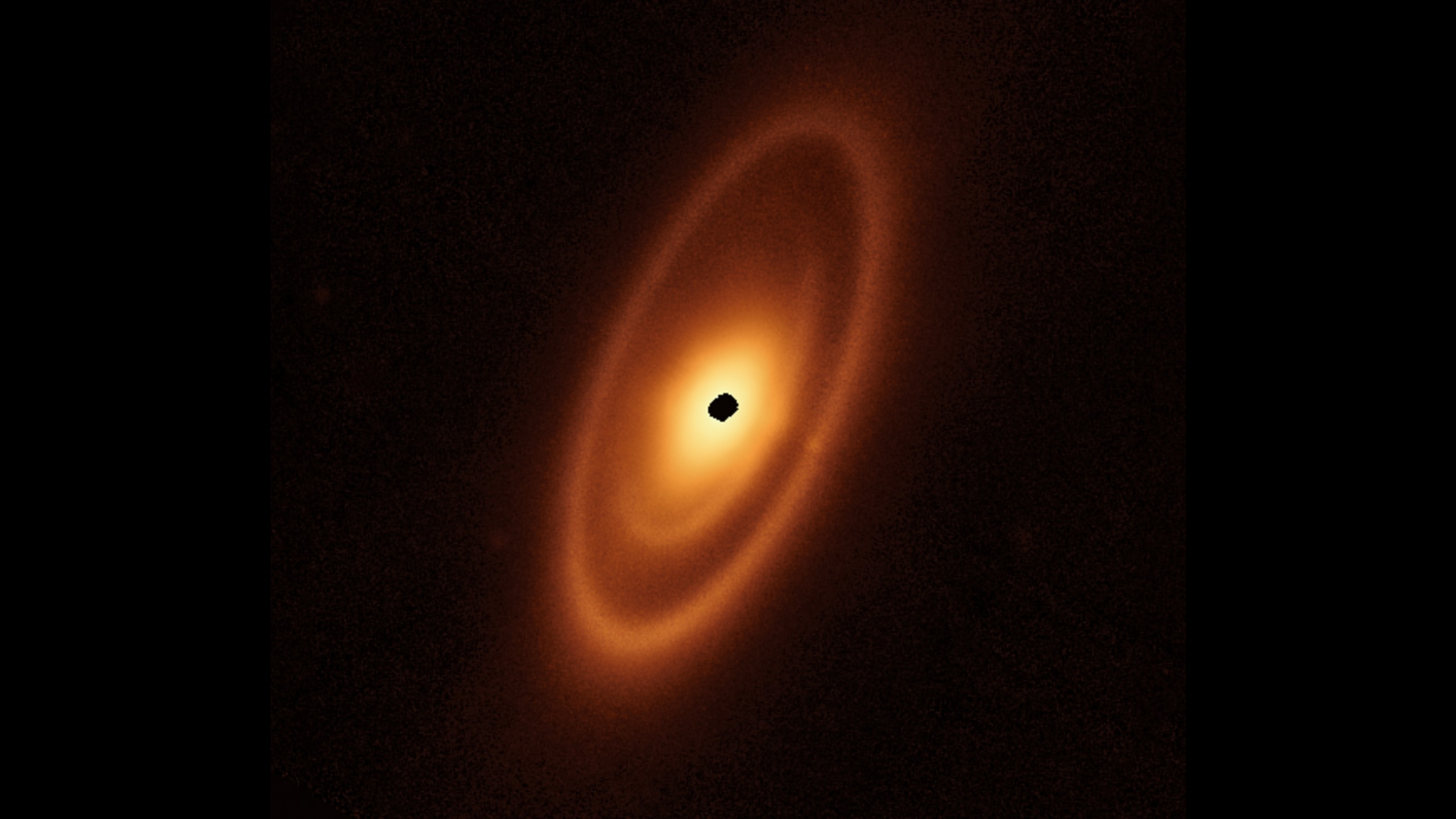
This image of the dusty debris disk surrounding the young star Fomalhaut is from Webb’s Mid-Infrared Instrument (MIRI). It reveals three nested belts extending out to 14 billion miles (23 billion kilometers) from the star. The inner belts – which had never been seen before – were revealed by Webb for the first time. The ragged black spot in the middle indicates a lack of data due to detector saturation. The Hubble Space Telescope and Herschel Space Observatory, as well as the Atacama Large Millimeter/submillimeter Array (ALMA), have previously taken sharp images of the outermost belt. However, none of them found any structure interior to it. These belts most likely are carved by the gravitational forces produced by unseen planets.
10.7k downloads