Orange Wallpapers
Hot dust and glowing hydrogen, from planetary nebulae to the inner regions of active star-forming clouds.
13 wallpapers
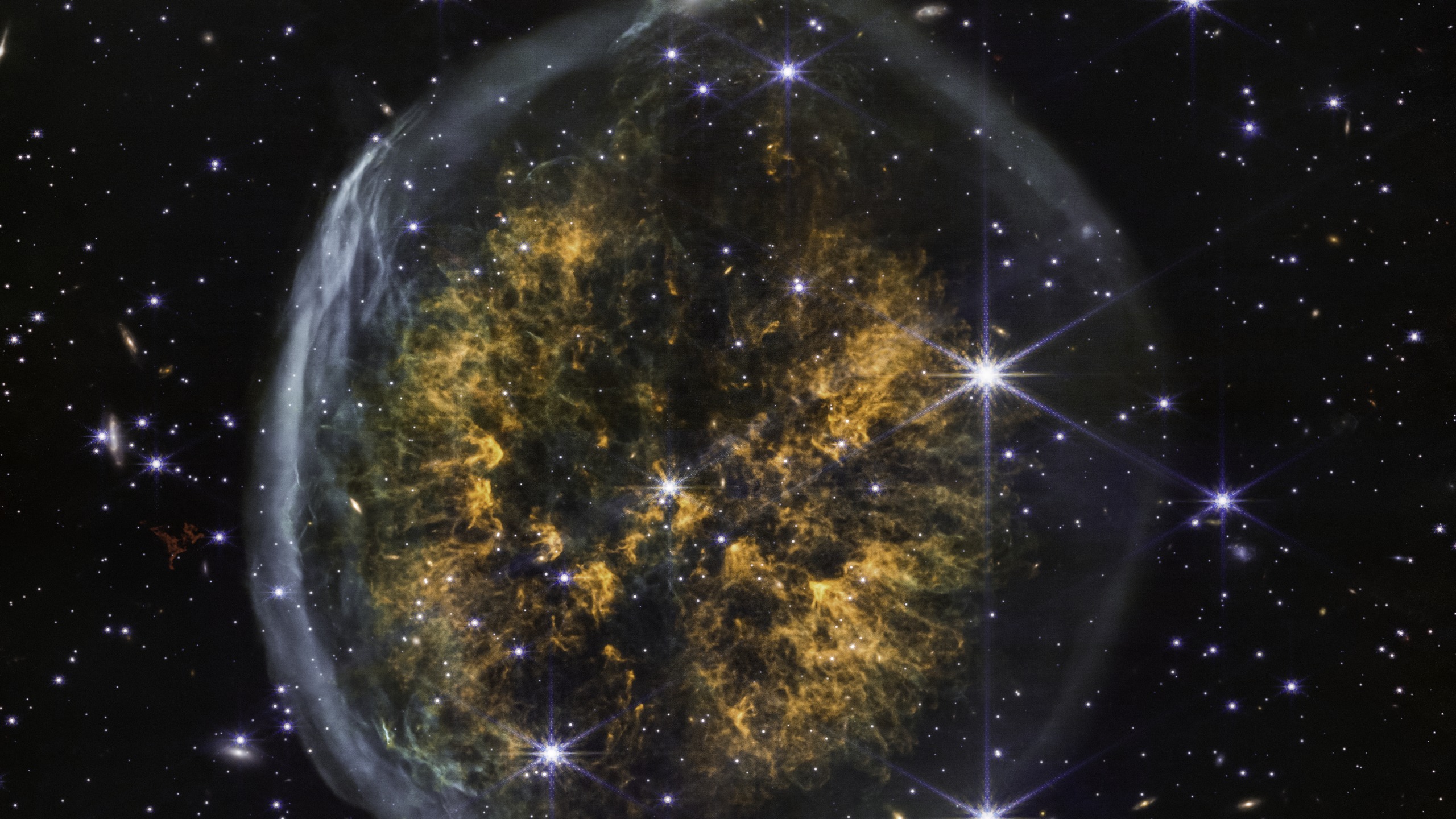
NASA's James Webb Space Telescope captured this near-infrared view of the PMR 1 "Exposed Cranium" nebula using its NIRCam instrument. More stars and background galaxies shine through in this near-infrared light, and the dark center lane that gives the nebula its distinctive brain-like appearance is especially noticeable here.
36k downloads
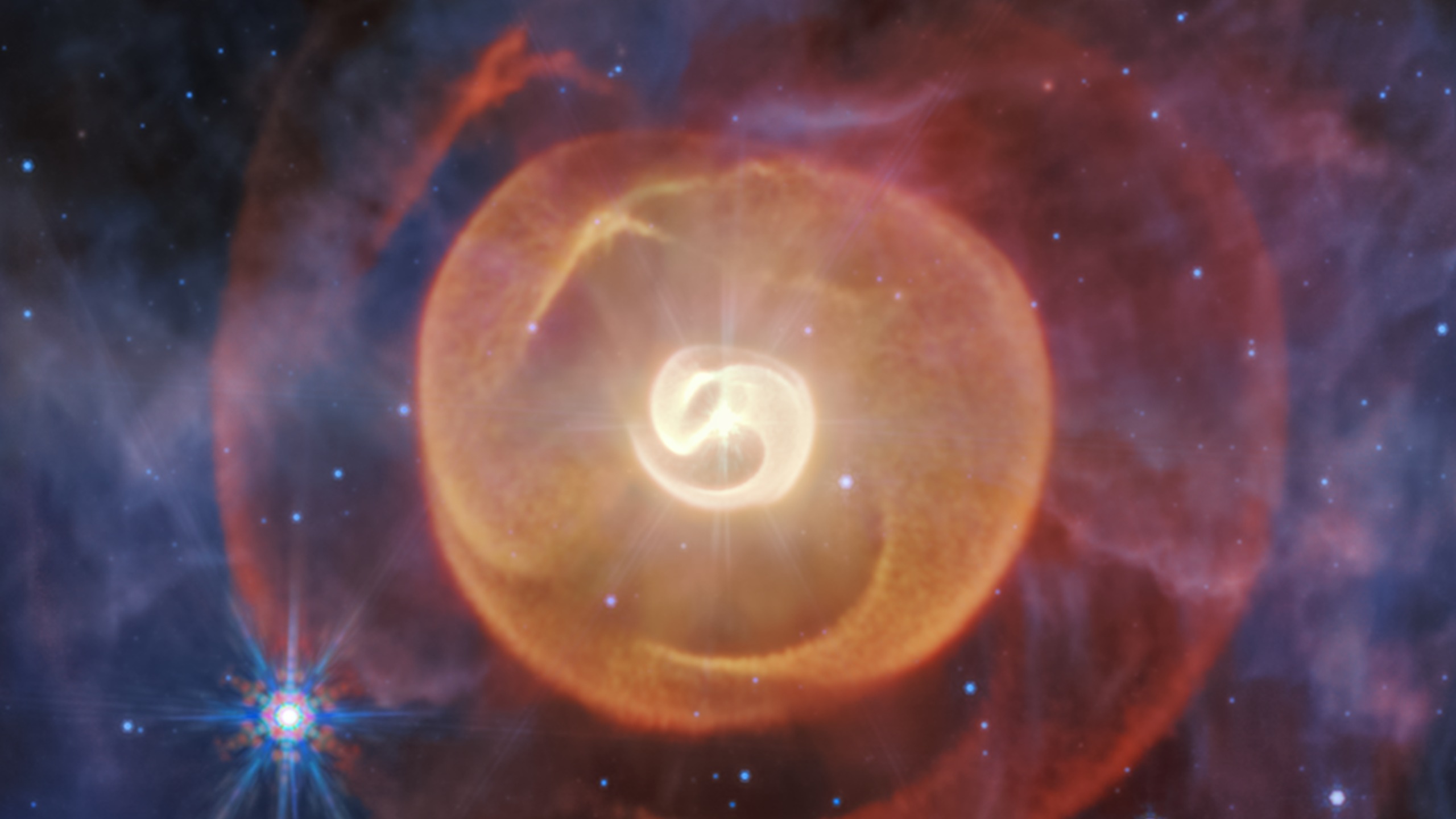
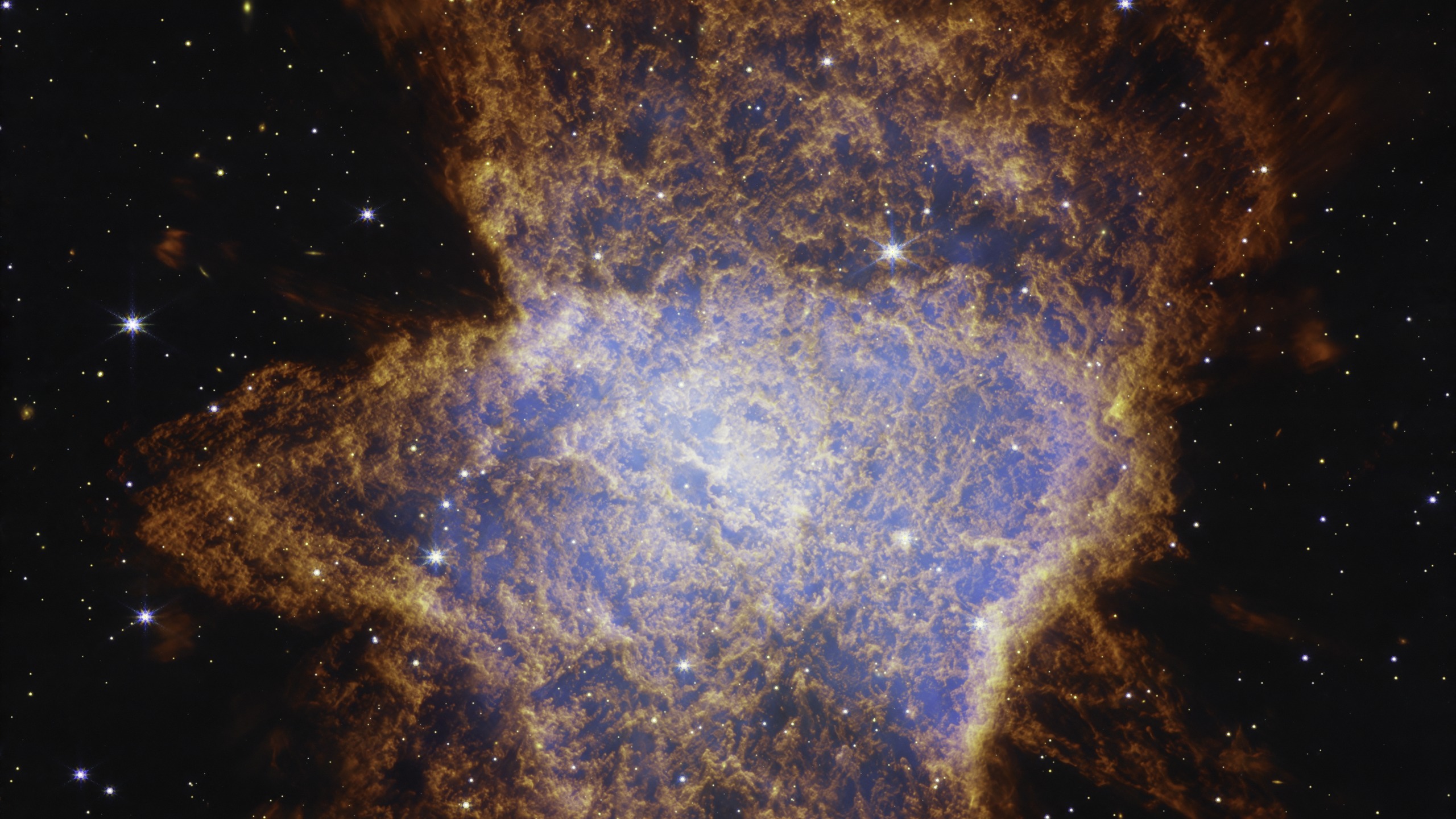
NASA’s James Webb Space Telescope’s view of planetary nebula NGC 6072 in the near-infrared shows a complex scene of multiple outflows expanding out at different angles from a dying star at the center of the scene. There is one stretching from roughly 11 to 5 o’clock, another from 1 to 7 o’clock, and possibly a third from 12 to 6 o’clock. These outflows push gas toward the equatorial plane, forming a disk that appears to span from 9 to 3 o’clock. Astronomers suspect there is at least one other star interacting with the material cast off by the central dying star, creating the abnormal appearance of this planetary nebula. In this image, the red areas represent cool molecular gas, for example, molecular hydrogen. Read the full image description.
27.2k downloads
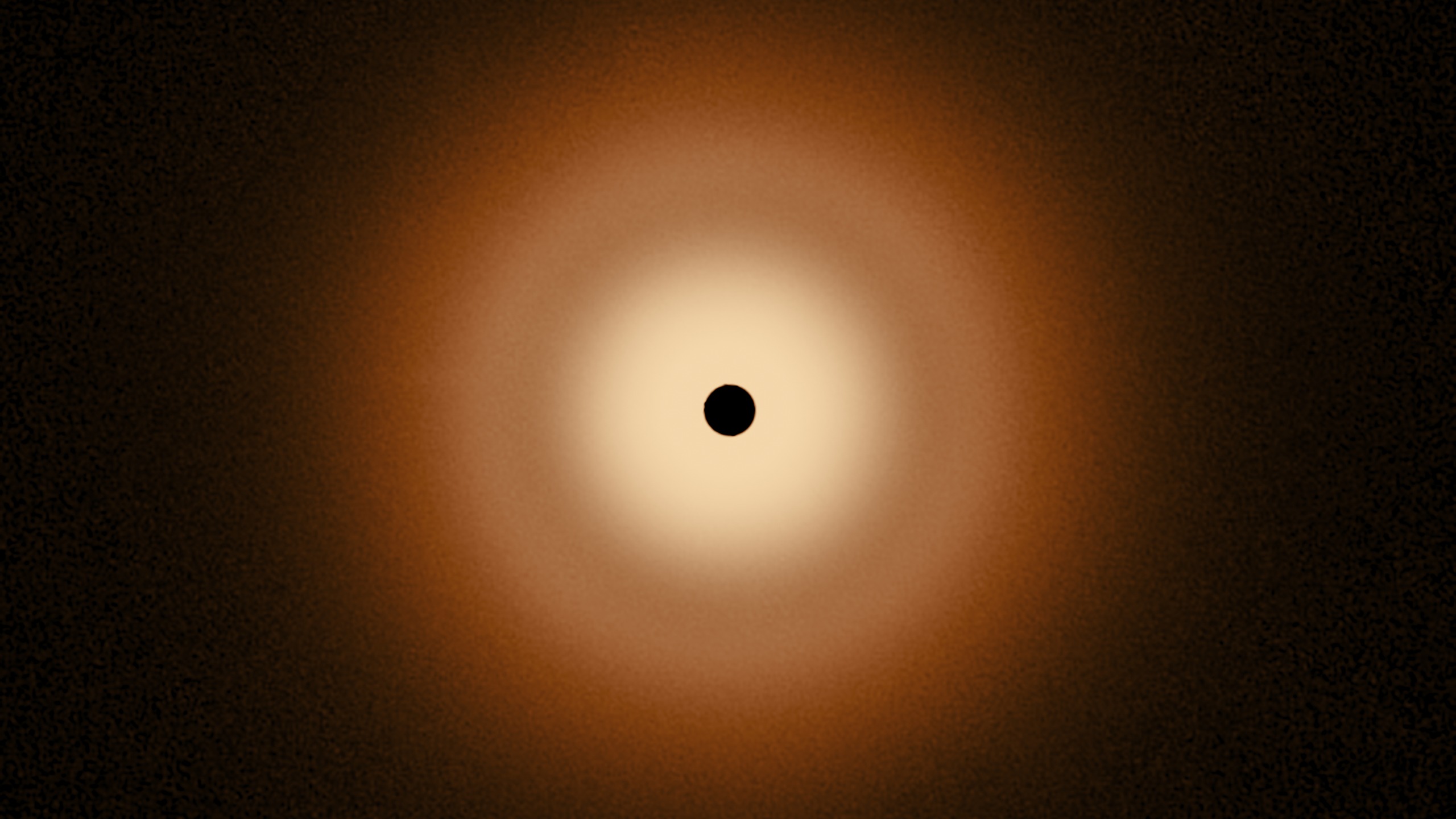
The James Webb Space Telescope resolves the glow of warm dust in a disk halo, at 23 billion miles out. The outer disk (analogous to the solar system's Kuiper Belt) extends from 7 billion miles to 15 billion miles. The inner disk extends from the inner edge of the outer disk down to close proximity to the star. There is a notable dip in surface brightness of the inner disk from approximately 3.7 to 7.2 billion miles. The black spot at the center is due to lack of data from saturation.
4.5k downloads
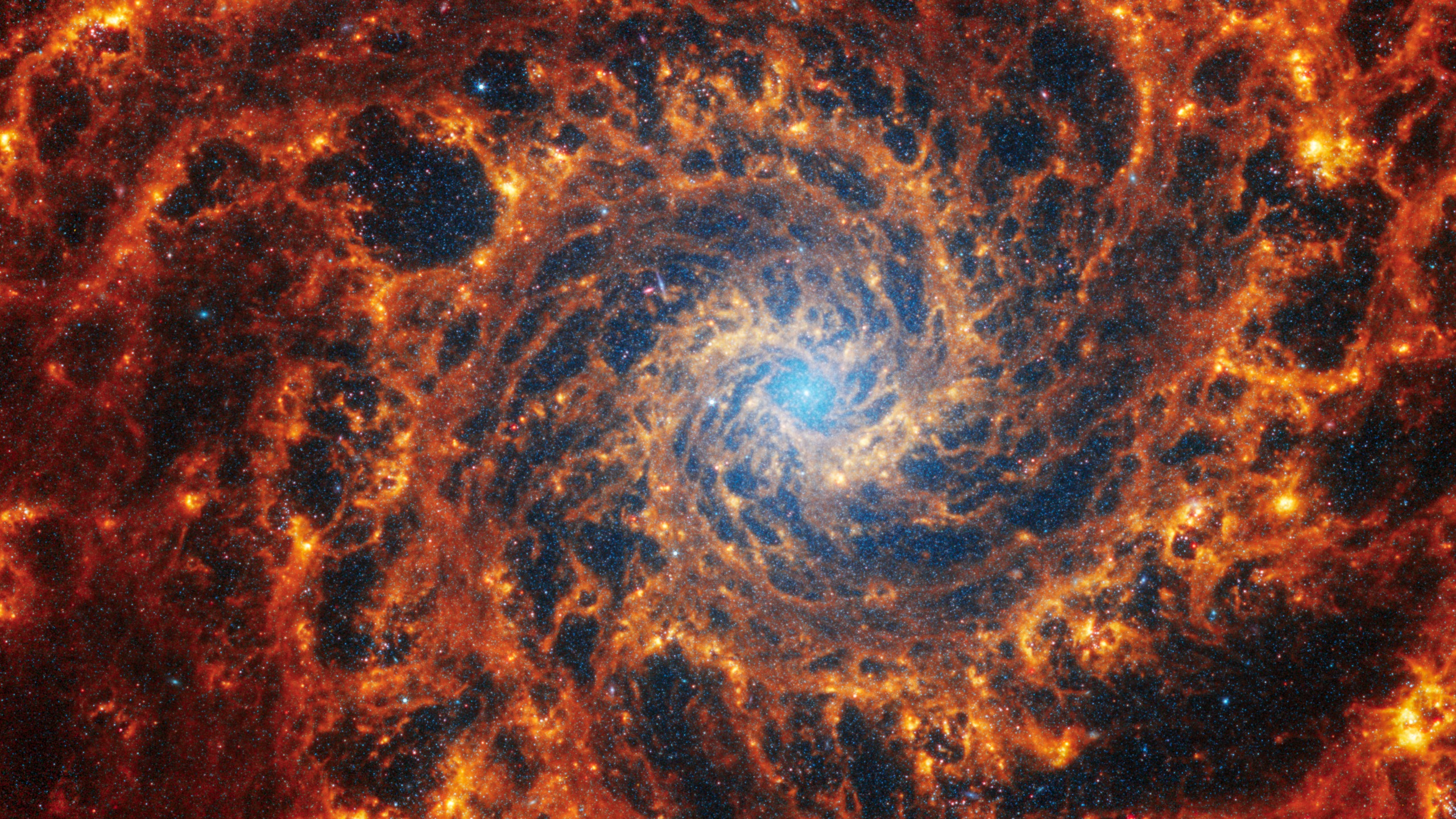
Face-on spiral galaxy, NGC 628, is split diagonally in this image: The James Webb Space Telescope’s observations appear at top left, and the Hubble Space Telescope’s on bottom right. Webb and Hubble’s images show a striking contrast, an inverse of darkness and light. Why? Webb’s observations combine near- and mid-infrared light and Hubble’s showcase visible light. Dust absorbs ultraviolet and visible light, and then re-emits it in the infrared. In Webb's images, we see dust glowing in infrared light. In Hubble’s images, dark regions are where starlight is absorbed by dust. Webb’s image includes distant galaxies that are located well behind the tightly cropped foreground galaxy. Look for bright blue and pink disks, some seen edge-on, like a plate with a central sphere. Redder galaxies are more distant. In Hubble’s view, distant galaxies are often light orange if they are slightly closer. Like in Webb's image, those that are deeper red are also more distant. Galaxy NGC 628 was observed as part of the Physics at High Angular resolution in Nearby GalaxieS (PHANGS) program, a large project that includes observations from several space- and ground-based telescopes of many galaxies to help researchers study all phases of the star formation cycle, from the formation of stars within dusty gas clouds to the energy released in the process that creates the intricate structures revealed by Webb’s new images. NGC 628 is 32 million light-years away in the constellation Pisces. Extended Description and Image Alt Text
21.8k downloads
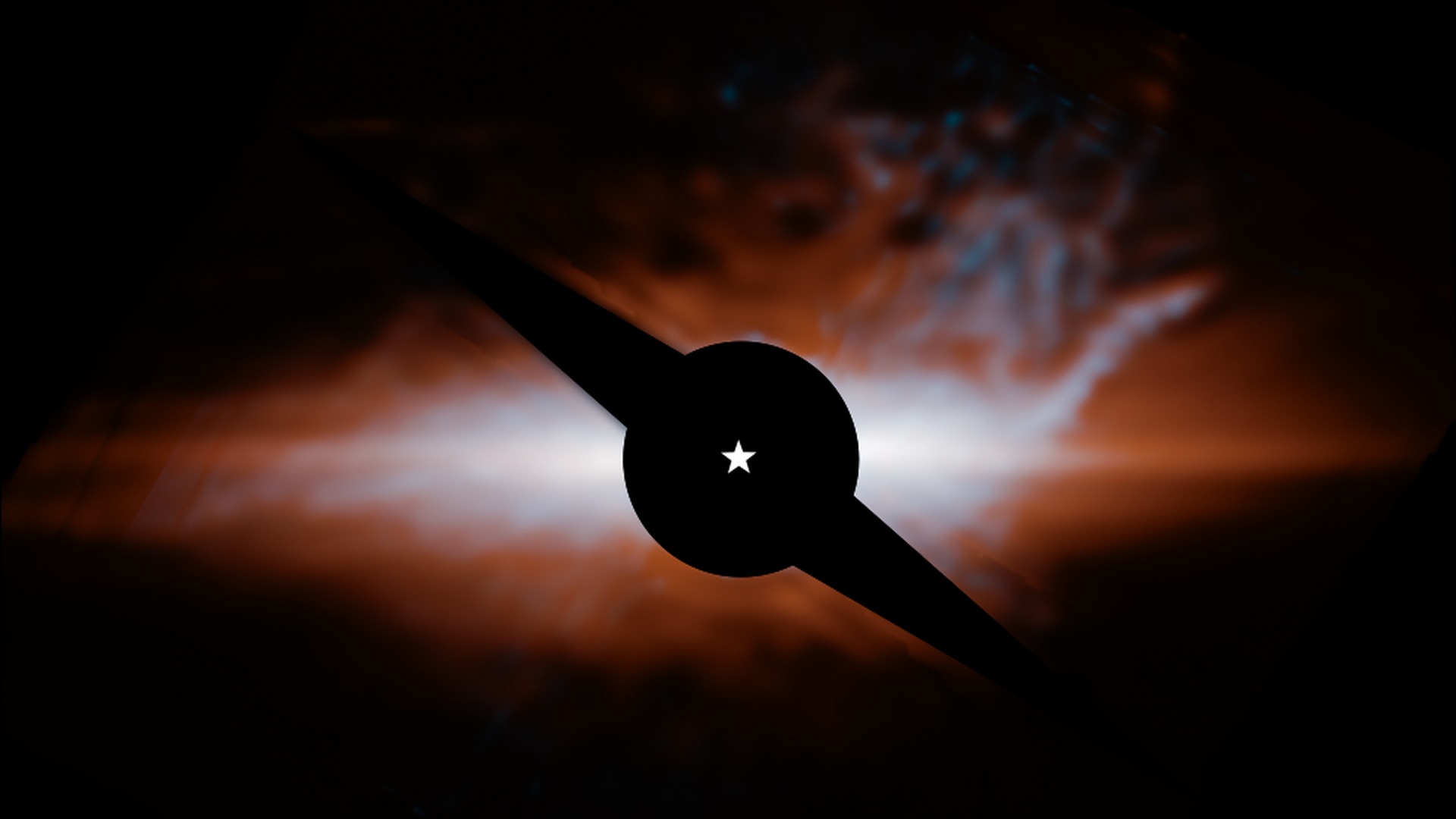
The dark circle and two smaller disks at the center of this image are a coronagraph, deliberately blocking the light of Beta Pictoris' central star (its actual position is marked with a small white star shape) so the much fainter dust disks surrounding it become visible. NASA's James Webb Space Telescope used this technique to image star system Beta Pictoris in detail. Webb's MIRI (Mid-Infrared Instrument) enabled a team of astronomers to investigate the composition of Beta Pic's main and secondary debris disks, the latter a feature previously detected by the Hubble Space Telescope. Unexpectedly, Webb's infrared capabilities detected a new feature of the Beta Pic system: a curvy branch of dust that resembles the shape of a cat's tail. This tail, only noticeable in the MIRI data, extends from the southwest portion of the secondary debris disk and is estimated to span 10 billion miles. The dust that forms the tail may be similar to the matter found on the surfaces of comets and asteroids in our solar system. The team believes a dust production event, such as a collision between asteroids, comets, or planetesimals, is responsible. In this image, light at 15.5 microns is colored cyan and 23 microns is orange (filters F1550C and F2300C).
10.8k downloads
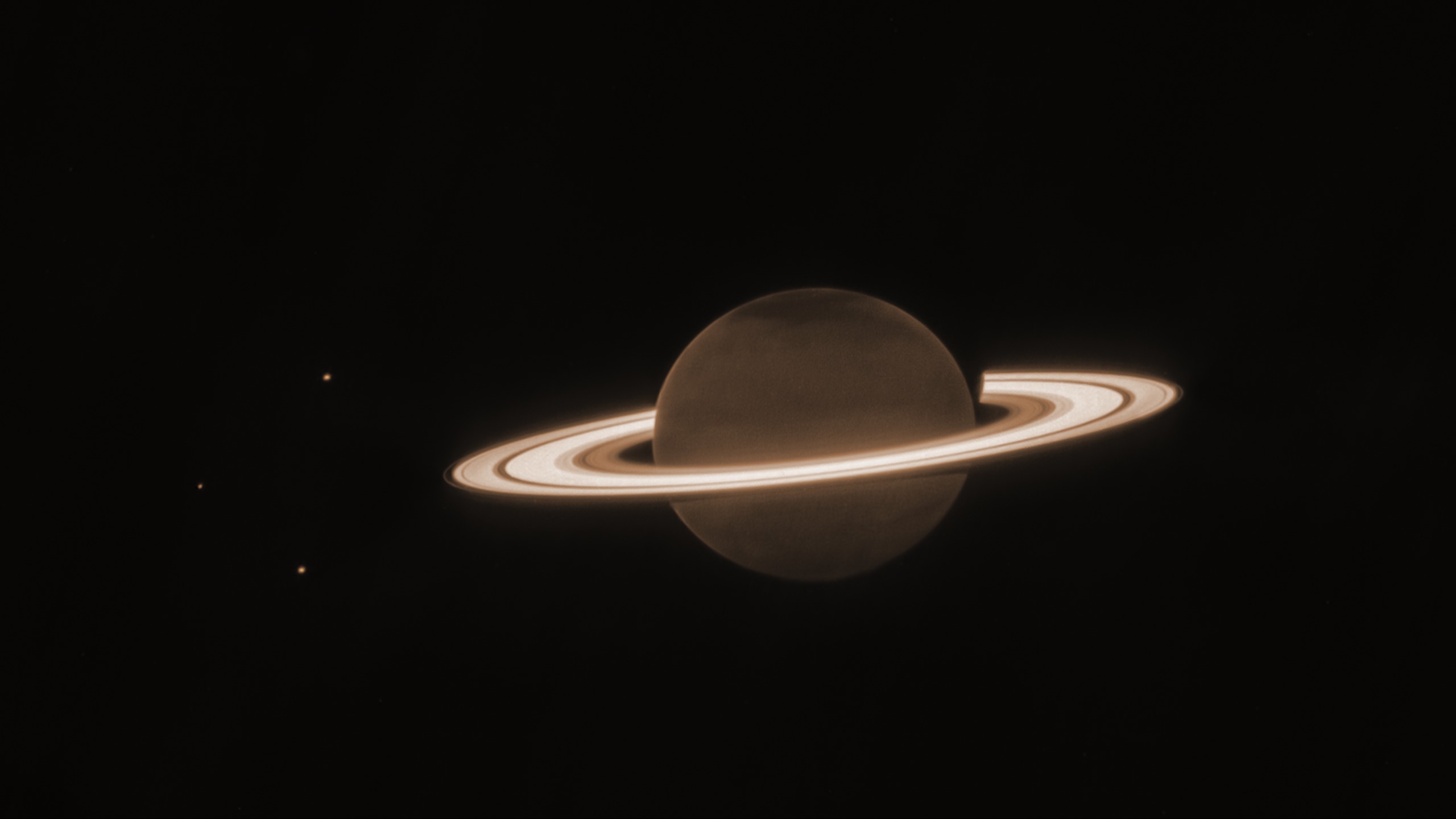
On June 25, 2023, NASA's James Webb Space Telescope turned to famed ringed world Saturn for its first near-infrared observations of the planet. The initial imagery from Webb's NIRCam (Near-Infrared Camera) is already fascinating researchers. Saturn itself appears extremely dark at this infrared wavelength observed by the telescope, as methane gas absorbs almost all of the sunlight falling on the atmosphere. However, the icy rings stay relatively bright, leading to the unusual appearance of Saturn in the Webb image. This image was taken as part of Webb Guaranteed Time Observation program 1247. The program included several very deep exposures of Saturn, which were designed to test the telescope's capacity to detect faint moons around the planet and its bright rings. Any newly discovered moons could garner important clues about the flow of material in the current Saturn system, as well as its past history.
12.5k downloads
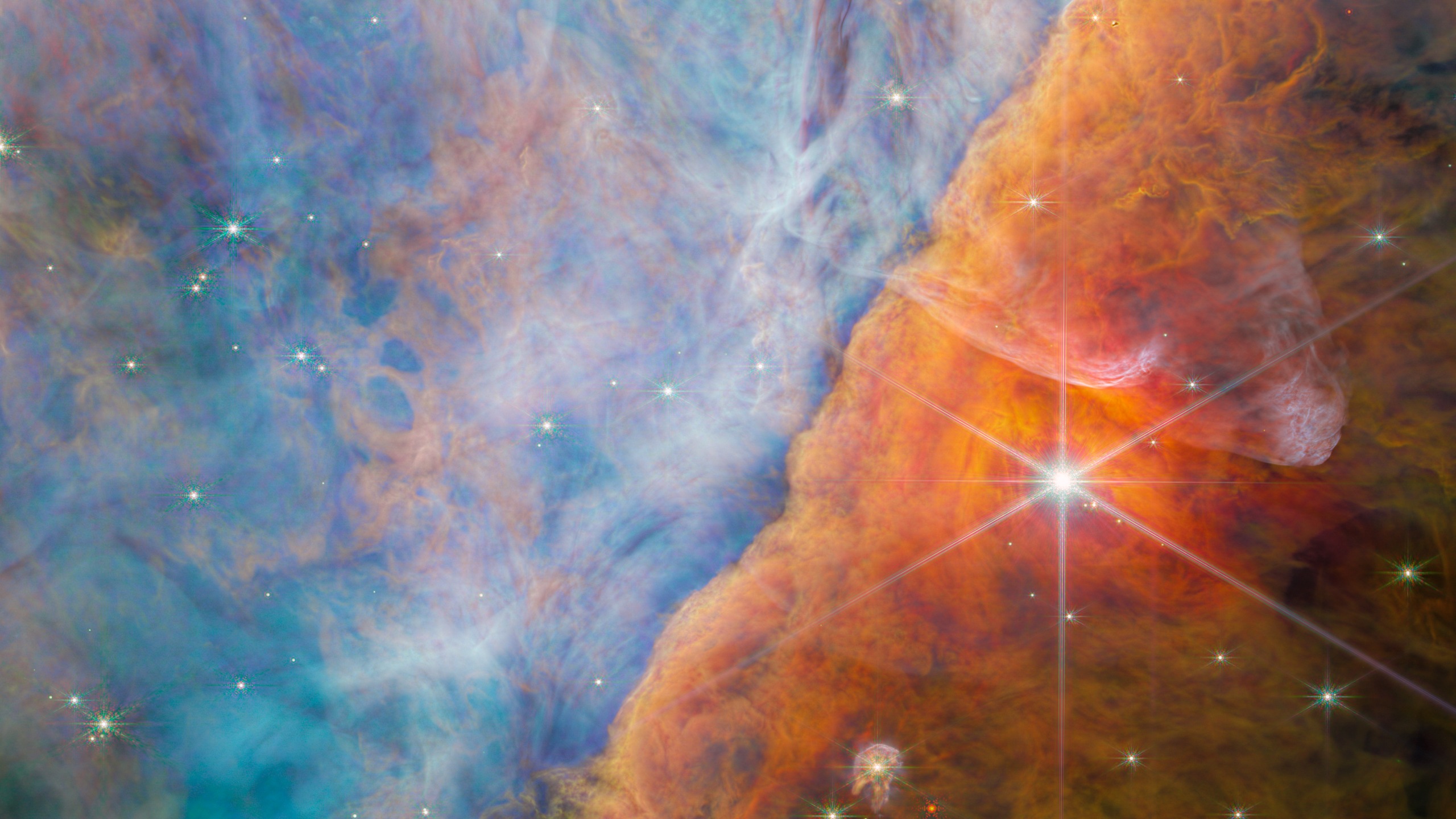
This image taken by Webb’s NIRCam (Near-Infrared Camera) shows a part of the Orion Nebula known as the Orion Bar. It is a region where energetic ultraviolet light from the Trapezium Cluster — located off the upper-left corner — interacts with dense molecular clouds. The energy of the stellar radiation is slowly eroding the Orion Bar, and this has a profound effect on the molecules and chemistry in the protoplanetary disks that have formed around newborn stars here. Within this image lies a young star system known as d203-506, which has a protoplanetary disk. Astronomers used Webb to detect a carbon molecule known as methyl cation in that disk for the first time. That molecule is important because it aids the formation of more complex carbon-based molecules.
18.6k downloads
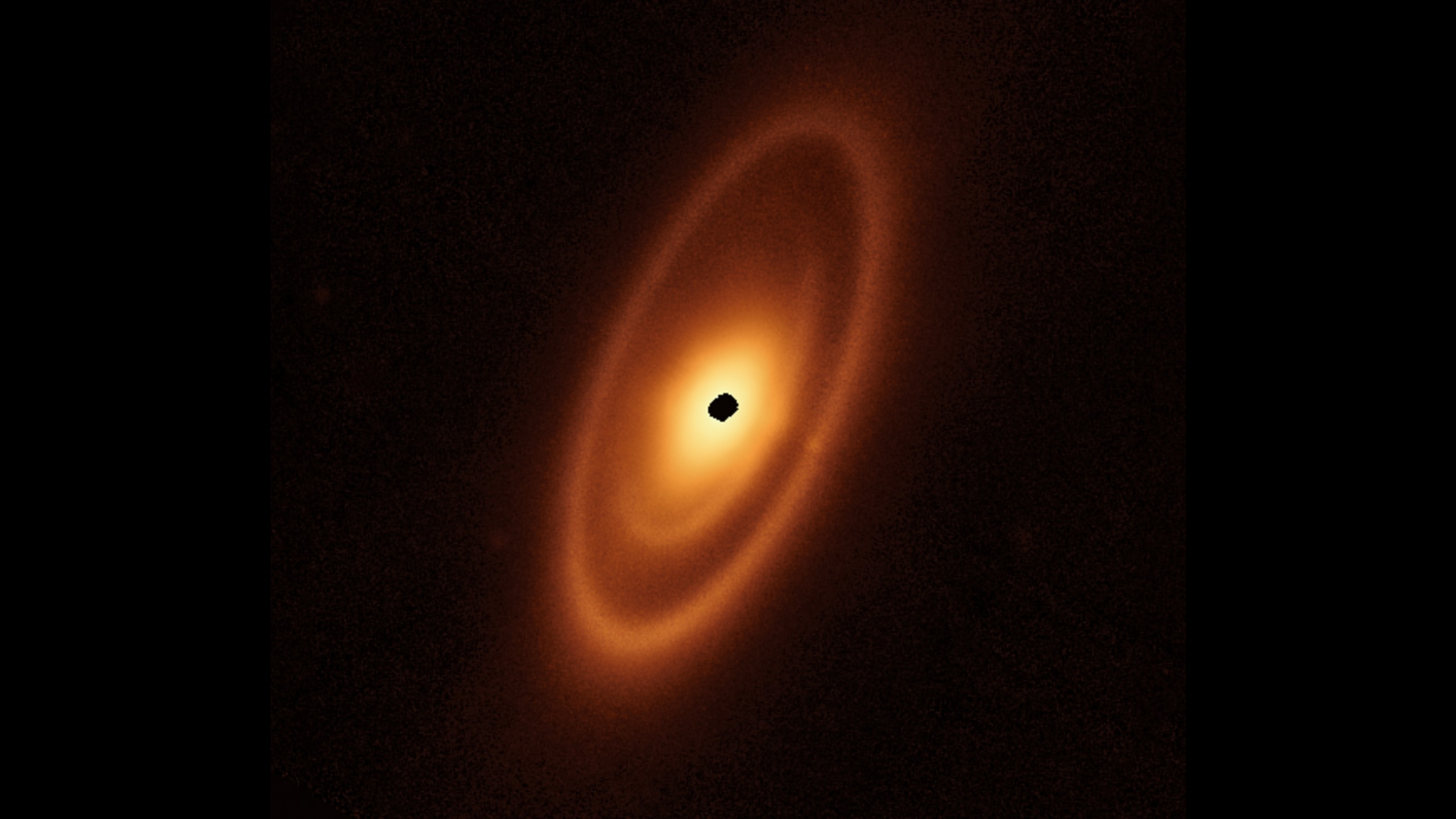
This image of the dusty debris disk surrounding the young star Fomalhaut is from Webb’s Mid-Infrared Instrument (MIRI). It reveals three nested belts extending out to 14 billion miles (23 billion kilometers) from the star. The inner belts – which had never been seen before – were revealed by Webb for the first time. The ragged black spot in the middle indicates a lack of data due to detector saturation. The Hubble Space Telescope and Herschel Space Observatory, as well as the Atacama Large Millimeter/submillimeter Array (ALMA), have previously taken sharp images of the outermost belt. However, none of them found any structure interior to it. These belts most likely are carved by the gravitational forces produced by unseen planets.
10.7k downloads
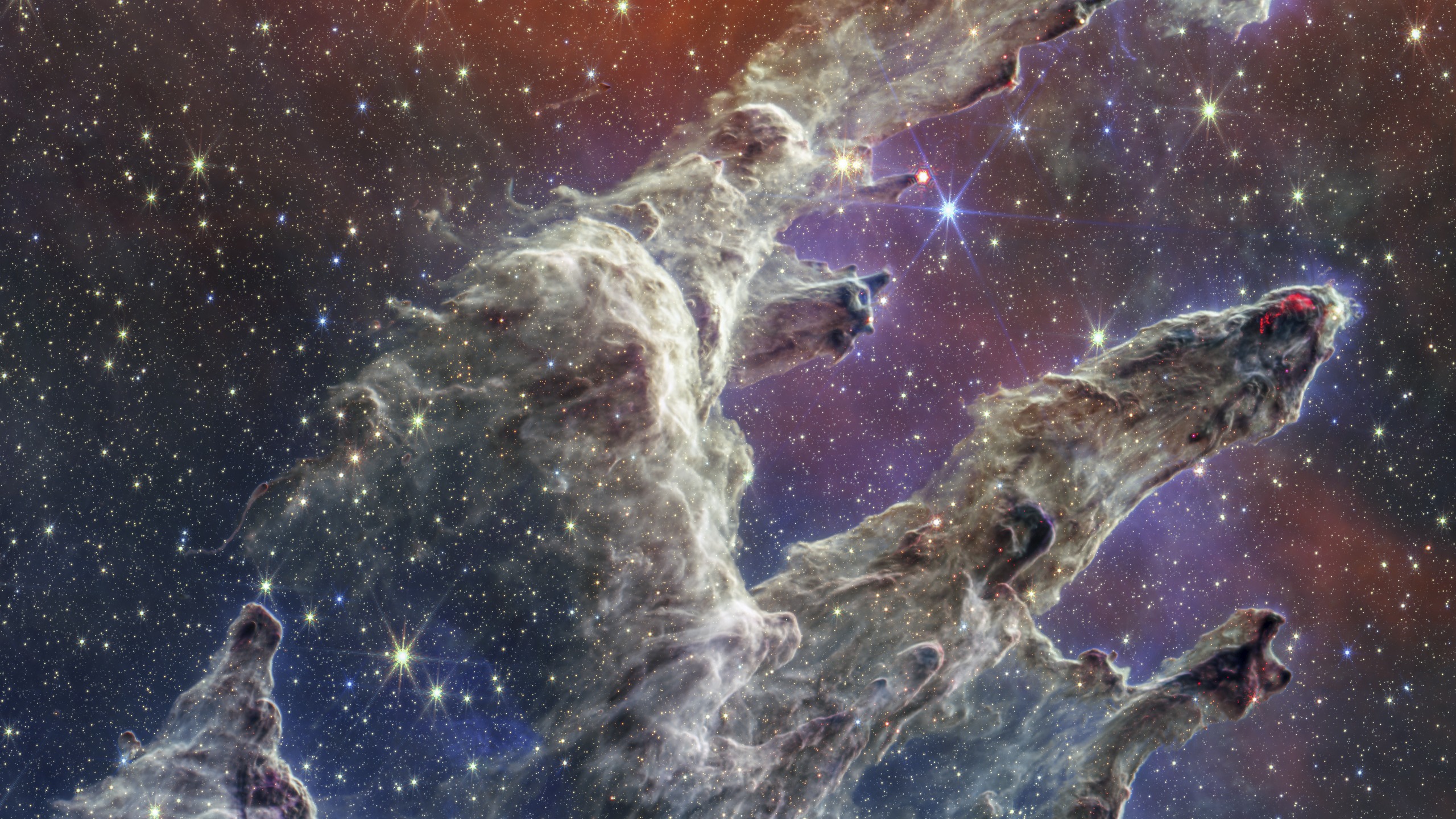
By combining images of the iconic Pillars of Creation from two cameras aboard NASA’s James Webb Space Telescope, the universe has been framed in its infrared glory. Webb’s near-infrared image was fused with its mid-infrared image, setting this star-forming region ablaze with new details. Myriad stars are spread throughout the scene. The stars primarily show up in near-infrared light, marking a contribution of Webb’s Near-Infrared Camera (NIRCam). Near-infrared light also reveals thousands of newly formed stars – look for bright orange spheres that lie just outside the dusty pillars. In mid-infrared light, the dust is on full display. The contributions from Webb’s Mid-Infrared Instrument (MIRI) are most apparent in the layers of diffuse, orange dust that drape the top of the image, relaxing into a V. The densest regions of dust are cast in deep indigo hues, obscuring our view of the activities inside the dense pillars. Dust also makes up the spire-like pillars that extend from the bottom left to the top right. This is one of the reasons why the region is overflowing with stars – dust is a major ingredient of star formation. When knots of gas and dust with sufficient mass form in the pillars, they begin to collapse under their own gravitational attraction, slowly heat up, and eventually form new stars. Newly formed stars are especially apparent at the edges of the top two pillars – they are practically bursting onto the scene. At the top edge of the second pillar, undulating detail in red hints at even more embedded stars. These are even younger, and are quite active as they form. The lava-like regions capture their periodic ejections. As stars form, they periodically send out supersonic jets that can interact within clouds of material, like these thick pillars of gas and dust. These young stars are estimated to be only a few hundred thousand years old, and will continue to form for millions of years. Almost everything you see in this scene is local. The distant universe is largely blocked from our view both by the interstellar medium, which is made up of sparse gas and dust located between the stars, and a thick dust lane in our Milky Way galaxy. As a result, the stars take center stage in Webb’s view of the Pillars of Creation. The Pillars of Creation is a small region within the vast Eagle Nebula, which lies 6,500 light-years away. Revisit Webb’s near-infrared image and its mid-infrared image. The Pillars of Creation was made famous by the Hubble Space Telescope’s 1995 image. NIRCam was built by a team at the University of Arizona and Lockheed Martin’s Advanced Technology Center. MIRI was contributed by ESA and NASA, with the instrument designed and built by a consortium of nationally funded European Institutes (The MIRI European Consortium) in partnership with JPL and the University of Arizona.
20.4k downloads
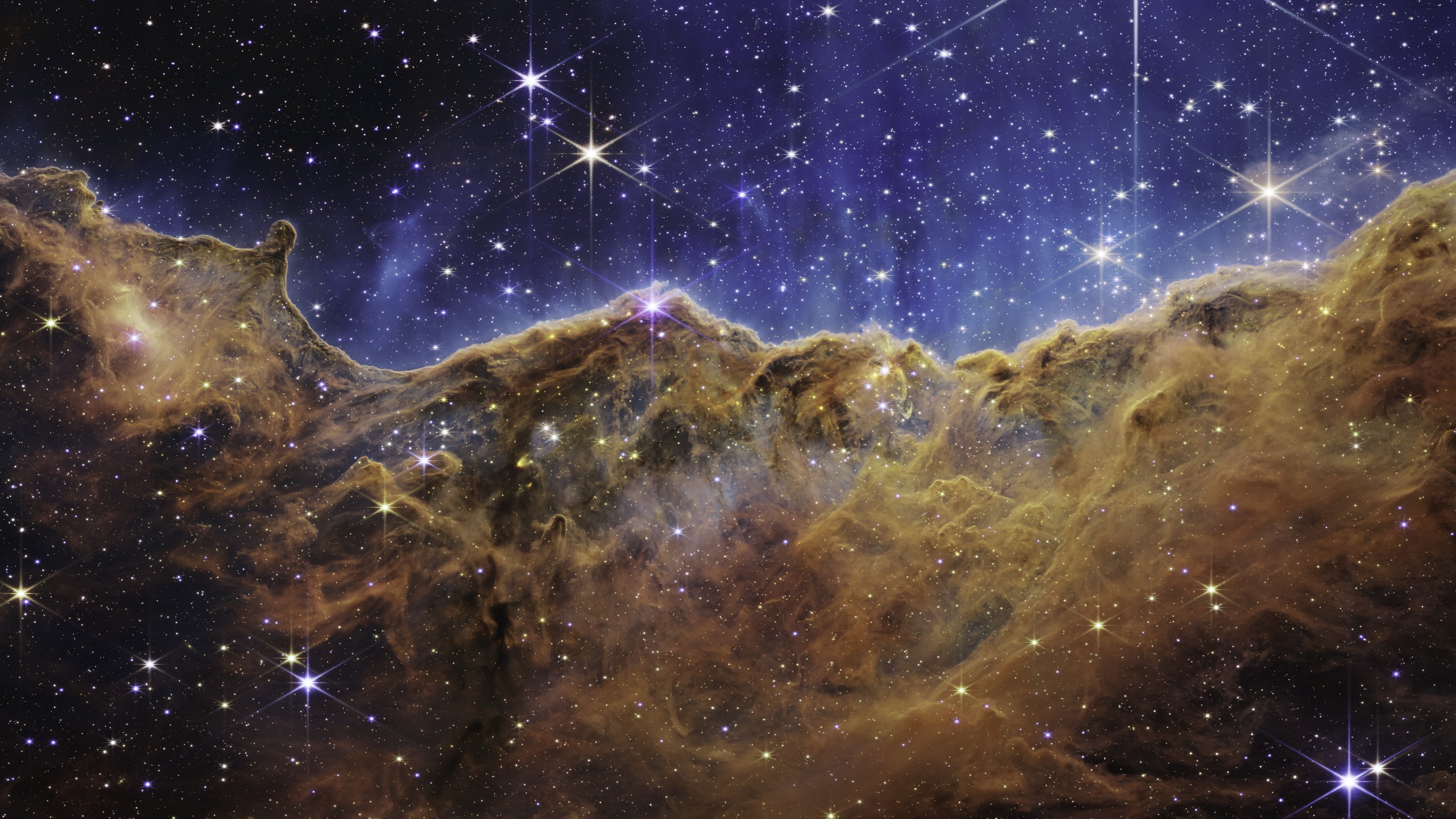
What looks like craggy mountains in moonlight is actually the edge of NGC 3324, a young star-forming region in the Carina Nebula, captured in infrared by Webb's NIRCam. Nicknamed the "Cosmic Cliffs," the region is the edge of a gigantic cavity carved by intense ultraviolet radiation and stellar winds from hot, massive young stars, revealing hundreds of previously hidden stars and background galaxies for the first time.
5.2k downloads
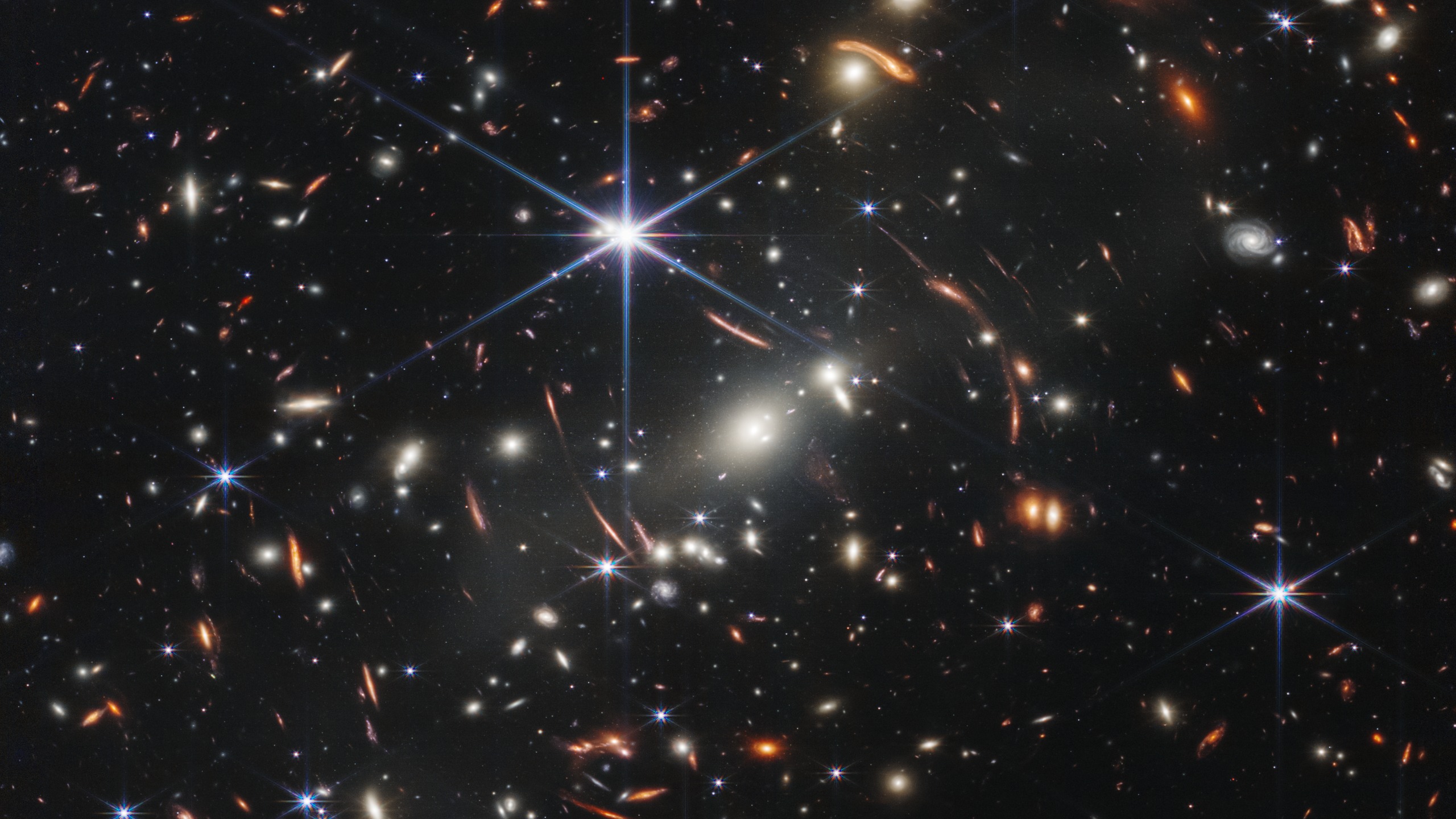
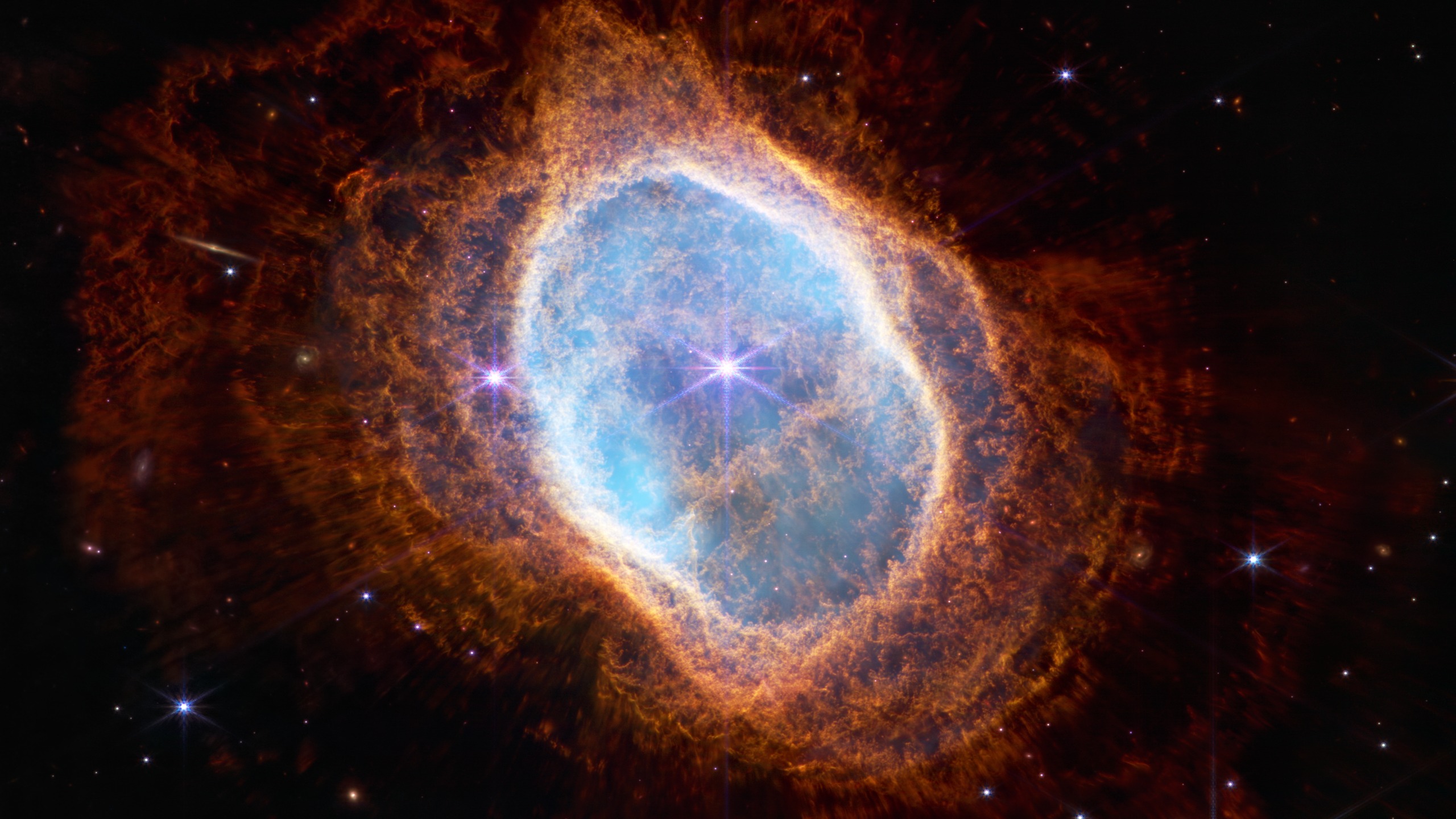
The bright star at the center of NGC 3132, the Southern Ring Nebula, plays a supporting role in sculpting the nebula's rings — a dimmer companion star hidden along one of its diffraction spikes is the true source, having ejected at least eight layers of gas and dust over thousands of years. Webb's near-infrared view also reveals countless background galaxies through the nebula's transparent regions.
2.1k downloads