#gas giant
2 wallpapers tagged "gas giant"
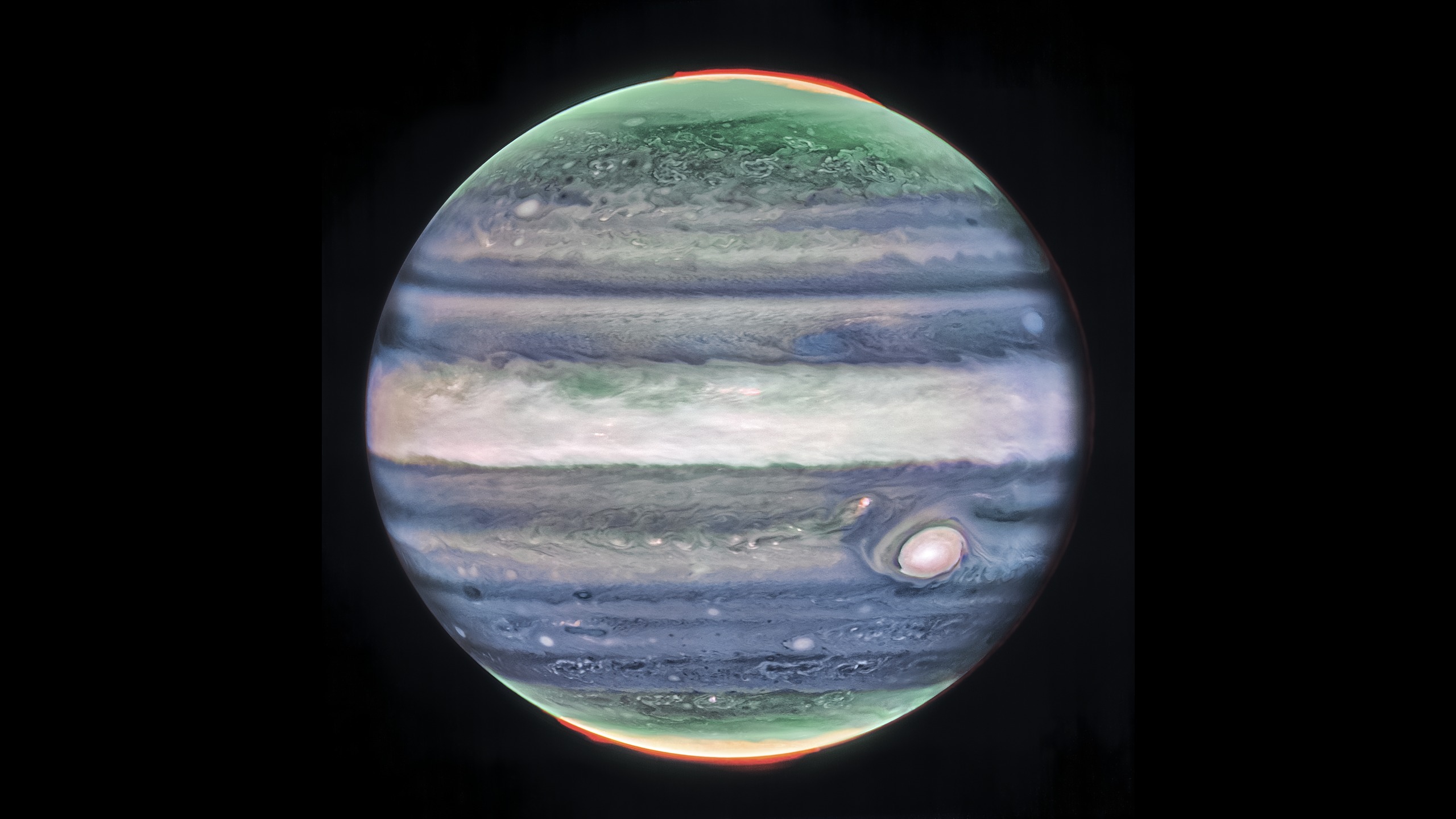
This image of Jupiter from NASA's James Webb Space Telescope's NIRCam (Near-Infrared Camera) shows stunning details of the majestic planet in infrared light. In this image, brightness indicates high altitude. The numerous bright white "spots" and "streaks" are likely very high-altitude cloud tops of condensed convective storms. Auroras, appearing in red in this image, extend to higher altitudes above both the northern and southern poles of the planet. By contrast, dark ribbons north of the equatorial region have little cloud cover. In Webb's images of Jupiter from July 2022, researchers recently discovered a narrow jet stream traveling 320 miles per hour (515 kilometers per hour) sitting over Jupiter's equator above the main cloud decks.
2.3k downloads
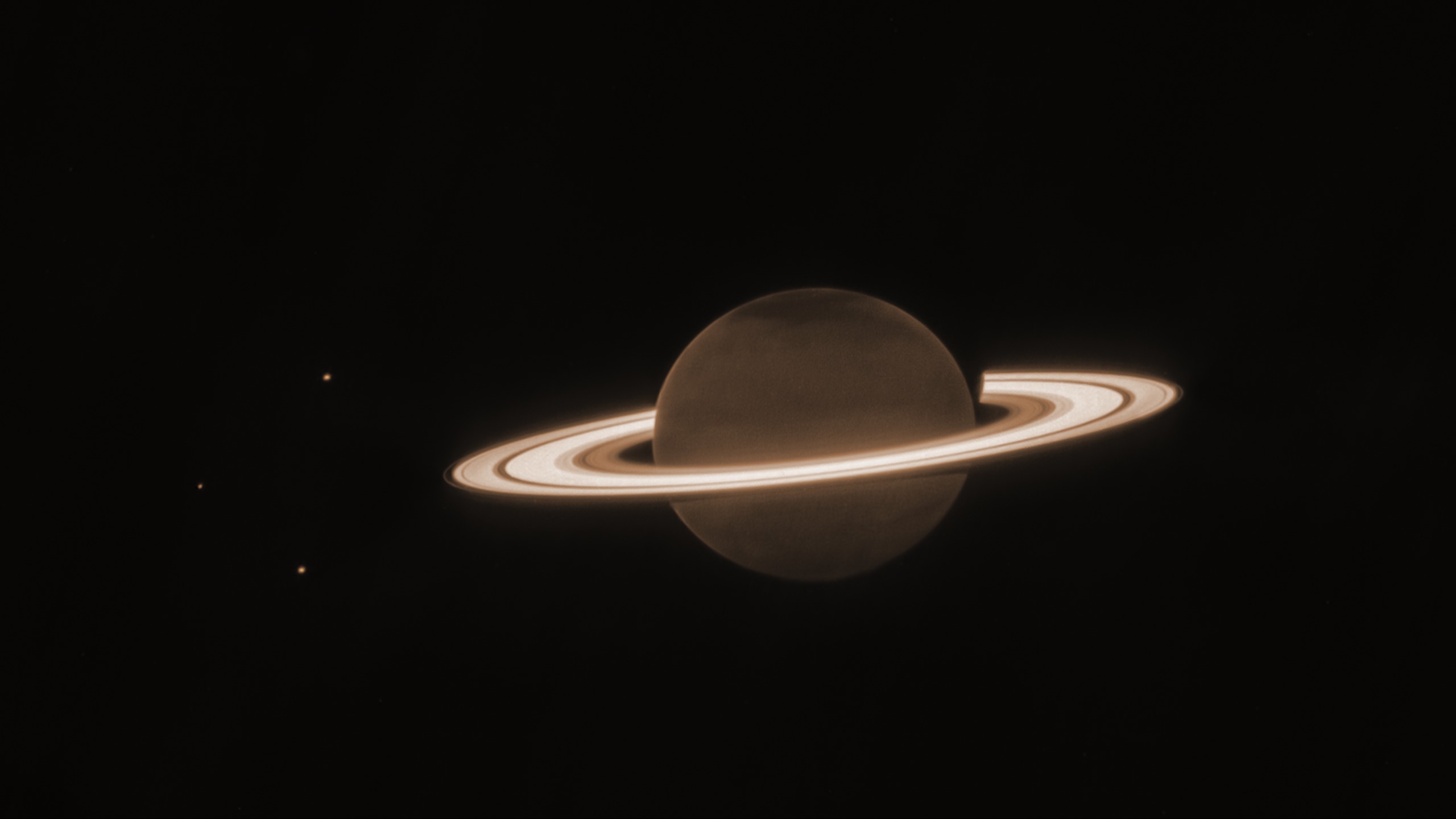
On June 25, 2023, NASA's James Webb Space Telescope turned to famed ringed world Saturn for its first near-infrared observations of the planet. The initial imagery from Webb's NIRCam (Near-Infrared Camera) is already fascinating researchers. Saturn itself appears extremely dark at this infrared wavelength observed by the telescope, as methane gas absorbs almost all of the sunlight falling on the atmosphere. However, the icy rings stay relatively bright, leading to the unusual appearance of Saturn in the Webb image. This image was taken as part of Webb Guaranteed Time Observation program 1247. The program included several very deep exposures of Saturn, which were designed to test the telescope's capacity to detect faint moons around the planet and its bright rings. Any newly discovered moons could garner important clues about the flow of material in the current Saturn system, as well as its past history.
12.5k downloads