#Lyra
2 wallpapers tagged "Lyra"
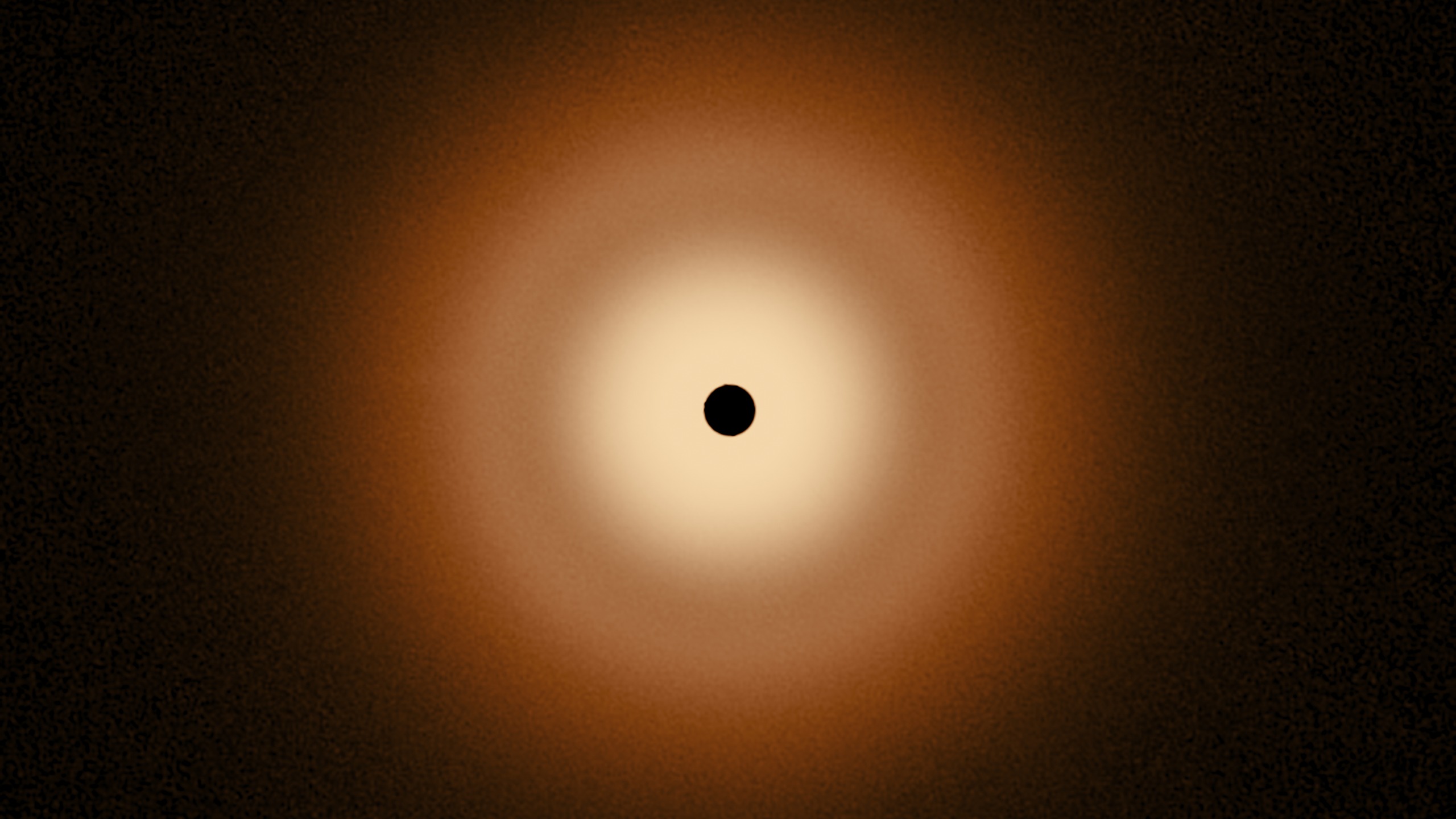
The James Webb Space Telescope resolves the glow of warm dust in a disk halo, at 23 billion miles out. The outer disk (analogous to the solar system's Kuiper Belt) extends from 7 billion miles to 15 billion miles. The inner disk extends from the inner edge of the outer disk down to close proximity to the star. There is a notable dip in surface brightness of the inner disk from approximately 3.7 to 7.2 billion miles. The black spot at the center is due to lack of data from saturation.
4.5k downloads
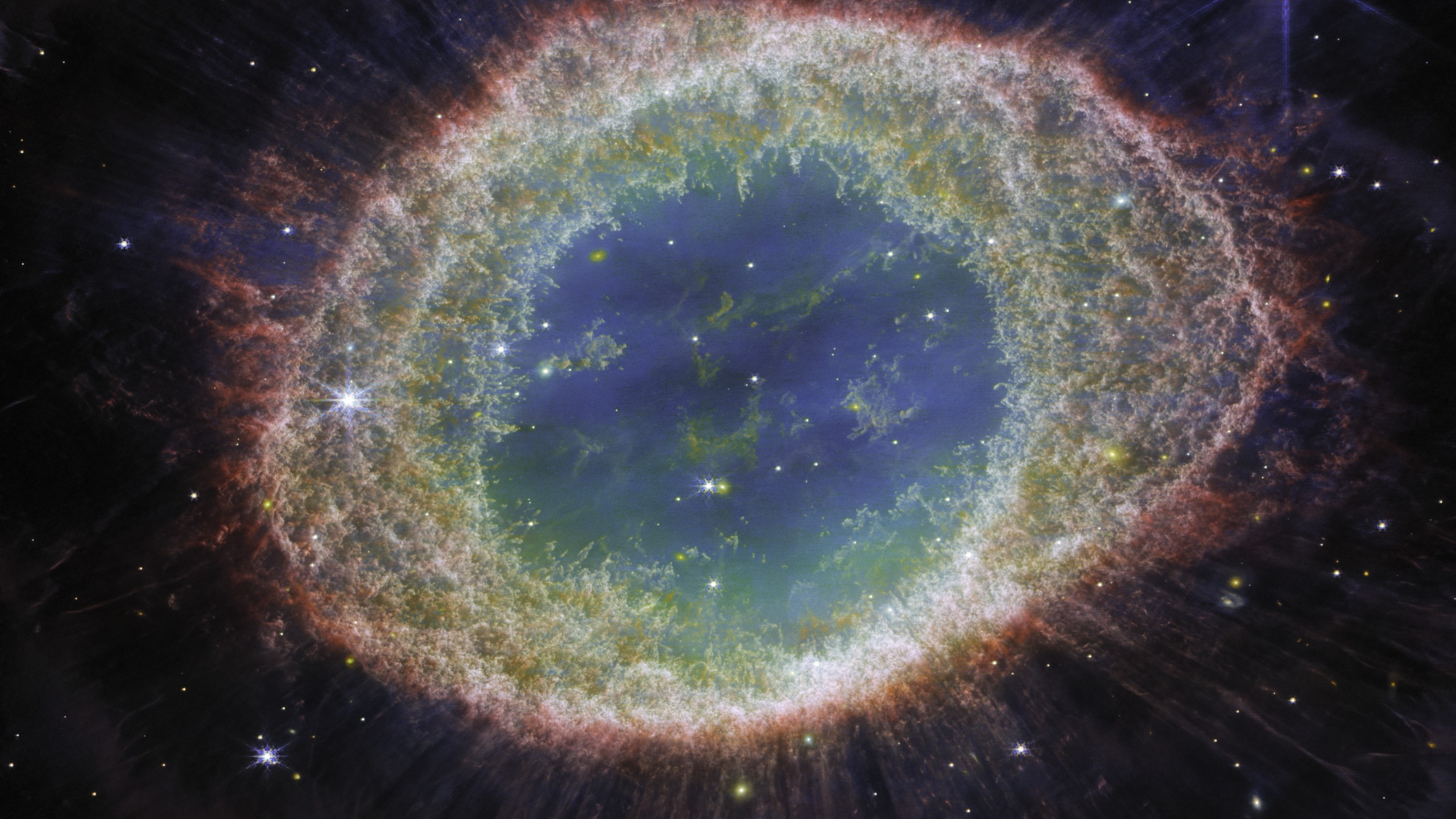
NASA’s James Webb Space Telescope has observed the well-known Ring Nebula in unprecedented detail. Formed by a star throwing off its outer layers as it runs out of fuel, the Ring Nebula is an archetypal planetary nebula. Also known as M57 and NGC 6720, it is relatively close to Earth at roughly 2,500 light-years away. This new image from Webb’s NIRCam (Near-Infrared Camera) provides unprecedented spatial resolution and spectral sensitivity. For example, the intricate details of the filament structure of the inner ring are particularly visible in this dataset. There are some 20,000 dense globules in the nebula, which are rich in molecular hydrogen. In contrast, the inner region shows very hot gas. The main shell contains a thin ring of enhanced emission from carbon-based molecules known as polycyclic aromatic hydrocarbons (PAHs). Roughly ten concentric arcs are located just beyond the outer edge of the main ring. The arcs are thought to originate from the interaction of the central star with a low-mass companion orbiting at a distance comparable to that between the Earth and Pluto. In this way, nebulae like the Ring Nebula reveal a kind of astronomical archaeology, as astronomers study the nebula to learn about the star that created it.
15.6k downloads