#Orion
2 wallpapers tagged "Orion"
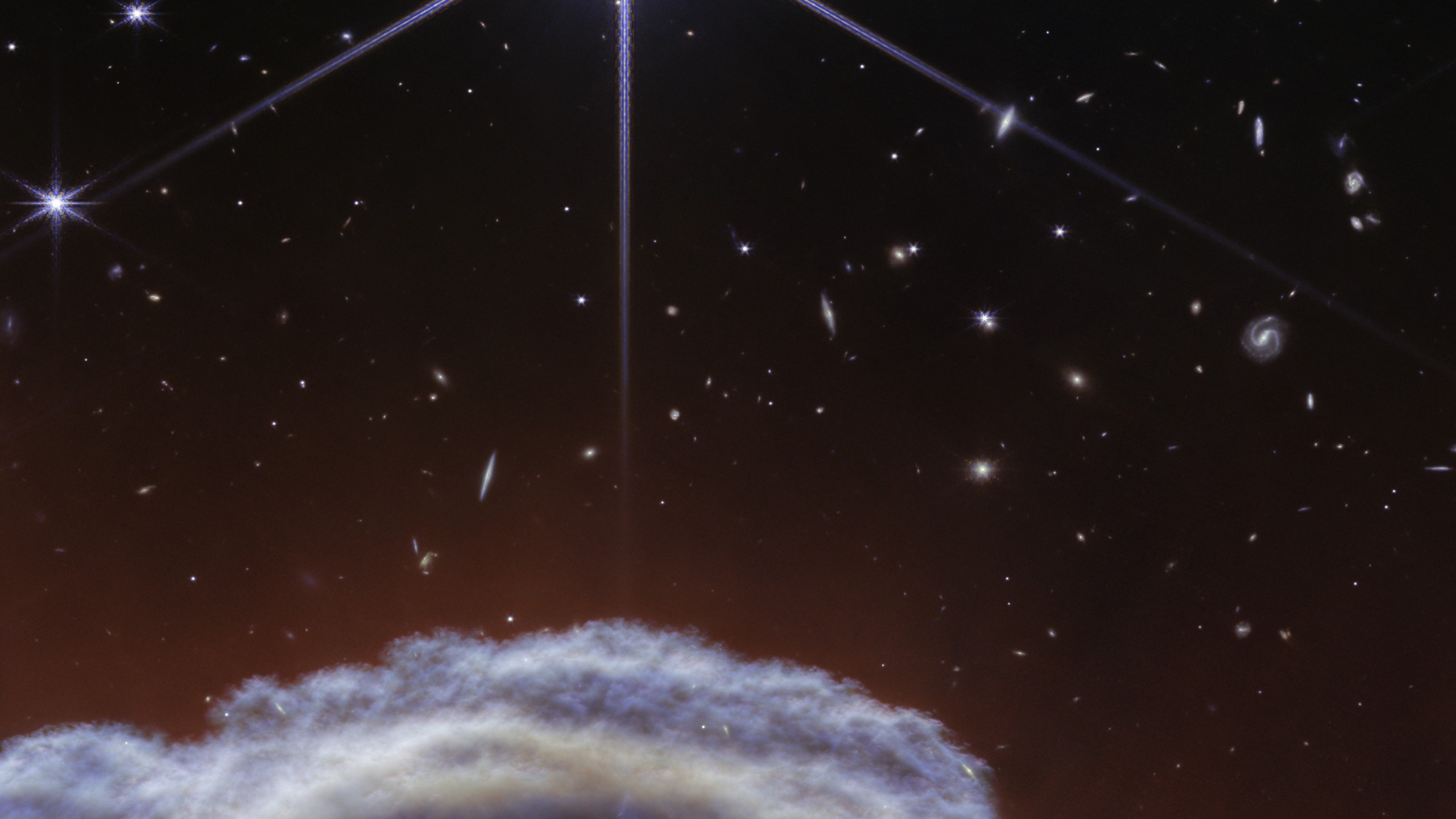
This image of the Horsehead Nebula from NASA’s James Webb Space Telescope focuses on a portion of the horse’s “mane” that is about 0.8 light-years in width. It was taken with Webb’s NIRCam (Near-infrared Camera). The ethereal clouds that appear blue at the bottom of the image are filled with a variety of materials including hydrogen, methane, and water ice. Red-colored wisps extending above the main nebula represent both atomic and molecular hydrogen. In this area, known as a photodissociation region, ultraviolet light from nearby young, massive stars creates a mostly neutral, warm area of gas and dust between the fully ionized gas above and the nebula below. As with many Webb images, distant galaxies are sprinkled in the background. This image is composed of light at wavelengths of 1.4 and 2.5 microns (represented in blue), 3.0 and 3.23 microns (cyan), 3.35 microns (green), 4.3 microns (yellow), and 4.7 and 4.05 microns (red).
24.2k downloads
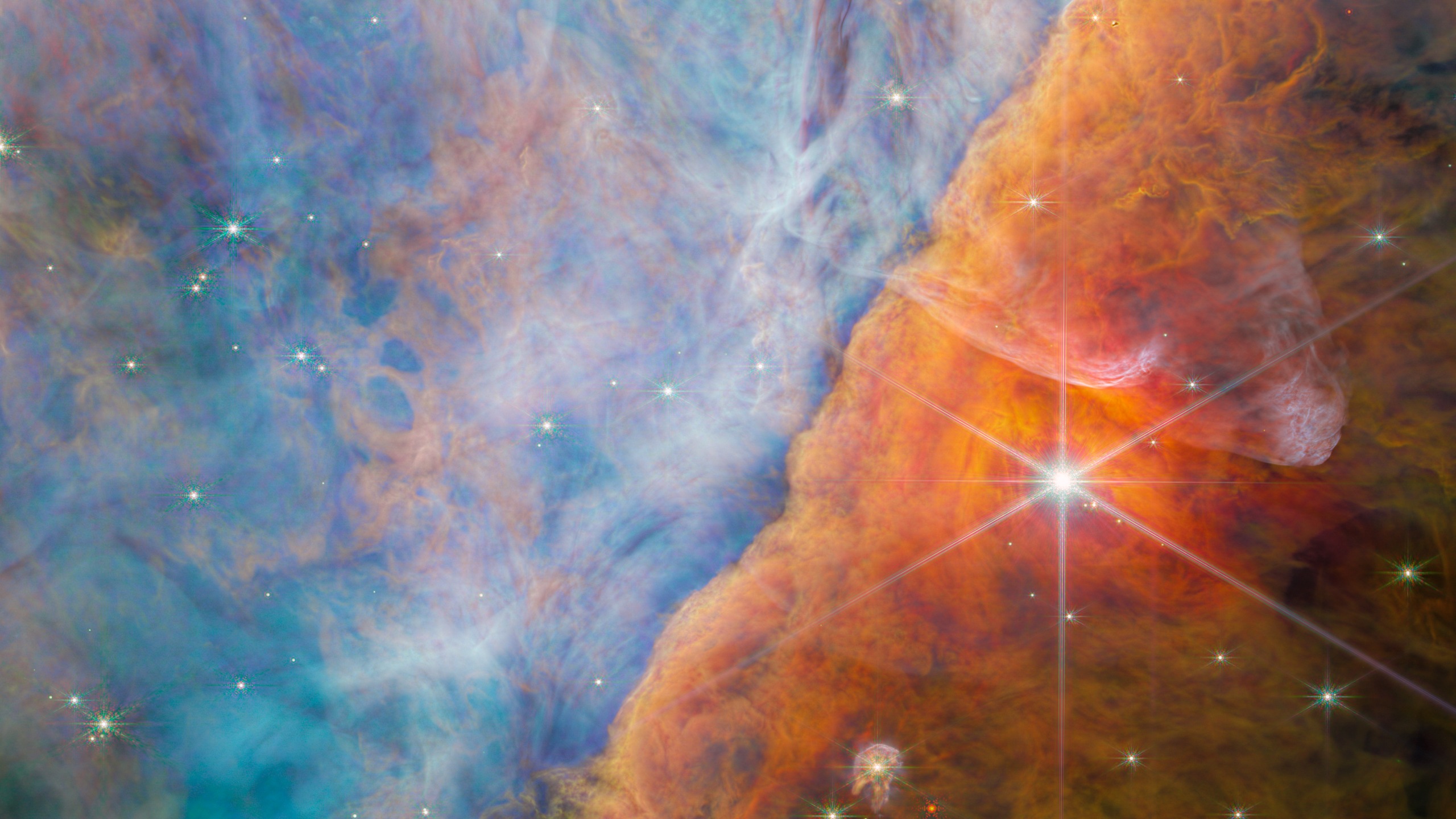
This image taken by Webb’s NIRCam (Near-Infrared Camera) shows a part of the Orion Nebula known as the Orion Bar. It is a region where energetic ultraviolet light from the Trapezium Cluster — located off the upper-left corner — interacts with dense molecular clouds. The energy of the stellar radiation is slowly eroding the Orion Bar, and this has a profound effect on the molecules and chemistry in the protoplanetary disks that have formed around newborn stars here. Within this image lies a young star system known as d203-506, which has a protoplanetary disk. Astronomers used Webb to detect a carbon molecule known as methyl cation in that disk for the first time. That molecule is important because it aids the formation of more complex carbon-based molecules.
18.6k downloads