#Perseus
3 wallpapers tagged "Perseus"
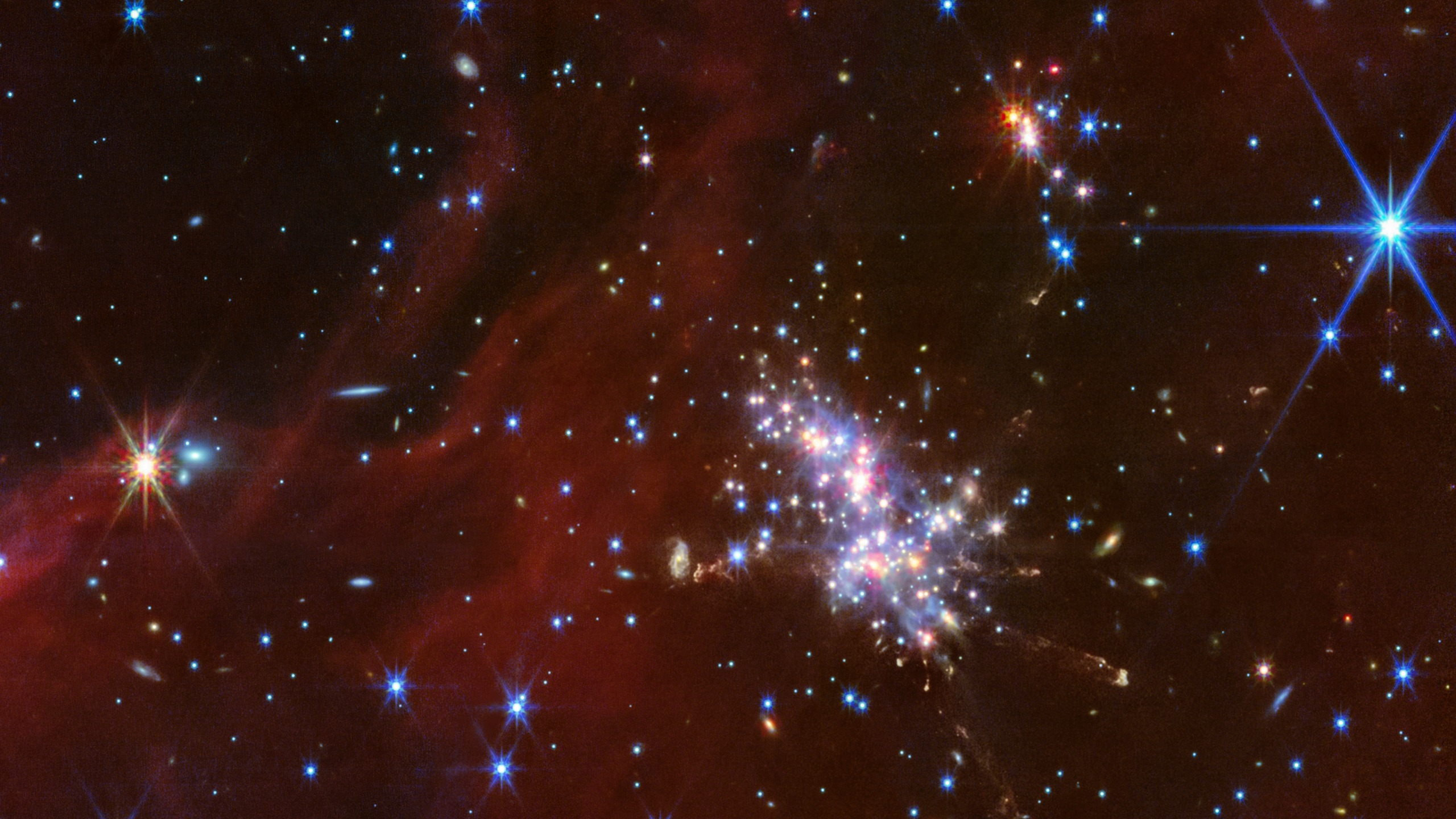
NASA’s James Webb Space Telescope observed the outskirts of our Milky Way galaxy. Known as the Extreme Outer Galaxy, this region is located more than 58,000 light-years from the Galactic Center. To learn more about how a local environment affects the star formation process within it, a team of scientists directed the telescope’s NIRCam (Near-Infrared Camera) and MIRI (Mid-Infrared Instrument) toward a total of four star-forming areas within Digel Clouds 1 and 2: 1A, 1B, 2N, and 2S. In the case of Cloud 2S, shown here, Webb revealed a luminous main cluster that contains newly formed stars. Several of these young stars are emitting extended jets of material from their poles. To the main cluster’s top right is a sub-cluster of stars, a feature that scientists previously suspected to exist but has now been confirmed with Webb. Additionally, the telescope revealed a deep sea of background galaxies and red nebulous structures that are being carved away by winds and radiation from nearby stars.
26.5k downloads
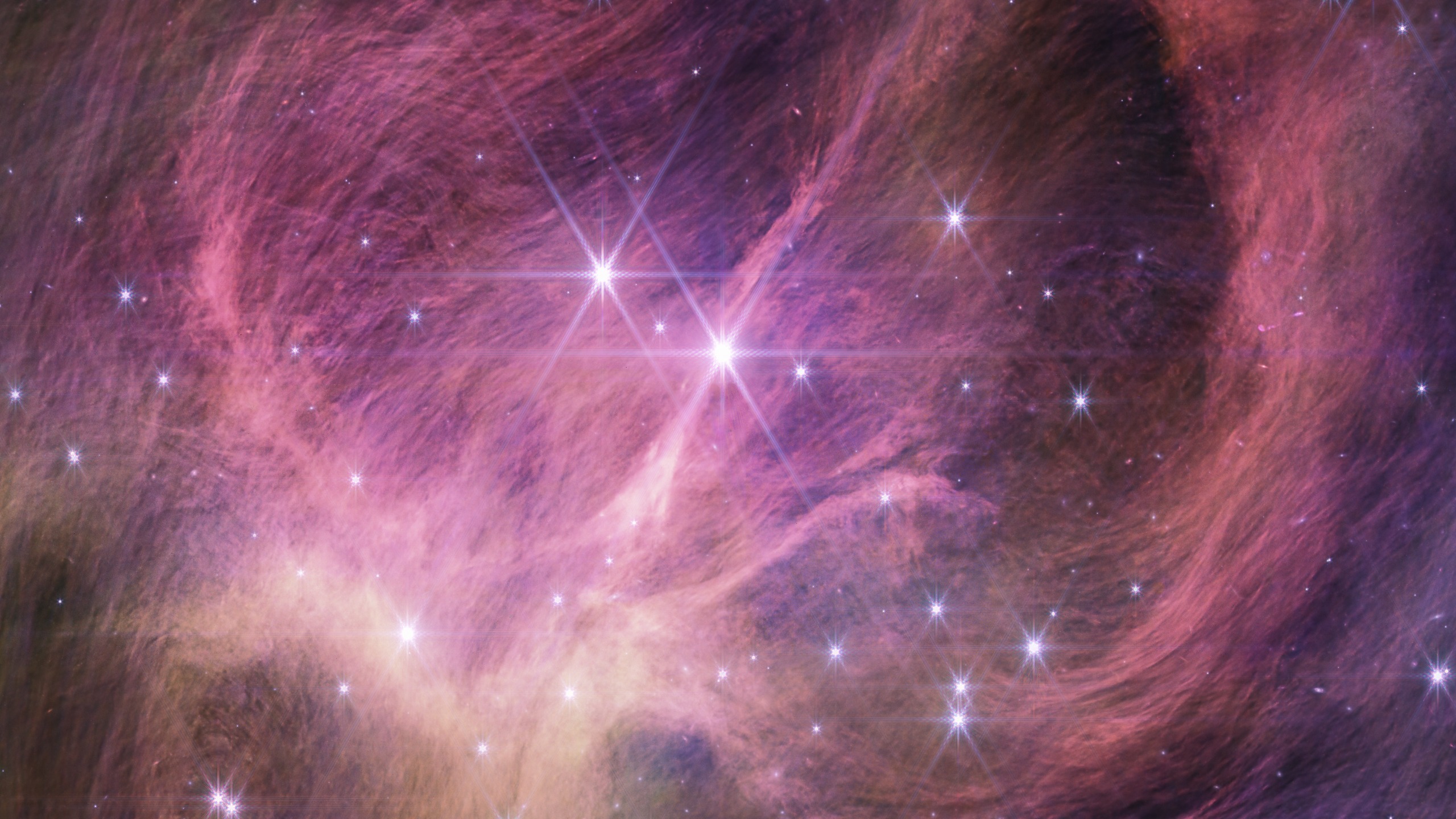
This image from the NIRCam (Near-Infrared Camera) instrument on NASA’s James Webb Space Telescope shows the central portion of the star cluster IC 348. Astronomers combed the cluster in search of tiny, free-floating brown dwarfs: objects too small to be stars but larger than most planets. They found three brown dwarfs that are less than eight times the mass of Jupiter. The smallest weighs just three to four times Jupiter, challenging theories for star formation. The wispy curtains filling the image are interstellar material reflecting the light from the cluster’s stars – what is known as a reflection nebula. The material also includes carbon-containing molecules known as polycyclic aromatic hydrocarbons, or PAHs. The bright star closest to the center of the frame is actually a pair of type B stars in a binary system, which are the most massive stars in the cluster. Winds from these stars may help sculpt the large loop seen on the right side of the field of view.
37.5k downloads
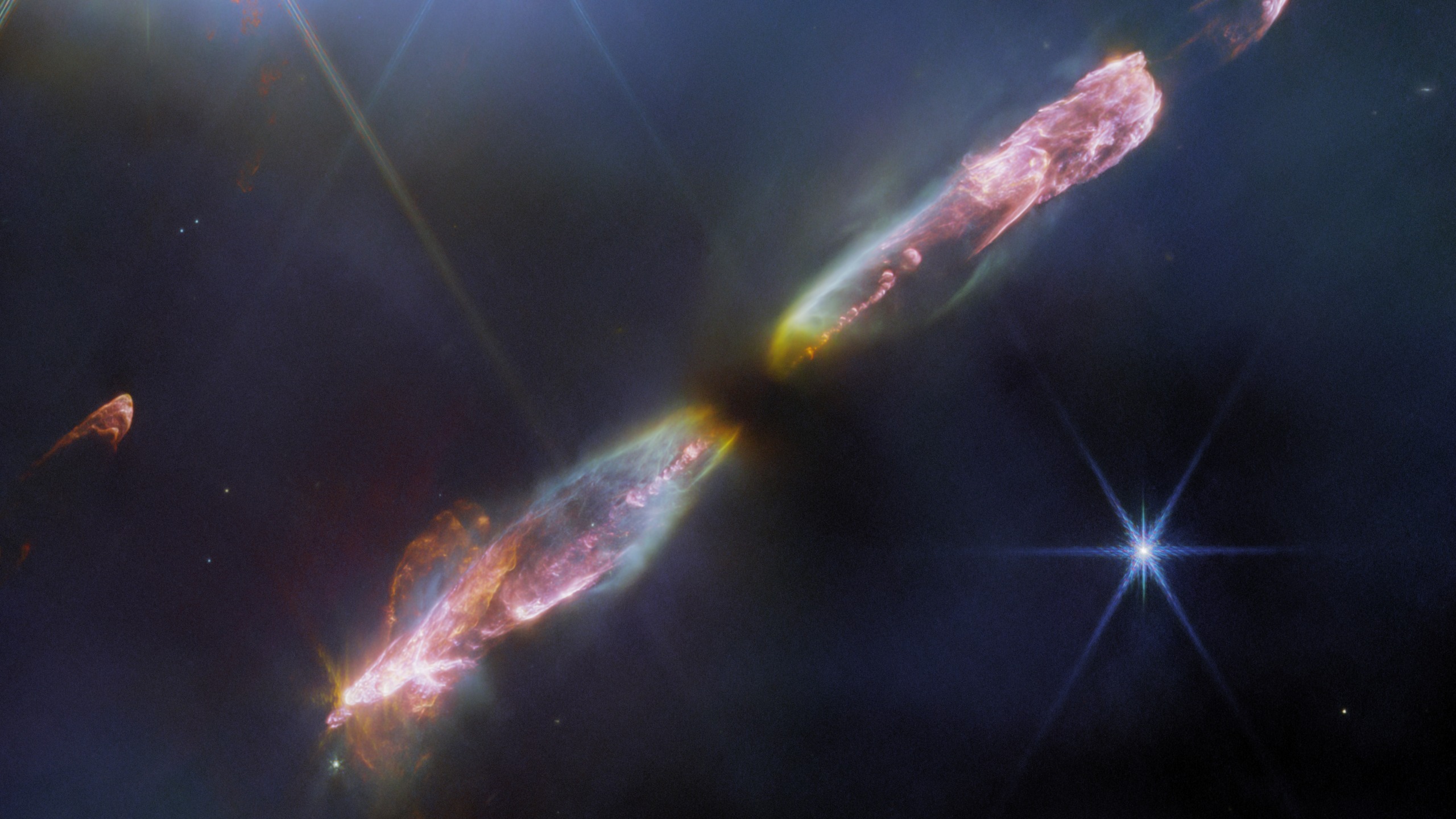
NASA’s James Webb Space Telescope’s high resolution, near-infrared look at Herbig-Haro 211 reveals exquisite detail of the outflow of a young star, an infantile analogue of our Sun. Herbig-Haro objects are formed when stellar winds or jets of gas spewing from newborn stars form shock waves colliding with nearby gas and dust at high speeds The image showcases a series of bow shocks to the southeast (lower-left) and northwest (upper-right) as well as the narrow bipolar jet that powers them in unprecedented detail. Molecules excited by the turbulent conditions, including molecular hydrogen, carbon monoxide and silicon monoxide, emit infrared light, collected by Webb, that map out the structure of the outflows.
6.9k downloads