#planet
3 wallpapers tagged "planet"
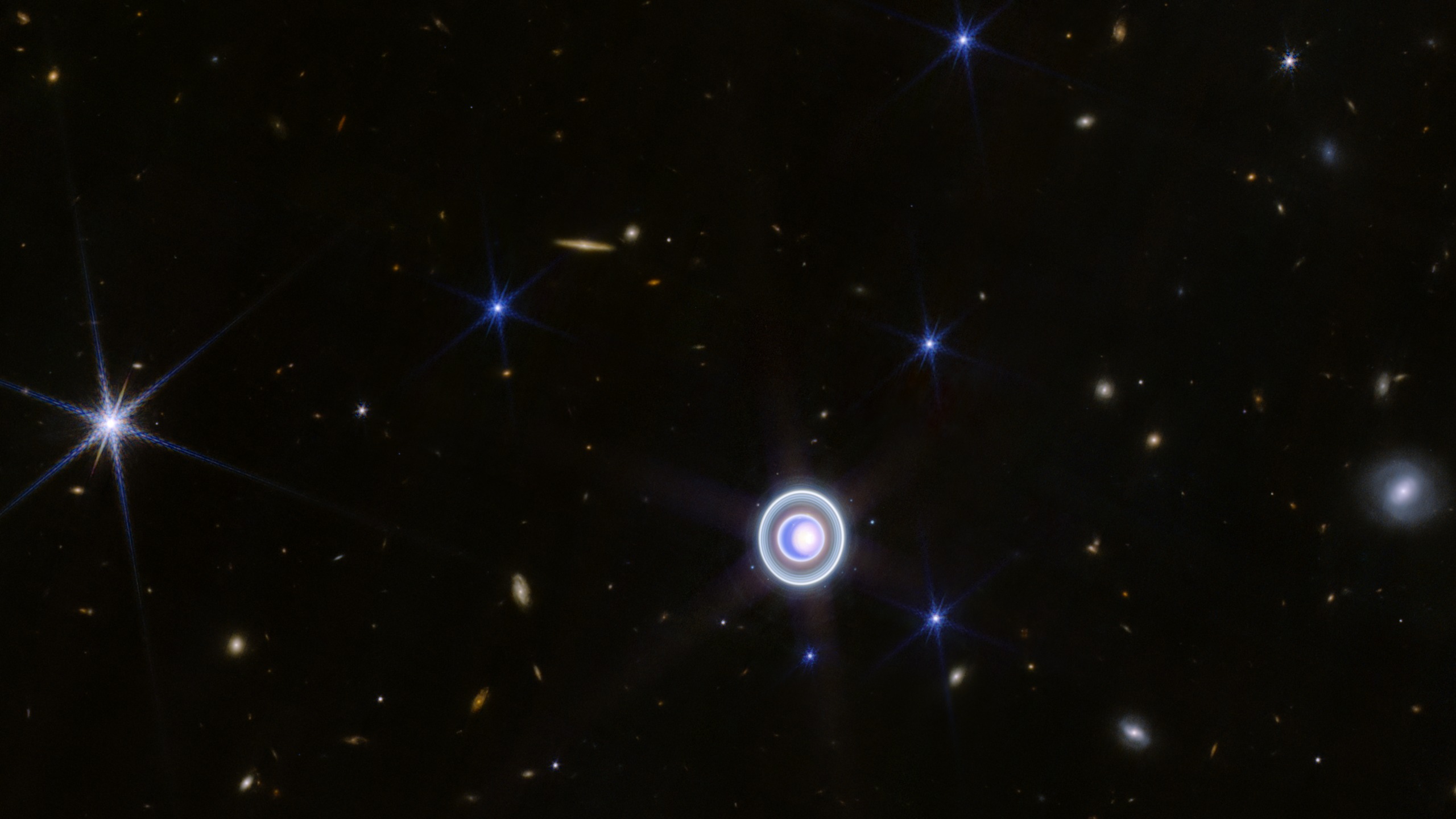
This image of Uranus from NIRCam (Near-Infrared Camera) on NASA's James Webb Space Telescope shows the planet and its rings in new clarity. The planet's seasonal north polar cap gleams in a bright white, and Webb's exquisite sensitivity resolves Uranus' dim inner and outer rings, including the Zeta ring—the extremely faint and diffuse ring closest to the planet. This Webb image also shows 14 of the planet's 27 moons: Oberon, Titania, Umbriel, Juliet, Perdita, Rosalind, Puck, Belinda, Desdemona, Cressida, Ariel, Miranda, Bianca, and Portia. One day on Uranus is about 17 hours, so the planet's rotation is relatively quick. This makes it supremely difficult for observatories with a sharp eye like Webb to capture one simple image of the entire planet – storms and other atmospheric features, and the planet's moons, move visibly within minutes. This image combines several longer and shorter exposures of this dynamic system to correct for those slight changes throughout the observing time. Webb's extreme sensitivity also picks up a smattering of background galaxies—most appear as orange smudges, and there are two larger, fuzzy white galaxies to the right of the planet in this field of view.
17k downloads
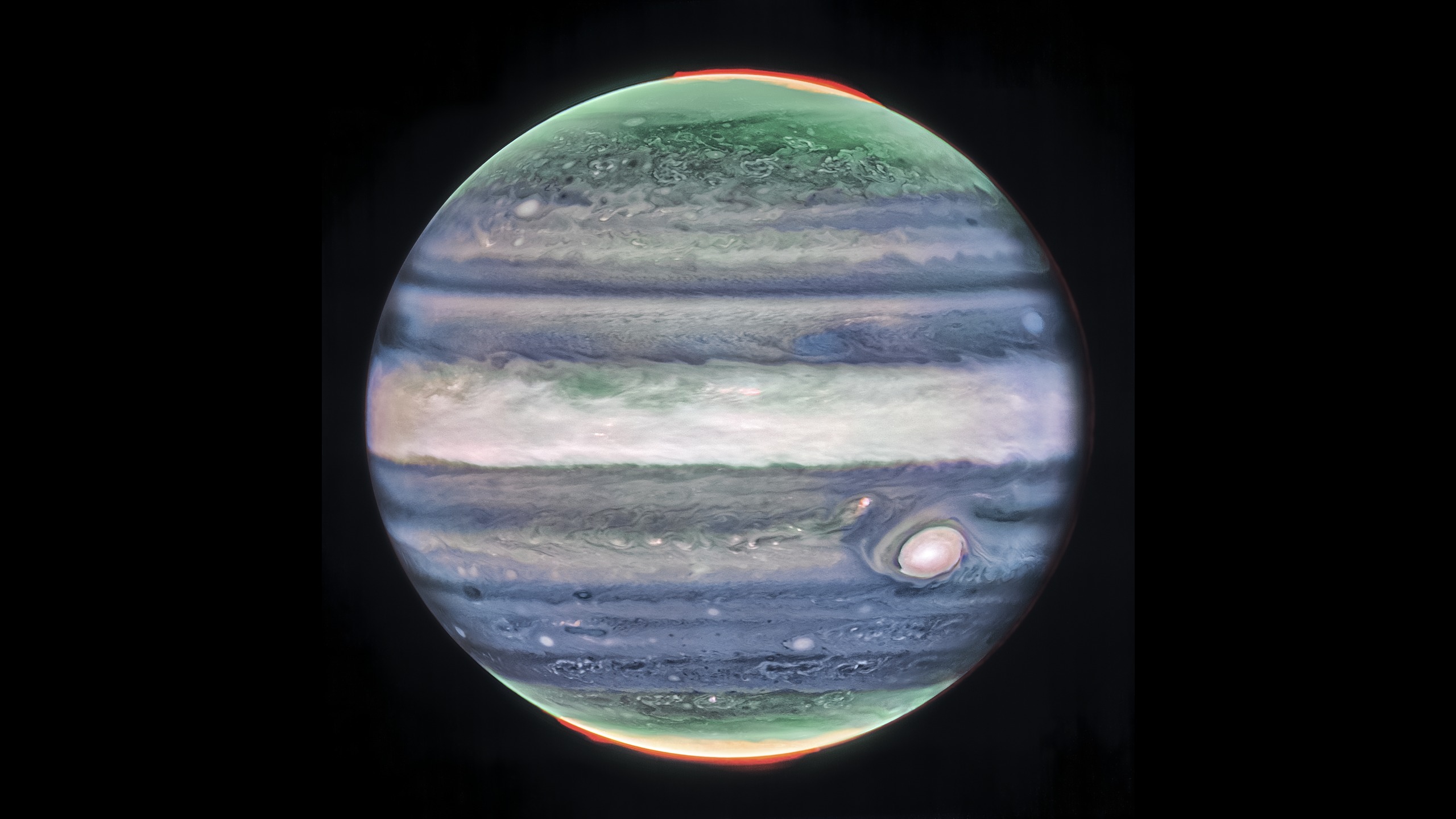
This image of Jupiter from NASA's James Webb Space Telescope's NIRCam (Near-Infrared Camera) shows stunning details of the majestic planet in infrared light. In this image, brightness indicates high altitude. The numerous bright white "spots" and "streaks" are likely very high-altitude cloud tops of condensed convective storms. Auroras, appearing in red in this image, extend to higher altitudes above both the northern and southern poles of the planet. By contrast, dark ribbons north of the equatorial region have little cloud cover. In Webb's images of Jupiter from July 2022, researchers recently discovered a narrow jet stream traveling 320 miles per hour (515 kilometers per hour) sitting over Jupiter's equator above the main cloud decks.
2.3k downloads
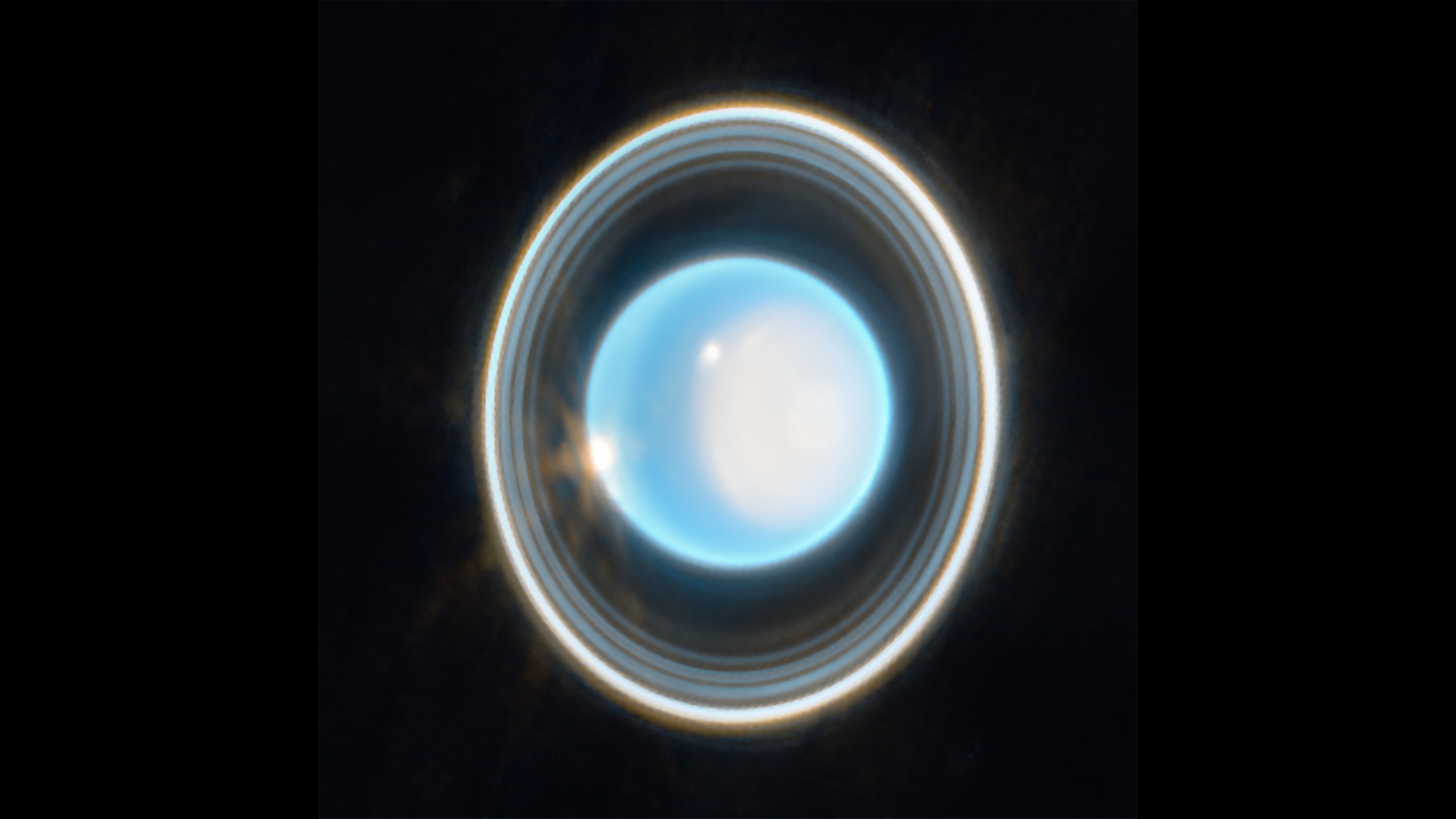
This zoomed-in image of Uranus, captured by Webb’s Near-Infrared Camera (NIRCam) Feb. 6, 2023, reveals stunning views of the planet’s rings. The planet displays a blue hue in this representative-color image, made by combining data from two filters (F140M, F300M) at 1.4 and 3.0 microns, which are shown here as blue and orange, respectively. On the right side of the planet there’s an area of brightening at the pole facing the Sun, known as a polar cap. This polar cap is unique to Uranus because it is the only planet in the solar system tilted on its side, which causes its extreme seasons. A new aspect of the polar cap revealed by Webb is a subtle brightening near the Uranian north pole. At the edge of the polar cap lies a bright cloud as well as a few fainter extended features just northward of the cap’s edge, and a second very bright cloud is seen at the planet’s left limb. Such clouds are typical for Uranus in infrared wavelengths, and likely are connected to storm activity.
36.4k downloads