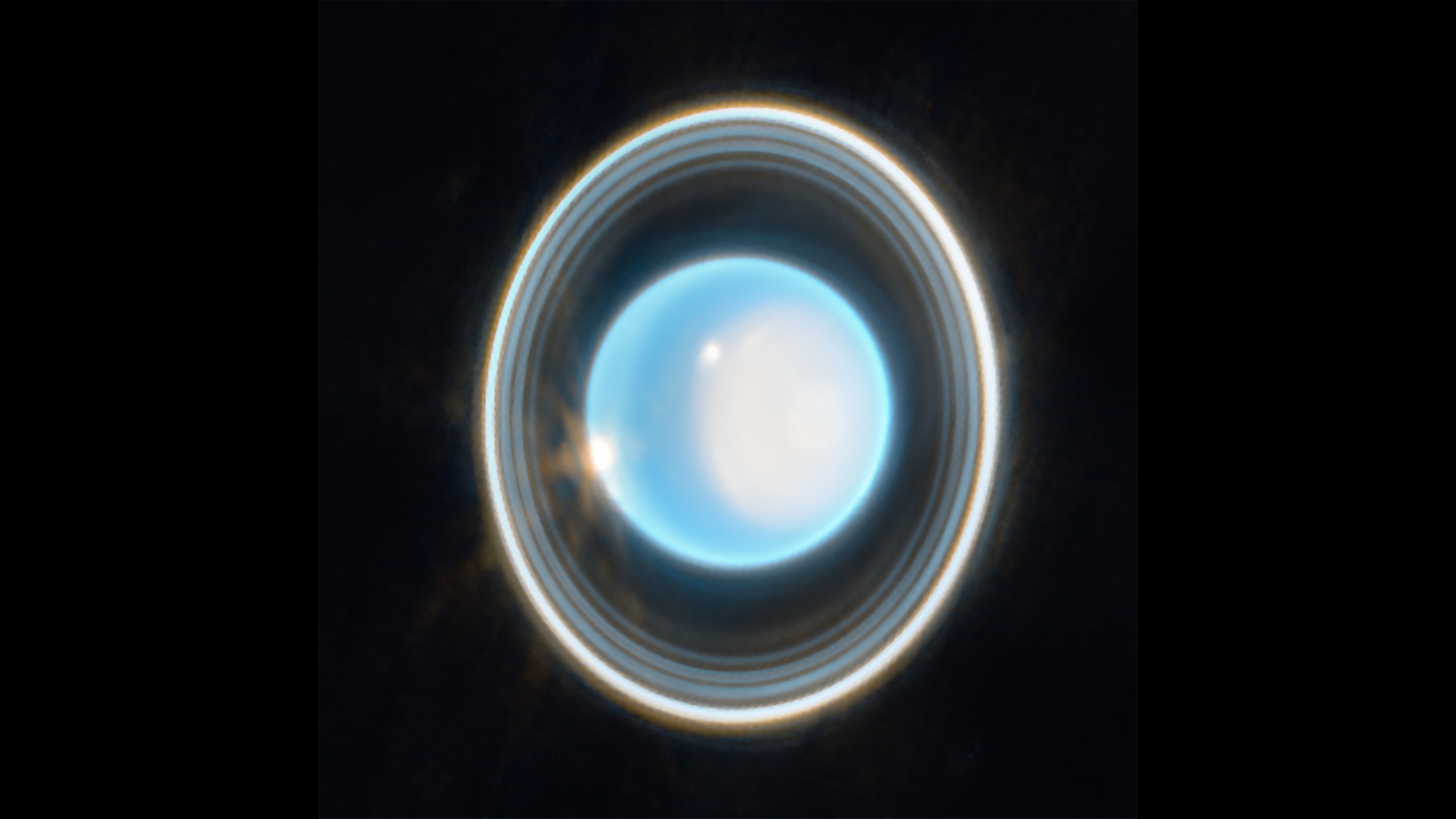
This zoomed-in image of Uranus, captured by Webb’s Near-Infrared Camera (NIRCam) Feb. 6, 2023, reveals stunning views of the planet’s rings. The planet displays a blue hue in this representative-color image, made by combining data from two filters (F140M, F300M) at 1.4 and 3.0 microns, which are shown here as blue and orange, respectively.
On the right side of the planet there’s an area of brightening at the pole facing the Sun, known as a polar cap. This polar cap is unique to Uranus because it is the only planet in the solar system tilted on its side, which causes its extreme seasons.
A new aspect of the polar cap revealed by Webb is a subtle brightening near the Uranian north pole. At the edge of the polar cap lies a bright cloud as well as a few fainter extended features just northward of the cap’s edge, and a second very bright cloud is seen at the planet’s left limb.
Such clouds are typical for Uranus in infrared wavelengths, and likely are connected to storm activity.
Image Credit:NASA, ESA, CSA, STScI
About the Object
- Distance
- On February 6, 2023 Uranus was 19.67 AU from Earth (1.83 billion miles)
Choose your device
iPhone (5)▾
Android (5)▾
Special (1)▾
Handheld (1)▾
Motorola (1)▾
More solar system wallpapers
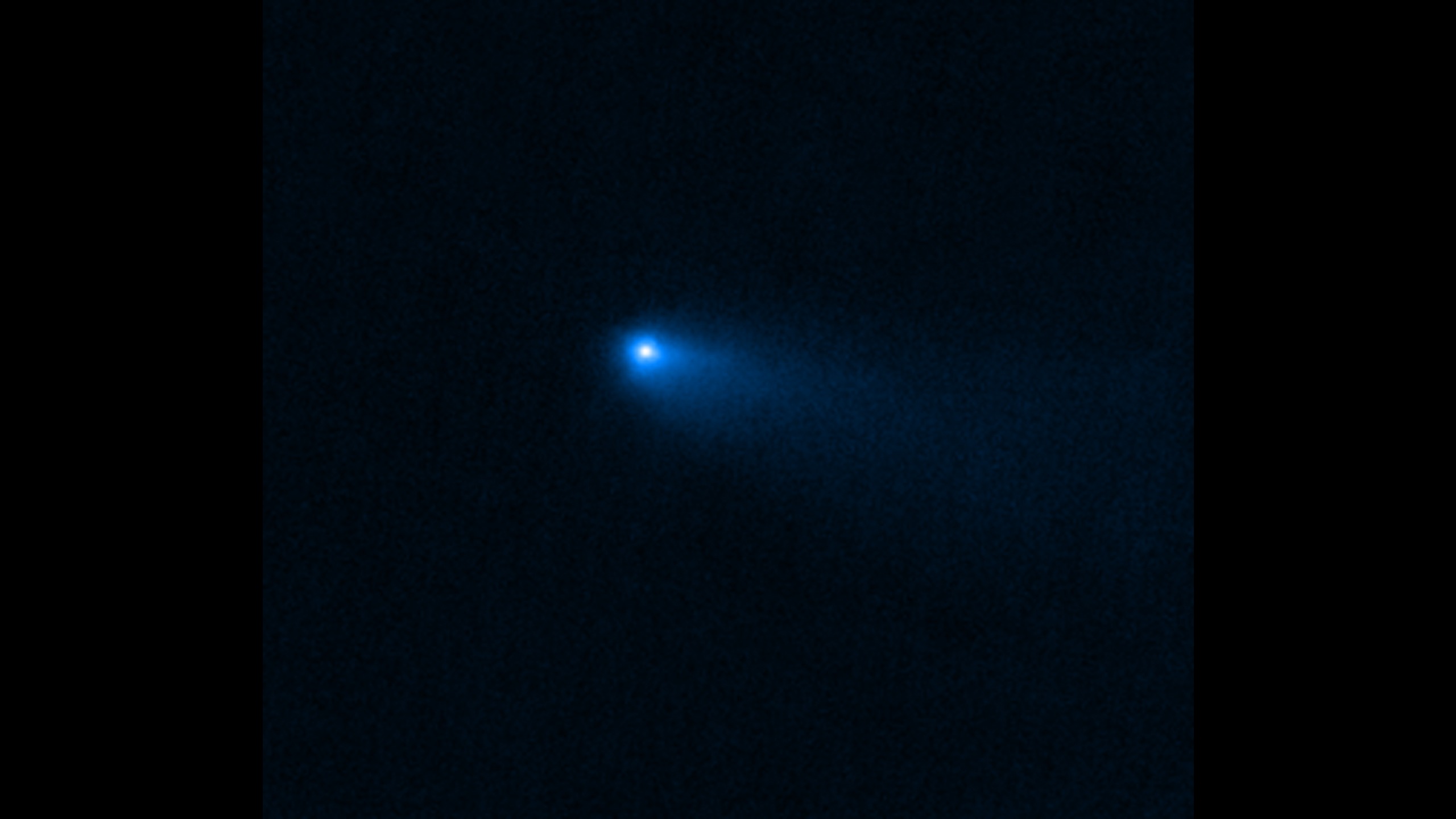
This image of Comet 238P/Read was captured by the NIRCam (Near-Infrared Camera) instrument on NASA’s James Webb Space Telescope on September 8, 2022. It displays the hazy halo, called the coma, and tail that are characteristic of comets, as opposed to asteroids. The dusty coma and tail result from the vaporization of ices as the Sun warms the main body of the comet. Comet Read was among three objects used to define the category of main belt comets in 2006. Before that, comets were understood to reside in the Kuiper Belt and Oort Cloud, beyond the orbit of Neptune, where their ices were preserved farther from the Sun. Since that time scientists have sought to confirm the presence of sublimating material in main belt comets, proving that their coma and tail were due to the same processes that other comets exhibit. With the detection of water vapor on Comet Read, Webb’s sensitive NIRSpec (Near-Infrared Spectrograph) instrument has achieved this goal.
5.9k downloads
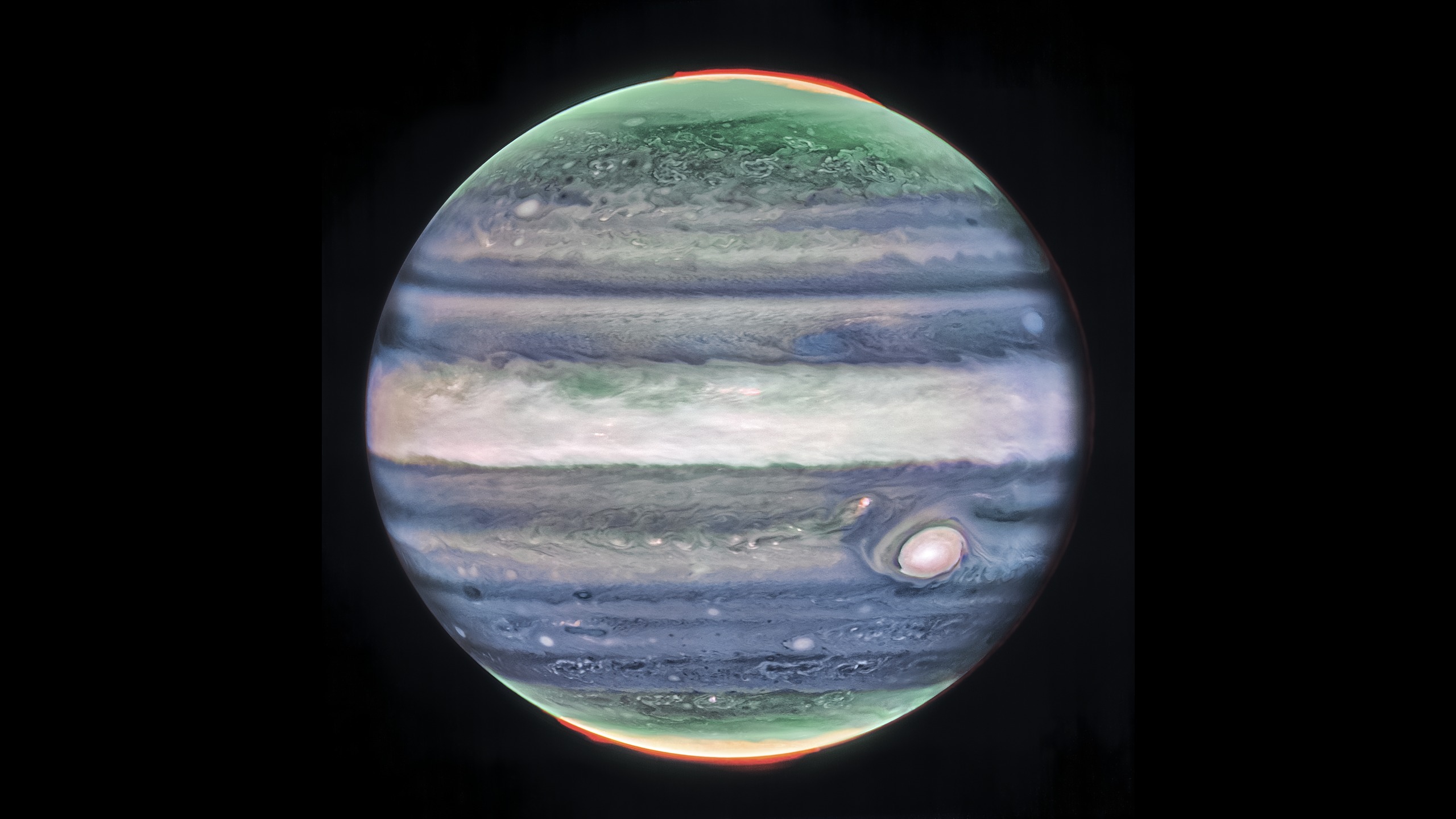
This image of Jupiter from NASA's James Webb Space Telescope's NIRCam (Near-Infrared Camera) shows stunning details of the majestic planet in infrared light. In this image, brightness indicates high altitude. The numerous bright white "spots" and "streaks" are likely very high-altitude cloud tops of condensed convective storms. Auroras, appearing in red in this image, extend to higher altitudes above both the northern and southern poles of the planet. By contrast, dark ribbons north of the equatorial region have little cloud cover. In Webb's images of Jupiter from July 2022, researchers recently discovered a narrow jet stream traveling 320 miles per hour (515 kilometers per hour) sitting over Jupiter's equator above the main cloud decks.
2.3k downloads
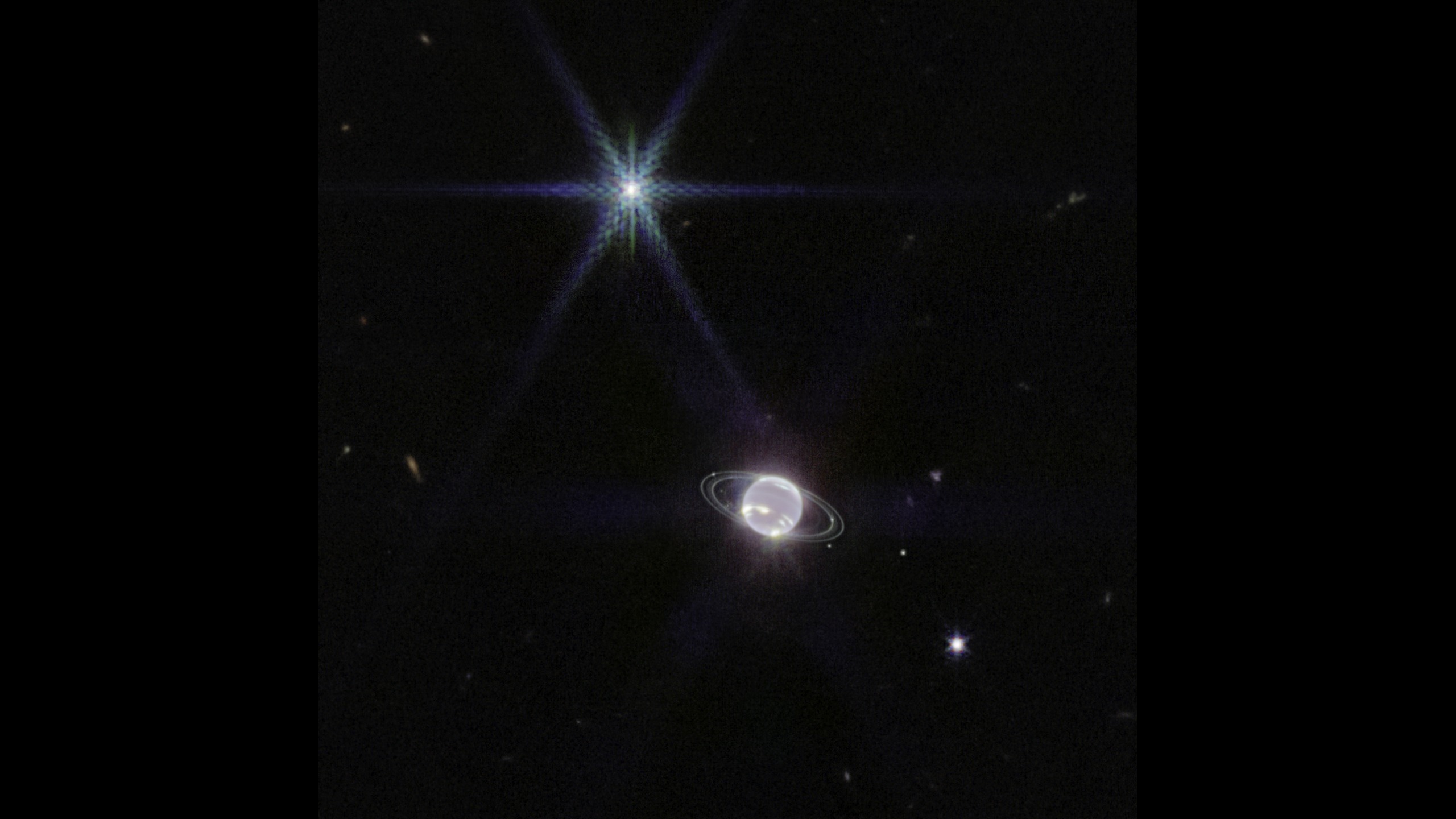
This image of the Neptune system, captured by Webb’s Near-Infrared Camera (NIRCam), reveals stunning views of the planet’s rings, which have not been seen with this clarity in more than three decades. Webb’s new image of Neptune also captures details of the planet’s turbulent, windy atmosphere. Neptune, an ice giant, has an interior that is much richer in elements heavier than hydrogen and helium, like methane, than the gas giants Jupiter and Saturn. Methane appears blue in visible wavelengths but, as evident in Webb’s image, that’s not the case in the near-infrared. Methane so strongly absorbs red and infrared light that the planet is quite dark at near-infrared wavelengths, except where high-altitude clouds are present. These methane-ice clouds are prominent in Webb’s image as bright streaks and spots, which reflect sunlight before it is absorbed by methane gas. To the upper left of the planet in this image, one of Neptune’s moons, Triton, also sports Webb’s distinctive eight diffraction spikes, an artifact of the telescope’s structure. Webb also captured 6 more of Neptune’s 14 known moons, along with a smattering of distant galaxies that appear as dim splotches and a nearby star. NIRCam was built by a team at the University of Arizona and Lockheed Martin’s Advanced Technology Center.
24.2k downloads