#protostar
2 wallpapers tagged "protostar"
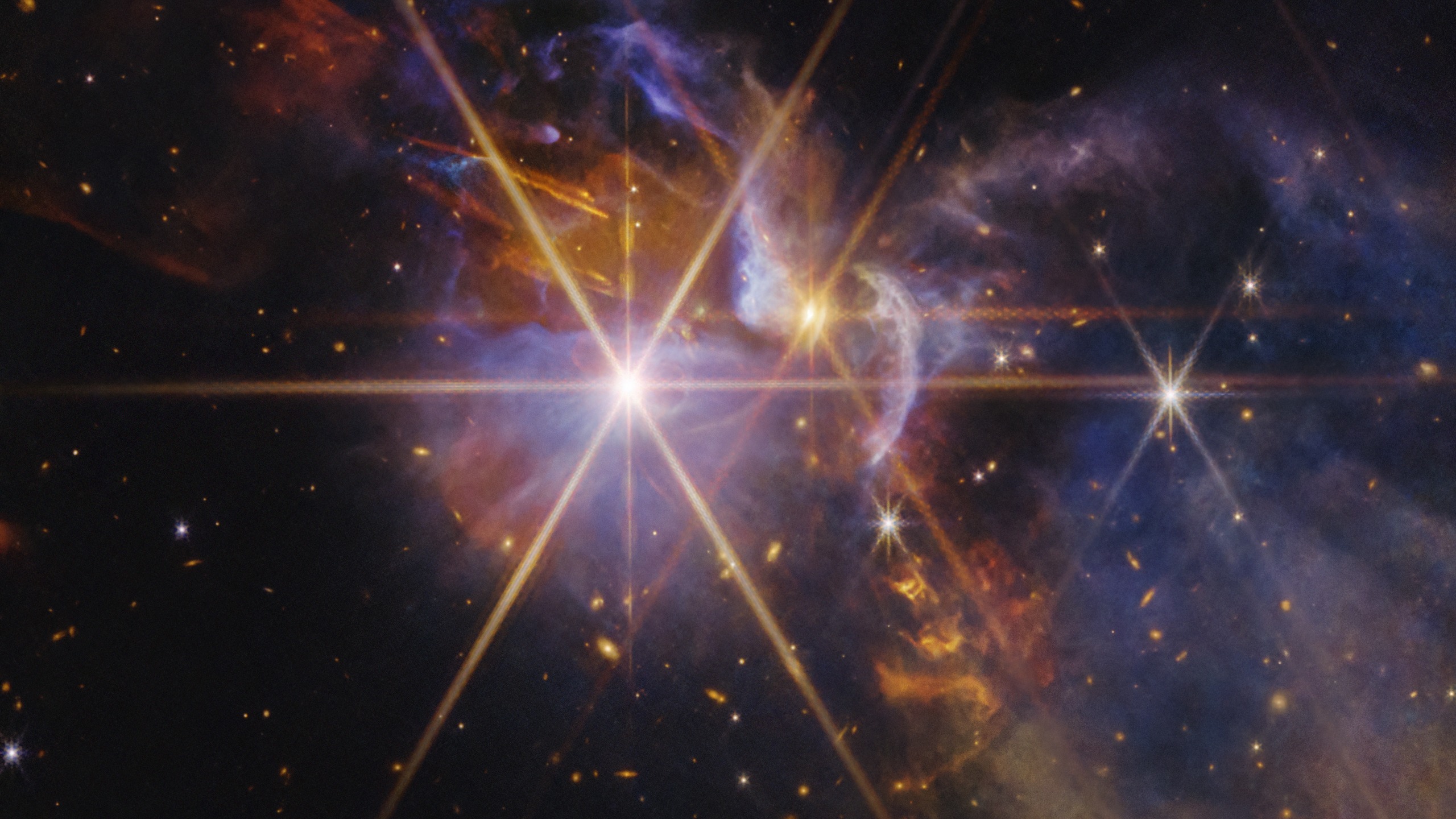
NASA's James Webb Space Telescope captures the infrared light from bright protostars in young star system FS Tau. FS Tau A, a pair of protostars that creates the largest diffraction pattern slightly to the left of center, is about half the mass of our Sun. FS Tau B, the orange protostar slightly right of center, is thought to be responsible for the red (molecular hydrogen) and orange (soot-like molecules known as polycyclic aromatic hydrocarbons) outflows that we see amid the dusty region. The blue ridges are areas where light has been scattered by dust.
12.3k downloads
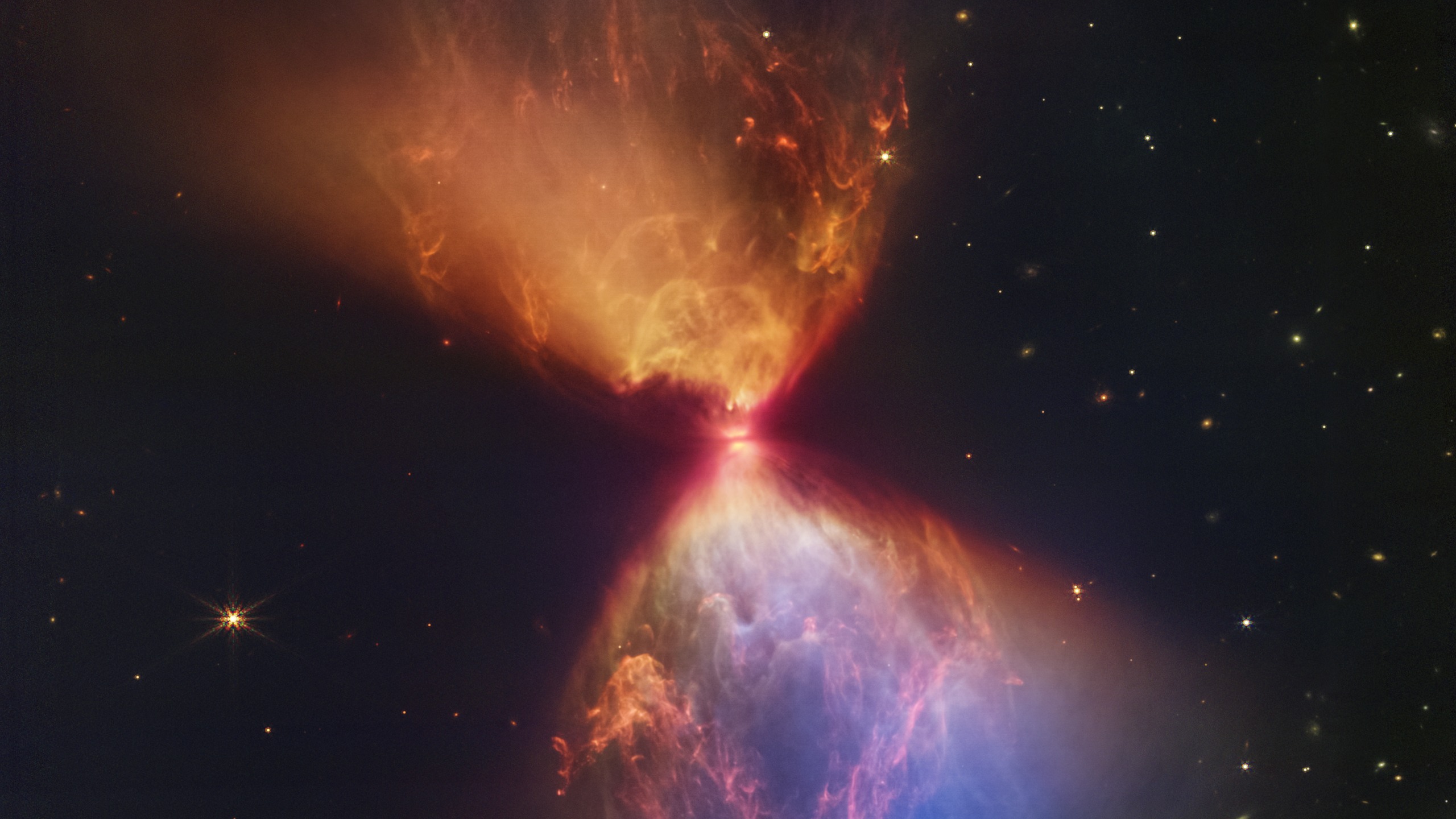
The protostar within the dark cloud L1527, shown in this image from NASA’s James Webb Space Telescope Near-Infrared Camera (NIRCam), is embedded within a cloud of material feeding its growth. Ejections from the star have cleared out cavities above and below it, whose boundaries glow orange and blue in this infrared view. The upper central region displays bubble-like shapes due to stellar “burps,” or sporadic ejections. Webb also detects filaments made of molecular hydrogen that has been shocked by past stellar ejections. The edges of the cavities at upper left and lower right appear straight, while the boundaries at upper right and lower left are curved. The region at lower right appears blue, as there’s less dust between it and Webb than the orange regions above it.
25.4k downloads