#Sagittarius
2 wallpapers tagged "Sagittarius"
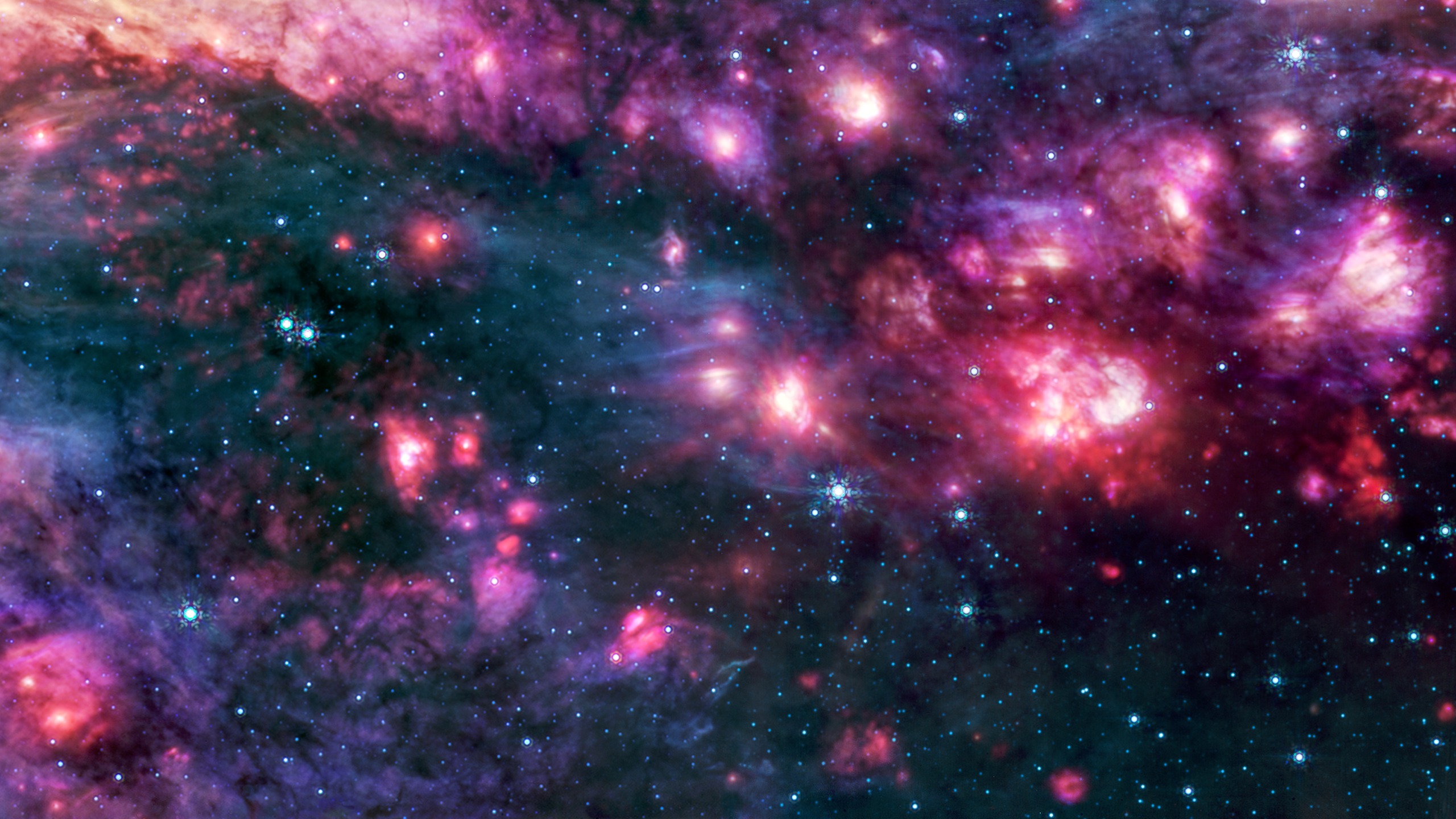
Webb's MIRI (Mid-Infrared Instrument) shows the Sagittarius B2 (Sgr B2) region in mid-infrared light, with warm dust glowing brightly. To the right is one clump of clouds that captured astronomers' attention. It is redder than the rest of the clouds in the image and corresponds to an area that other telescopes have shown to be one of the most molecularly rich regions known.
15k downloads
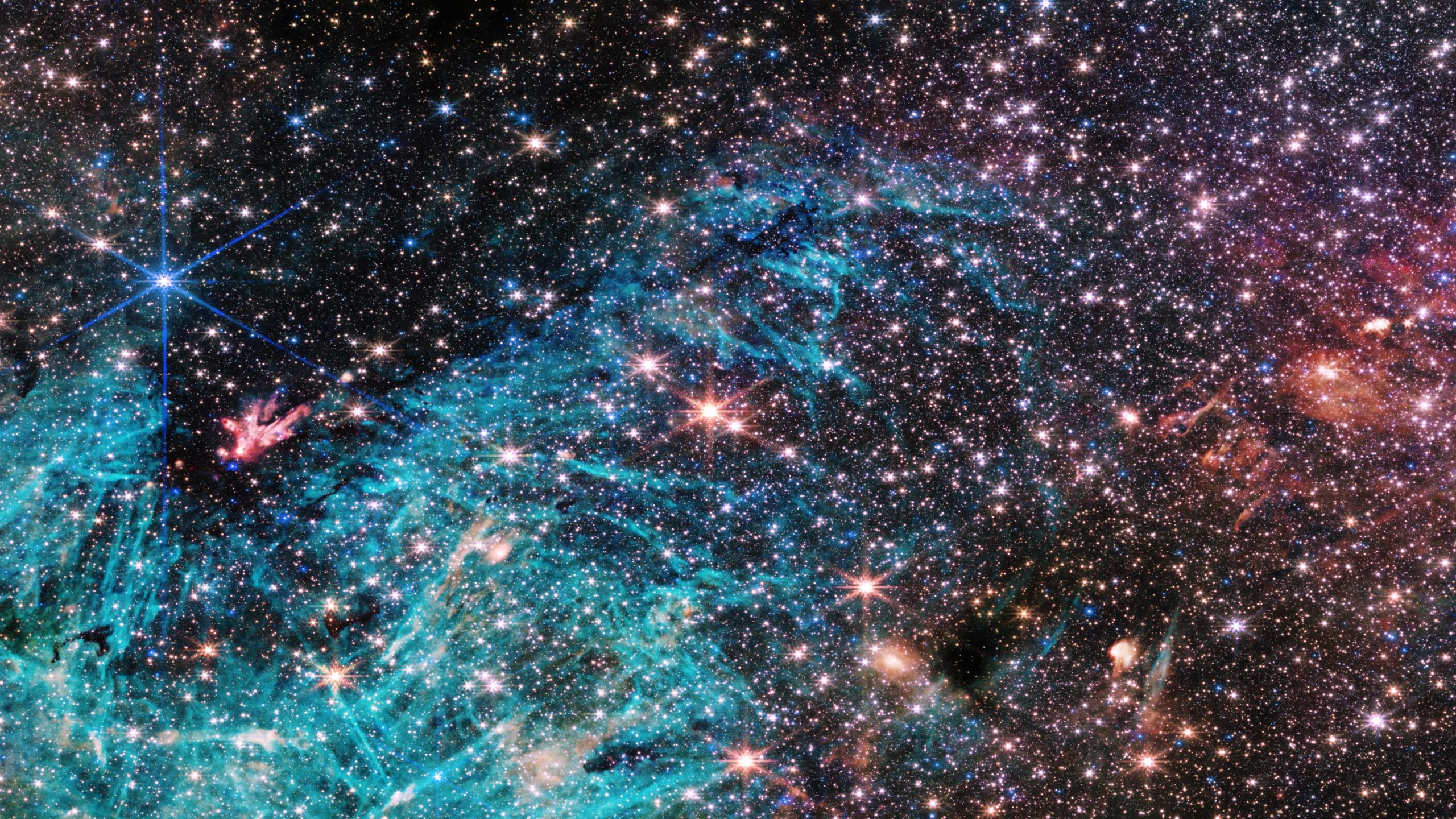
The full view of the James Webb Space Telescope’s NIRCam (Near-Infrared Camera) instrument reveals a 50 light-years-wide portion of the Milky Way’s dense center. An estimated 500,000 stars shine in this image of the Sagittarius C (Sgr C) region, along with some as-yet unidentified features. A vast region of ionized hydrogen, shown in cyan, wraps around an infrared-dark cloud, which is so dense that it blocks the light from distant stars behind it. Intriguing needle-like structures in the ionized hydrogen emission lack any uniform orientation. Researchers note the surprising extent of the ionized region, covering about 25 light-years. A cluster of protostars – stars that are still forming and gaining mass – are producing outflows that glow like a bonfire at the base of the large infrared-dark cloud, indicating that they are emerging from the cloud’s protective cocoon and will soon join the ranks of the more mature stars around them. Smaller infrared-dark clouds dot the scene, appearing like holes in the starfield. Researchers say they have only begun to dig into the wealth of unprecedented high-resolution data that Webb has provided on this region, and many features bear detailed study. This includes the rose-colored clouds on the right side of the image, which have never been seen in such detail.
25.5k downloads