#Taurus
5 wallpapers tagged "Taurus"
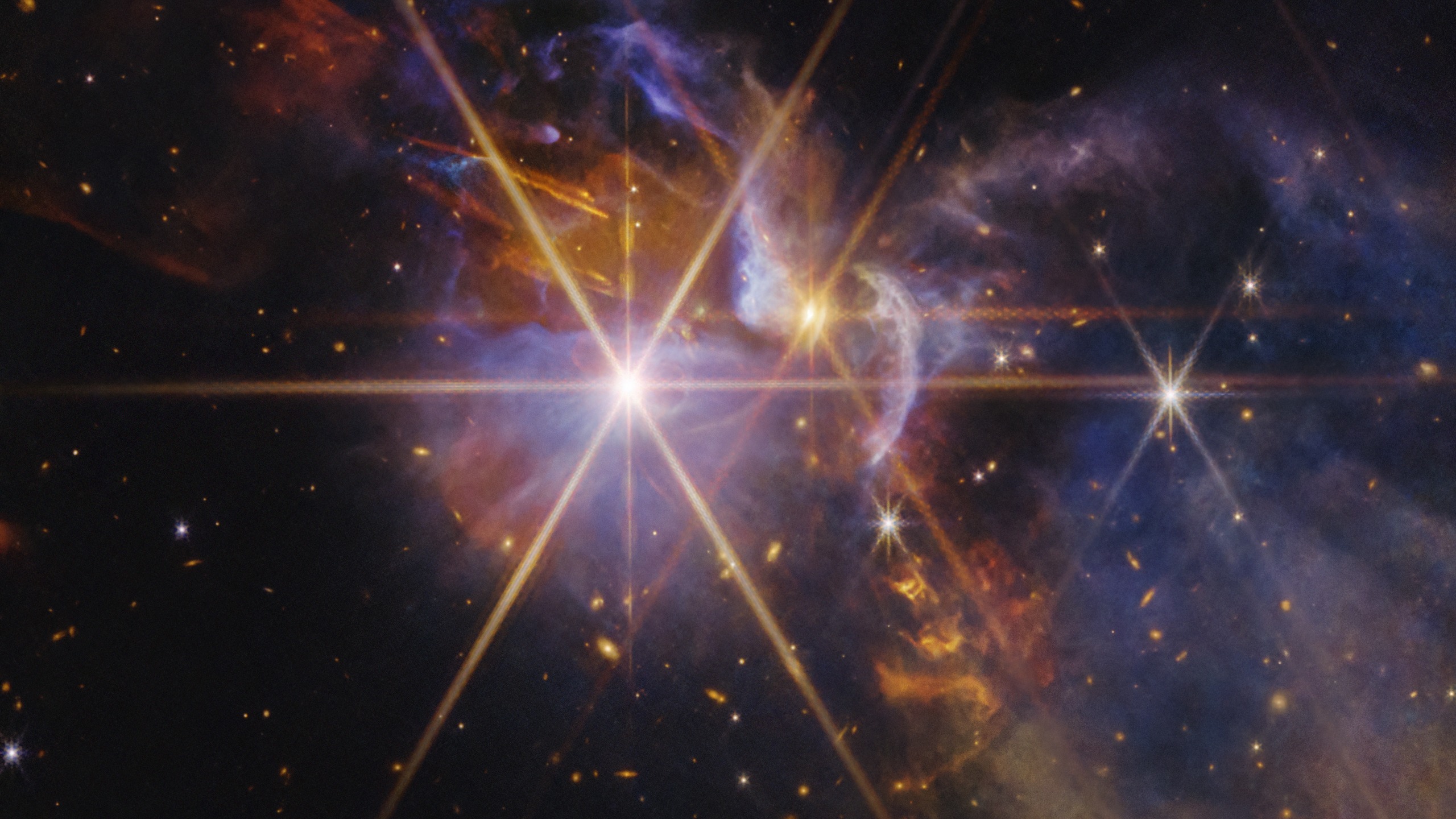
NASA's James Webb Space Telescope captures the infrared light from bright protostars in young star system FS Tau. FS Tau A, a pair of protostars that creates the largest diffraction pattern slightly to the left of center, is about half the mass of our Sun. FS Tau B, the orange protostar slightly right of center, is thought to be responsible for the red (molecular hydrogen) and orange (soot-like molecules known as polycyclic aromatic hydrocarbons) outflows that we see amid the dusty region. The blue ridges are areas where light has been scattered by dust.
12.3k downloads
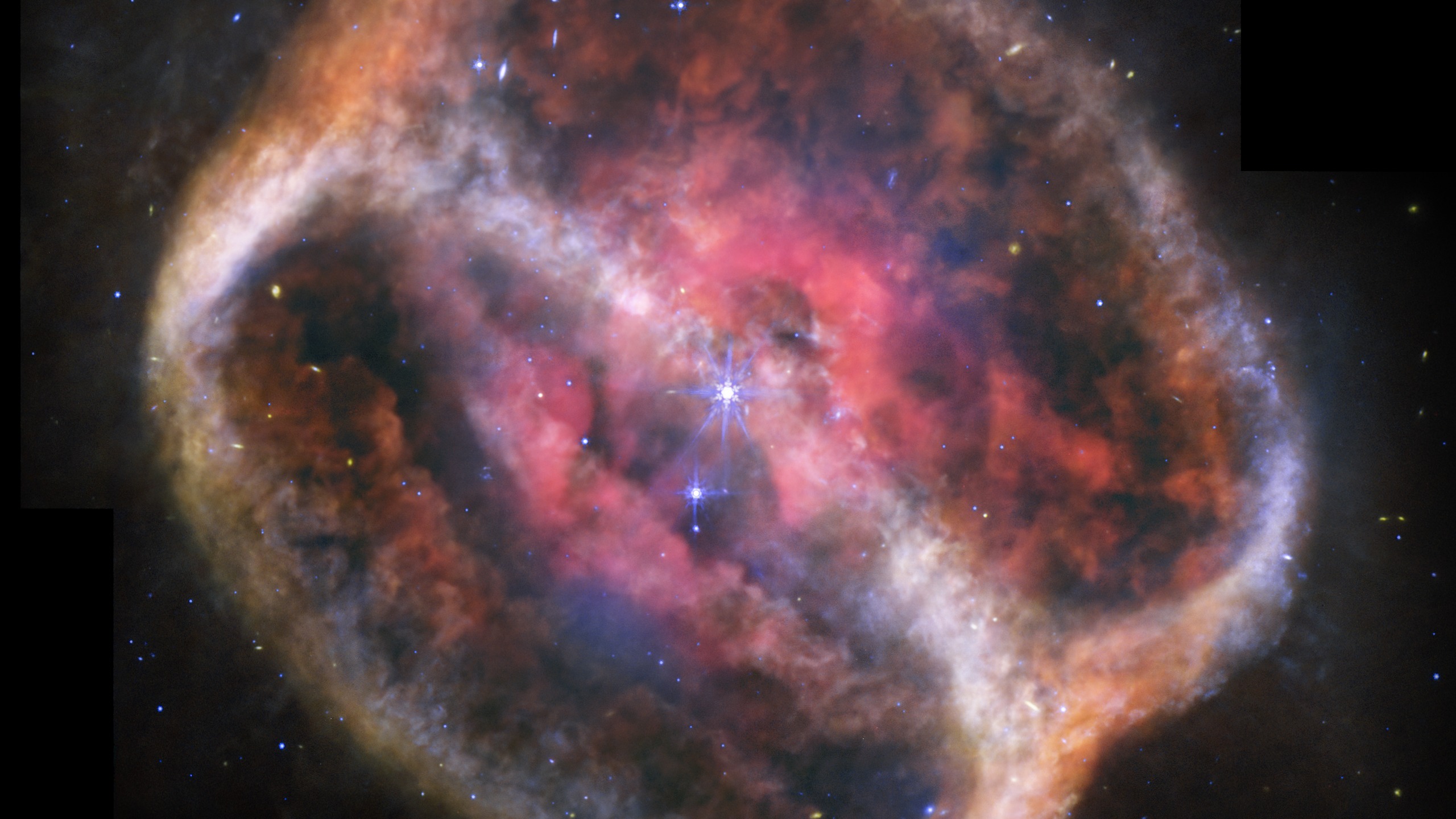
NASA’s James Webb Space Telescope has taken the most detailed image of planetary nebula NGC 1514 to date thanks to its unique mid-infrared observations. Webb shows its rings as intricate clumps of dust. It’s also easier to see holes punched through the bright pink central region.
23.9k downloads
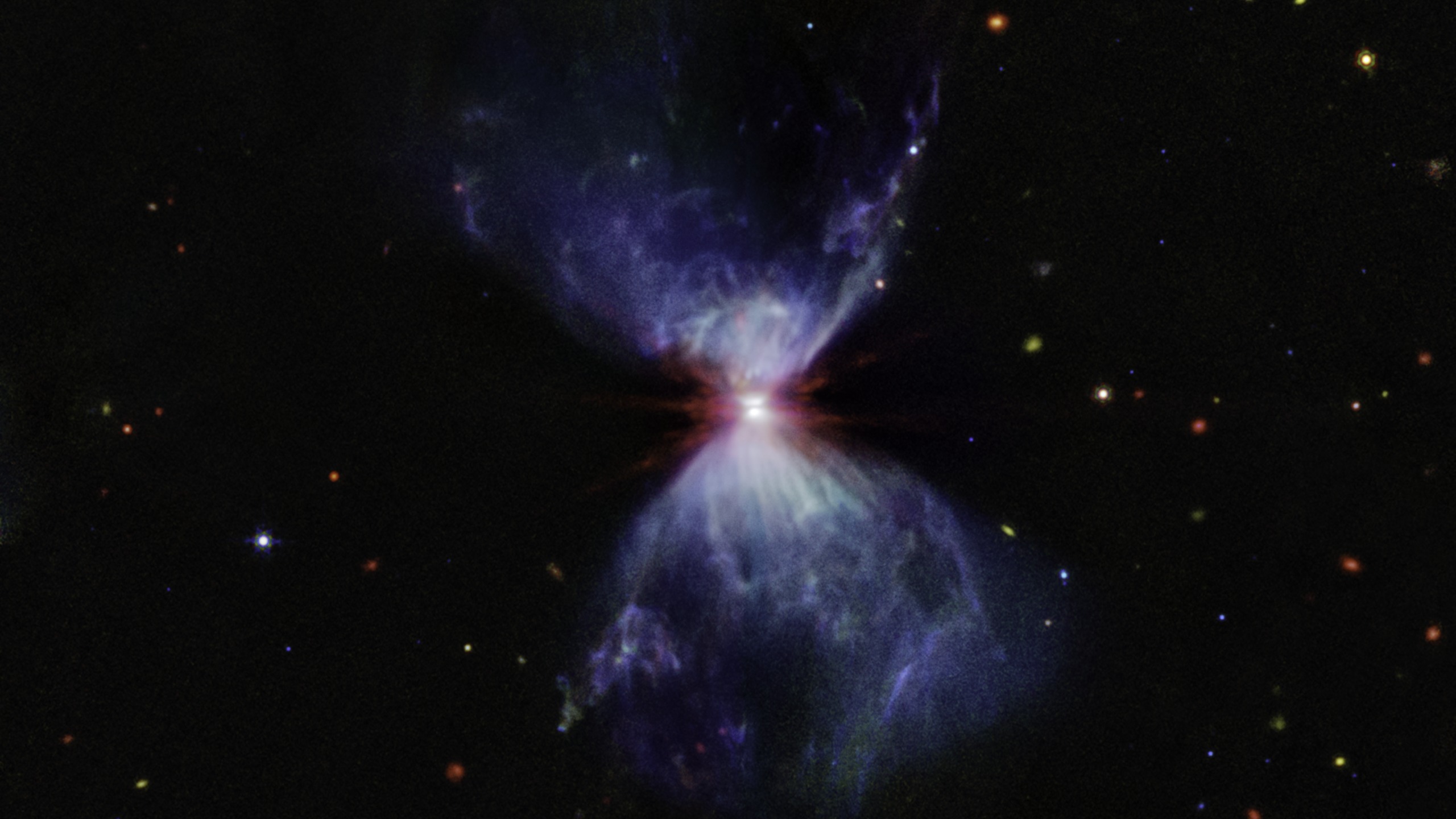
L1527, shown in this image from NASA’s James Webb Space Telescope’s MIRI (Mid-Infrared Instrument), is a molecular cloud that harbors a protostar. It resides about 460 light-years from Earth in the constellation Taurus. The more diffuse blue light and the filamentary structures in the image come from organic compounds known as polycyclic aromatic hydrocarbons (PAHs), while the red at the center of this image is an energized, thick layer of gases and dust that surrounds the protostar. The region in between, which shows up in white, is a mixture of PAHs, ionized gas, and other molecules. This image includes filters representing 7.7 microns light as blue, 12.8 microns light as green, and 18 microns light as red.
831 downloads
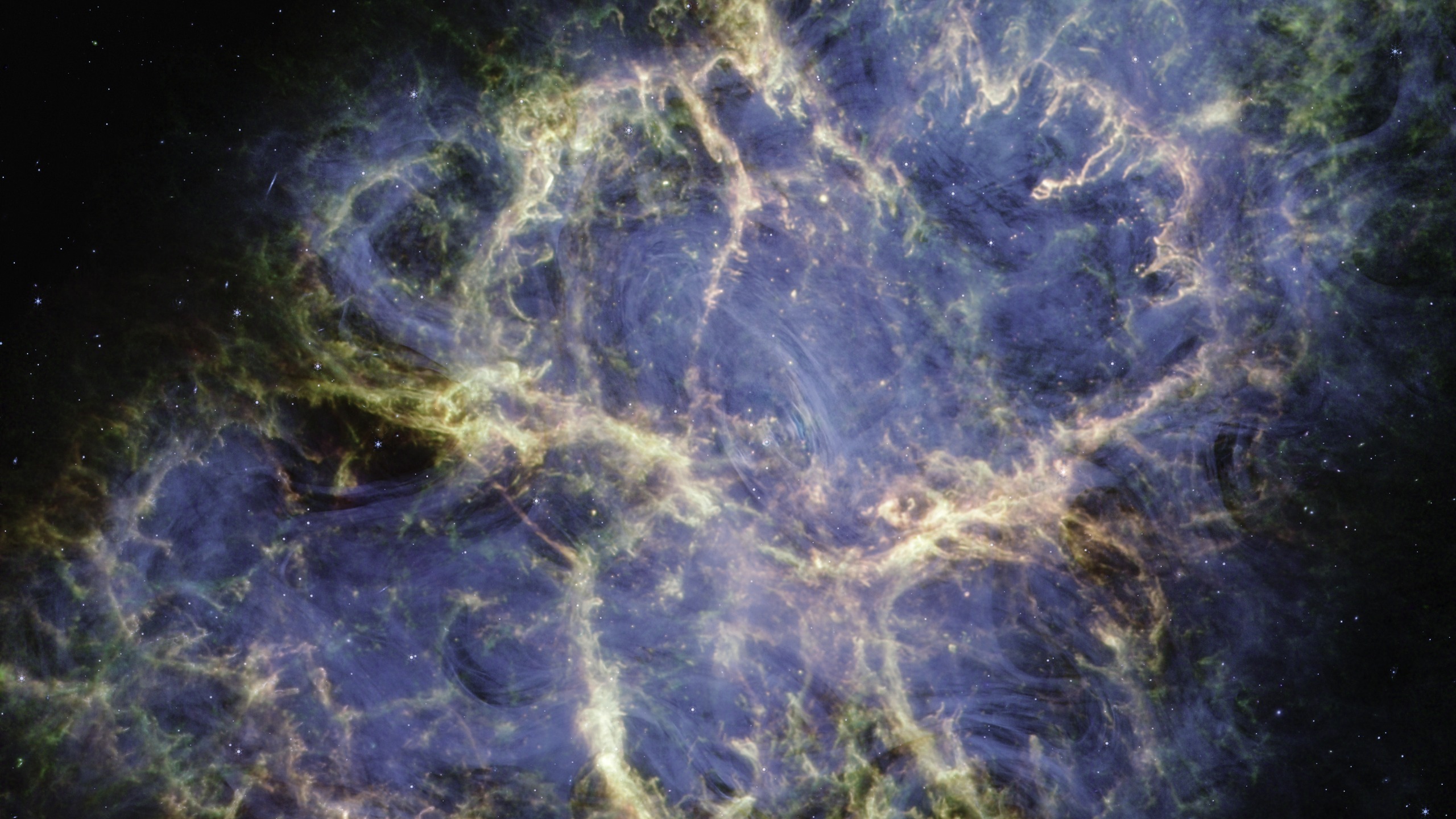
NASA’s James Webb Space Telescope dissected the Crab Nebula’s structure, aiding astronomers as they continue to evaluate leading theories about the supernova remnant’s origins. With the data collected by Webb’s NIRCam (Near-Infrared Camera) and MIRI (Mid-Infrared Instrument), a team of scientists were able to closely inspect some of the Crab Nebula’s major components. For the first time ever, astronomers mapped the warm dust emission throughout this supernova remnant. Represented as fluffy magenta material, the dust grains form a cage-like structure that is most apparent toward the lower left and upper right portions of the remnant. Filaments of dust are also threaded throughout the Crab’s interior and sometimes coincide with regions of doubly ionized sulfur (sulfur III) colored in green. Yellow-white mottled filaments, which form large loop-like structures around the supernova remnant’s center, represent areas where dust and doubly ionized sulfur overlap. The dust’s cage-like structure helps constrain some, but not all of the ghostly synchrotron emission represented in blue. The emission resembles wisps of smoke, most notable toward the Crab’s center. The thin blue ribbons follow the magnetic field lines created by the Crab’s pulsar heart — a rapidly rotating neutron star.
13.1k downloads
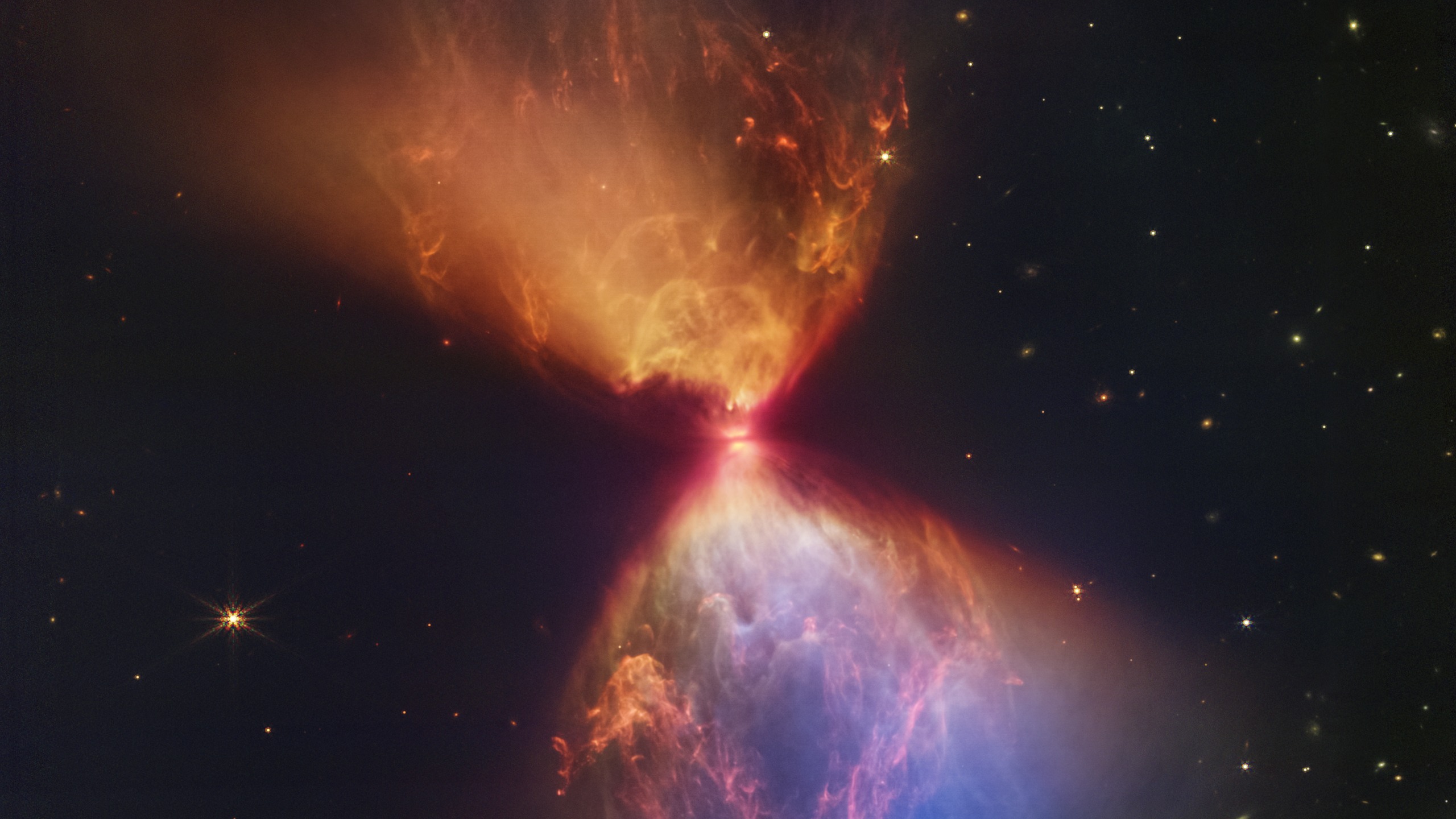
The protostar within the dark cloud L1527, shown in this image from NASA’s James Webb Space Telescope Near-Infrared Camera (NIRCam), is embedded within a cloud of material feeding its growth. Ejections from the star have cleared out cavities above and below it, whose boundaries glow orange and blue in this infrared view. The upper central region displays bubble-like shapes due to stellar “burps,” or sporadic ejections. Webb also detects filaments made of molecular hydrogen that has been shocked by past stellar ejections. The edges of the cavities at upper left and lower right appear straight, while the boundaries at upper right and lower left are curved. The region at lower right appears blue, as there’s less dust between it and Webb than the orange regions above it.
25.4k downloads