#young stellar object
3 wallpapers tagged "young stellar object"
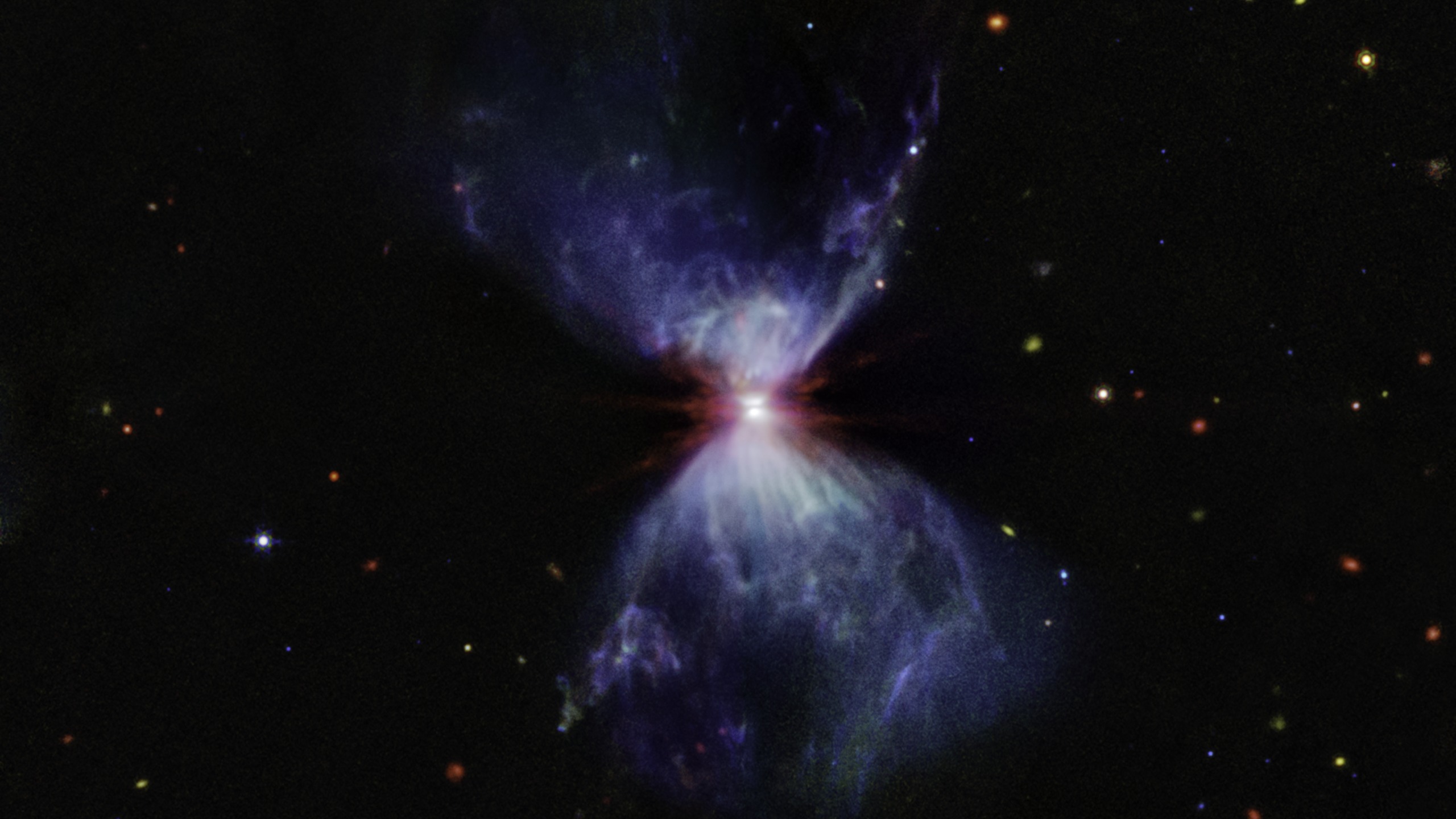
L1527, shown in this image from NASA’s James Webb Space Telescope’s MIRI (Mid-Infrared Instrument), is a molecular cloud that harbors a protostar. It resides about 460 light-years from Earth in the constellation Taurus. The more diffuse blue light and the filamentary structures in the image come from organic compounds known as polycyclic aromatic hydrocarbons (PAHs), while the red at the center of this image is an energized, thick layer of gases and dust that surrounds the protostar. The region in between, which shows up in white, is a mixture of PAHs, ionized gas, and other molecules. This image includes filters representing 7.7 microns light as blue, 12.8 microns light as green, and 18 microns light as red.
831 downloads
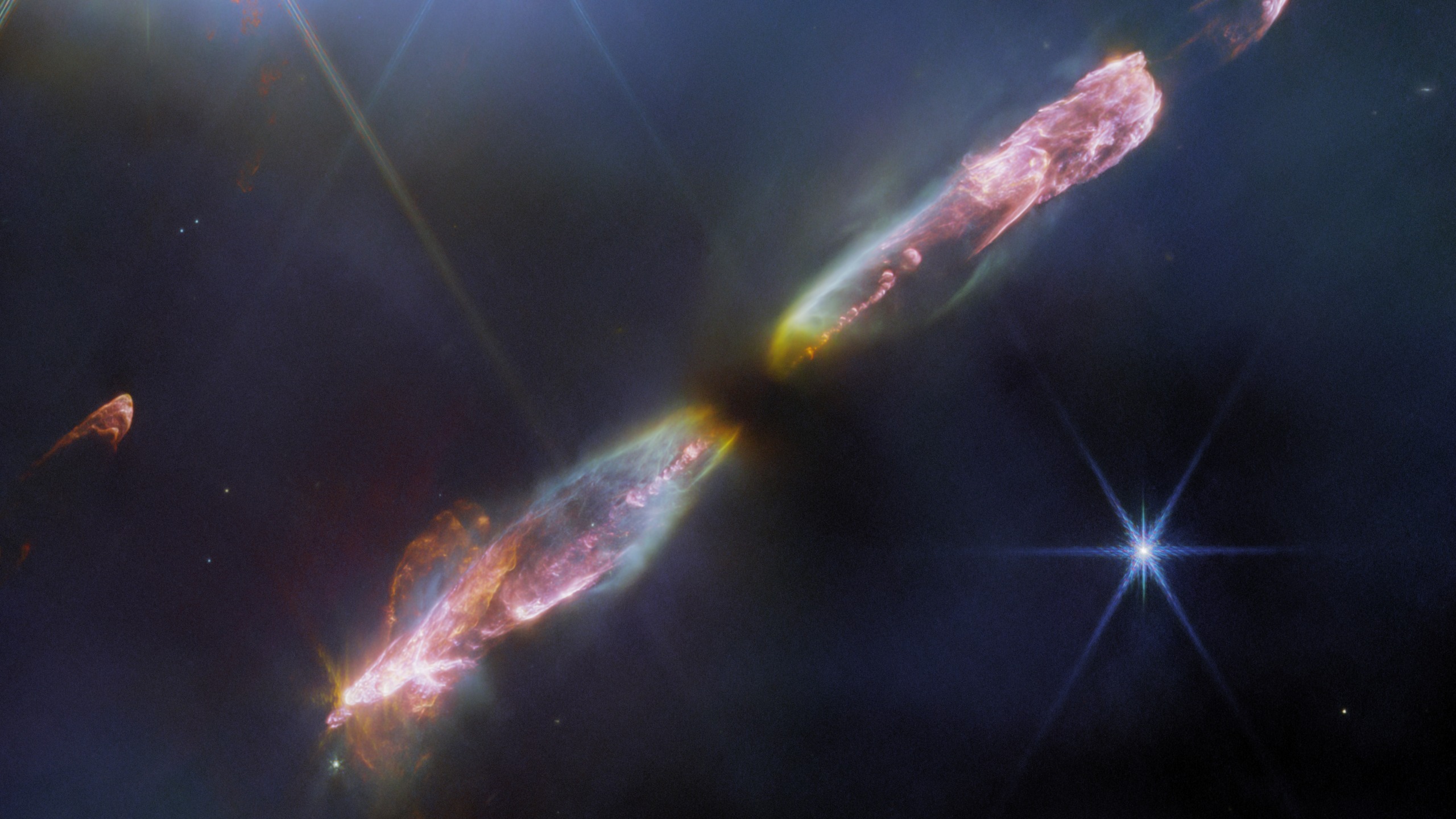
NASA’s James Webb Space Telescope’s high resolution, near-infrared look at Herbig-Haro 211 reveals exquisite detail of the outflow of a young star, an infantile analogue of our Sun. Herbig-Haro objects are formed when stellar winds or jets of gas spewing from newborn stars form shock waves colliding with nearby gas and dust at high speeds The image showcases a series of bow shocks to the southeast (lower-left) and northwest (upper-right) as well as the narrow bipolar jet that powers them in unprecedented detail. Molecules excited by the turbulent conditions, including molecular hydrogen, carbon monoxide and silicon monoxide, emit infrared light, collected by Webb, that map out the structure of the outflows.
6.9k downloads
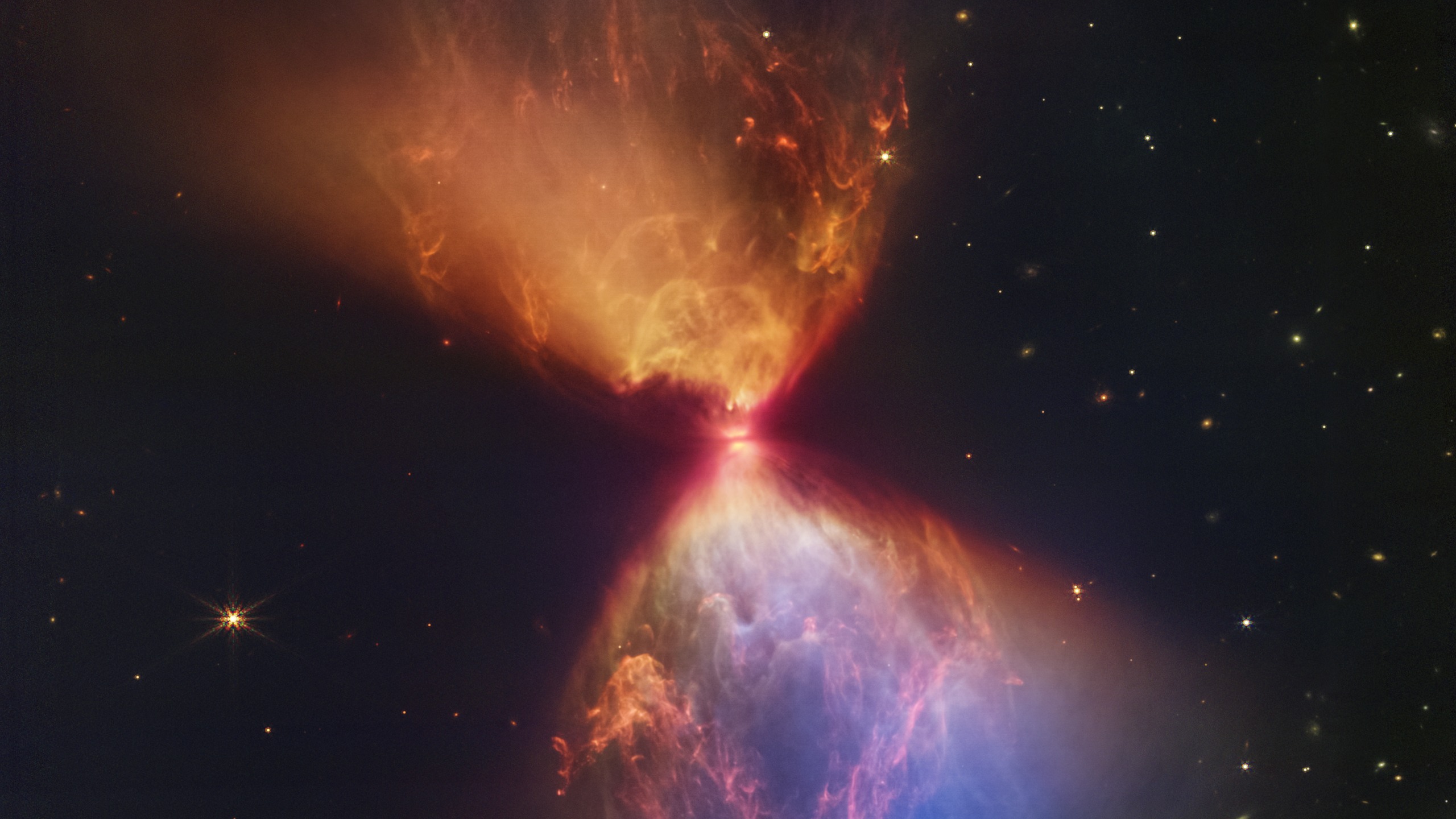
The protostar within the dark cloud L1527, shown in this image from NASA’s James Webb Space Telescope Near-Infrared Camera (NIRCam), is embedded within a cloud of material feeding its growth. Ejections from the star have cleared out cavities above and below it, whose boundaries glow orange and blue in this infrared view. The upper central region displays bubble-like shapes due to stellar “burps,” or sporadic ejections. Webb also detects filaments made of molecular hydrogen that has been shocked by past stellar ejections. The edges of the cavities at upper left and lower right appear straight, while the boundaries at upper right and lower left are curved. The region at lower right appears blue, as there’s less dust between it and Webb than the orange regions above it.
25.4k downloads